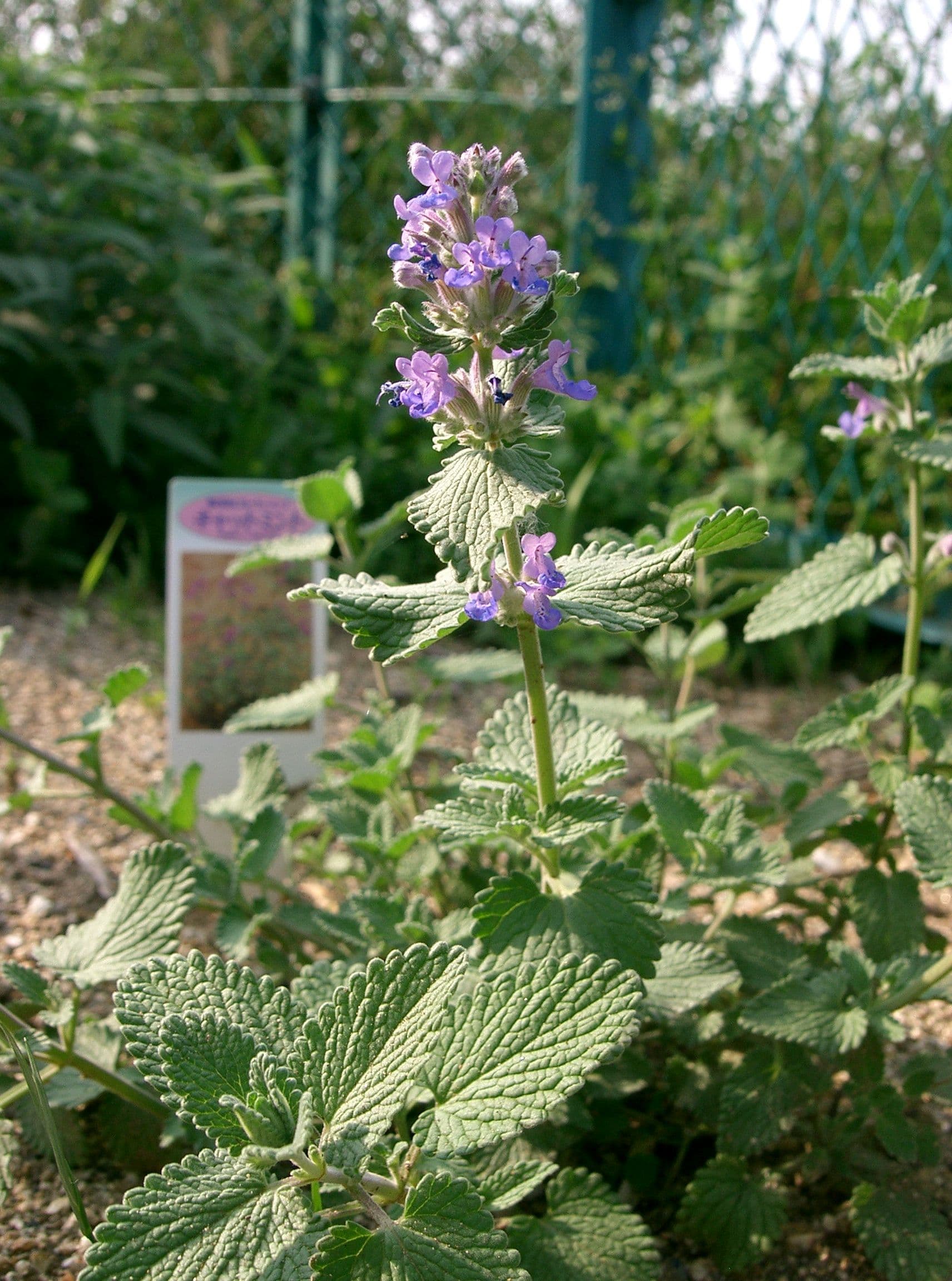
Catmint 'Six Hills Giant'
Nepeta × faassenii 'Six Hills Giant'
Dutch: Kattenkruid 'Six Hills Giant'
Kattenkruid 'Six Hills Giant' (Nepeta × faassenii 'Six Hills Giant') is a perennial from the Lamiaceae family that grows up to 60cm tall. This plant thrives in full sun to partial shade and requires low maintenance. Blooms in late spring and early summer and summer with blue, purple flowers and attracts bees and butterflies.
50–60 cm
45–60 cm
full sun, partial shade
moderate
sandy soil, loam, chalky soil
low maintenance
late spring, early summer, summer
blue, purple
Ecologische waarde
Verzorgingskalender
| Taak | Jan | Feb | Mrt | Apr | Mei | Jun | Jul | Aug | Sep | Okt | Nov | Dec |
|---|---|---|---|---|---|---|---|---|---|---|---|---|
| 🌱Planten | ||||||||||||
| ✂️Snoeien | ||||||||||||
| 💧Bemesten |
Care tips
Planting
Plant Nepeta × faassenii 'Six Hills Giant' between March and May or in September and October, when the soil is workable and not waterlogged. This catmint thrives in full sun but tolerates partial shade, though flowering may be less prolific in shadier spots. It is exceptionally unfussy about soil type, growing happily in sandy, loamy, or chalky conditions, provided drainage is reasonable. Avoid heavy clay that stays wet in winter. Prepare the planting area by removing weeds and digging in a little garden compost or well-rotted manure if your soil is very poor, though this isn't essential—catmint tolerates lean ground well. Dig a hole slightly larger than the root ball, set the plant at the same depth it was growing in its pot, and backfill with soil, firming gently with your hands. Space plants 50 cm apart; 'Six Hills Giant' will spread to 45–60 cm wide and forms a billowing mound 50–60 cm tall, so give it room to develop its natural shape. Water thoroughly after planting to settle the roots, then water regularly for the first few weeks until the plant is established. If planting in spring, keep an eye on moisture levels during any dry spells in late spring and early summer. Autumn-planted catmint usually needs little extra watering. A light mulch of garden compost or bark chippings around the base helps suppress weeds and retain moisture, but keep mulch clear of the stems to prevent rot. No staking is needed; the stems are sturdy enough to support themselves.
Pruning
The key to keeping 'Six Hills Giant' tidy and encouraging a second flush of flowers is to cut it back hard after the first flowering wave finishes. This typically falls in July or August, once the main display of blue-purple blooms has faded. Use garden shears or hedging shears to shear the whole plant back by about half to two-thirds of its height, removing spent flower stems and tired foliage. This may seem drastic, but catmint responds vigorously, producing fresh green growth and often a second, smaller flush of flowers in late summer or early autumn. If you prefer a slightly less severe approach, you can deadhead individual flower spikes as they fade, but this is time-consuming on a plant of this size and won't stimulate the same rejuvenation. The shearing method is far more practical and keeps the plant compact and shapely. Without this mid-summer cut, 'Six Hills Giant' can become sprawling and untidy, with stems flopping outward and foliage looking shabby. In late autumn or early spring, tidy up any remaining dead stems and foliage, cutting back to just above the emerging new growth at the base. Some gardeners prefer to leave the old stems over winter to provide a little protection for the crown in very cold spells, then clear them away in March. Either approach works well. No other pruning is necessary. This is a low-maintenance perennial that doesn't require complex shaping or thinning—just that one decisive summer shear to keep it performing well year after year.
Maintenance
Once established, 'Six Hills Giant' catmint is remarkably drought-tolerant and needs only moderate watering. In a typical year, rainfall is usually sufficient, but during prolonged dry spells in summer—especially if your soil is sandy—water deeply once a week rather than little and often. Avoid overwatering; catmint dislikes sitting in wet soil and is prone to root rot in poorly drained conditions. In autumn and winter, natural rainfall is more than adequate. Feed lightly in March or April with a general-purpose granular fertiliser such as blood, fish and bone or a balanced NPK feed, scattering a handful around the base of each plant and lightly forking it in. Catmint doesn't require rich feeding—too much nitrogen encourages lush, floppy growth at the expense of flowers. One feed in early spring is enough for the season. This perennial is fully hardy to zone 3, so overwintering in temperate Europe presents no problems. Leave the old stems in place over winter if you wish, or cut them back in late autumn; either way, new growth will emerge reliably in spring. Mulch lightly around the crown in autumn to suppress weeds, but don't smother the plant. Catmint is generally pest- and disease-free. Cats are famously attracted to the foliage and may roll in young plants, so protect new plantings with twigs or netting until they're established. Powdery mildew can occasionally appear on foliage in late summer, especially in dry conditions or crowded plantings, but it rarely causes serious harm. Good air circulation and the July cut-back help minimise this. Slugs and snails usually ignore the aromatic foliage.
More about this plant
Combines well with
Related guides
Catmint 'Six Hills Giant' in your garden design?
Make a free garden design with AI advice. Our AI knows Catmint 'Six Hills Giant' and 130+ other plants.
Start free design