Chinese astilbe 'Pumila' in September: monthly care
Month-by-month care — Astilbe chinensis 'Pumila'
In September your chinese astilbe 'Pumila' needs attention: plant / sow.
- Plant / sow
What to do this September
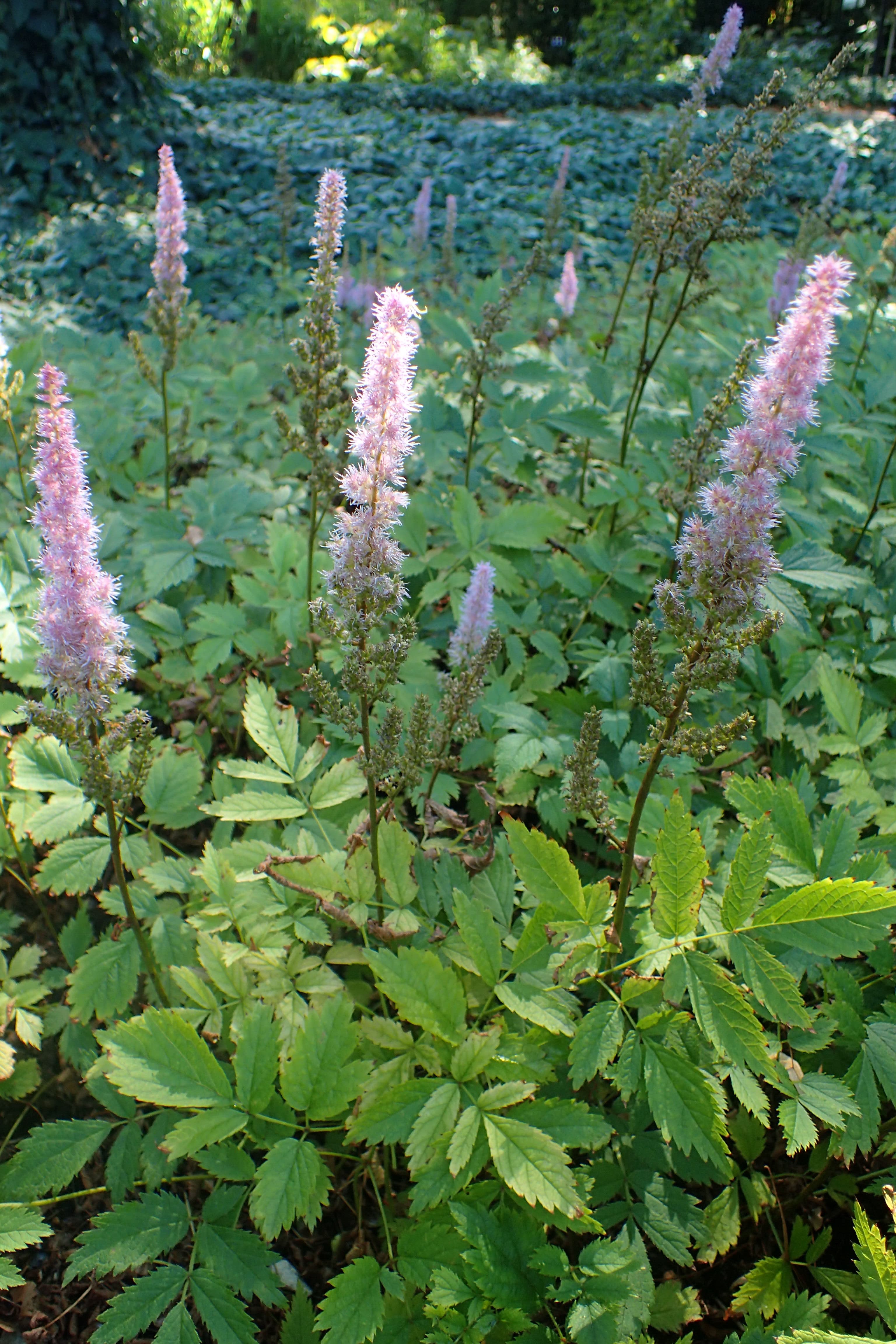
Astilbe chinensis 'Pumila' thrives in partial to full shade, making it an excellent choice for borders, woodland edges, or the front of shady beds where its compact 25–30 cm height won't be overwhelmed. Plant in March, April, May, September, or October, avoiding periods of frost or waterlogged soil. This astilbe prefers moisture-retentive loam or clay soil, so prepare the planting area by digging in plenty of organic matter—well-rotted compost or leaf mould—to improve structure and water retention, especially if your soil is on the lighter side. Space plants 30 cm apart to allow for their eventual spread of 30–40 cm. Dig a hole slightly larger than the root ball, position the crown so it sits level with the surrounding soil surface, and backfill gently, firming as you go to eliminate air pockets. Planting too deeply can lead to rot, while planting too shallow may expose roots to drying out. Water thoroughly immediately after planting, soaking the root zone to help the plant settle in. Apply a 5 cm layer of organic mulch—bark chips, compost, or leaf mould—around the base, keeping it clear of the crown itself. This mulch conserves moisture, suppresses weeds, and gradually enriches the soil as it breaks down. Spring plantings will establish quickly if kept moist through their first summer; autumn plantings benefit from mulch protection and will root in over winter, ready to put on strong growth the following spring. Astilbe chinensis 'Pumila' is hardy to zone 4, so winter cold is rarely an issue in temperate European gardens.