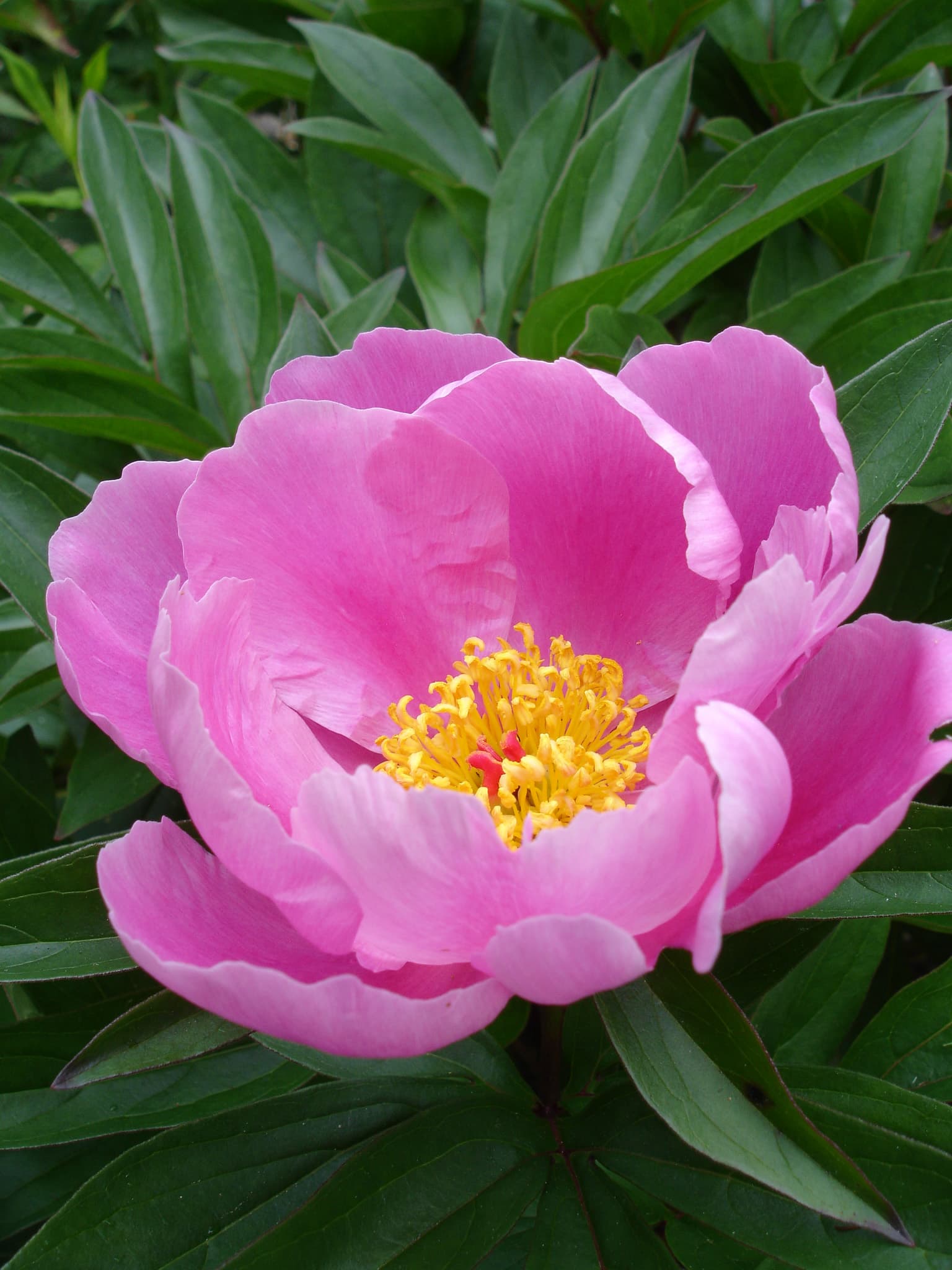
Chinese peony 'Karl Rosenfield'
Paeonia lactiflora 'Karl Rosenfield'
Dutch: Pioenroos 'Karl Rosenfield'
Pioenroos 'Karl Rosenfield' (Paeonia lactiflora 'Karl Rosenfield') is a perennial from the Paeoniaceae family that grows up to 90cm tall. This plant thrives in full sun to partial shade and requires low maintenance. Blooms in late spring and early summer with red flowers and attracts bees.
70–90 cm
60–80 cm
full sun, partial shade
moderate
loam, clay soil
low maintenance
late spring, early summer
red
Ecologische waarde
Verzorgingskalender
| Taak | Jan | Feb | Mrt | Apr | Mei | Jun | Jul | Aug | Sep | Okt | Nov | Dec |
|---|---|---|---|---|---|---|---|---|---|---|---|---|
| 🌱Planten | ||||||||||||
| ✂️Snoeien | ||||||||||||
| 💧Bemesten |
Care tips
Planting
Paeonia lactiflora 'Karl Rosenfield' thrives in full sun or partial shade, though flowering is most prolific with at least six hours of direct sunlight daily. Choose a sheltered spot with good air circulation to reduce fungal disease risk. This peony performs best in loam or clay soil that is rich, moisture-retentive yet well-drained. Avoid waterlogged ground, as the roots will rot. Plant bare-root divisions between September and November while the plant is dormant. This autumn window allows roots to establish before winter. Dig a generous hole 40–50 cm wide and deep, incorporating plenty of well-rotted manure or garden compost into the base and surrounding soil. The planting depth is critical: position the crown so that the dormant buds (eyes) sit no more than 2.5–5 cm below the soil surface. Planting too deep is the most common reason peonies fail to flower. Space plants 80 cm apart to allow for their mature spread and ensure good air movement. After planting, firm the soil gently around the roots and water thoroughly to settle them in. Apply a 5 cm layer of mulch around the base, keeping it clear of the crown itself to prevent rot. Avoid disturbing the roots once planted—peonies resent being moved and can take two to three years to settle and flower reliably. If you're planting container-grown specimens in spring, take extra care not to bury the crown too deeply and water regularly through the first growing season.
Pruning
Herbaceous peonies like 'Karl Rosenfield' do not require pruning in the traditional sense, but they do need an annual autumn cut-back. In October or November, once the foliage has been blackened by frost and died back naturally, cut all stems down to ground level. Use clean, sharp secateurs and remove every stem, leaving just the crown at soil level. This tidying is essential: peony foliage often harbours fungal spores (particularly peony wilt, *Botrytis paeoniae*), so leaving old stems and leaves in place invites disease to overwinter and reinfect new growth in spring. Dispose of all cut material in your green waste bin or burn it—do not compost it, as home compost heaps rarely reach temperatures high enough to kill fungal pathogens. If you notice any stems wilting or browning during the growing season, cut them back immediately to healthy tissue or right to the base and bin them to limit the spread of infection. Deadheading is beneficial but not strictly necessary. Once the large, double red blooms fade in late spring or early summer, snip off the spent flower heads just above the first set of strong leaves. This prevents the plant from putting energy into seed production and keeps it looking tidy, though it won't encourage a second flush of flowers. Leave the foliage intact after flowering; it continues photosynthesising and feeding the roots for next year's display. Only remove it in autumn as described above.
Maintenance
Water 'Karl Rosenfield' moderately during dry spells, particularly in spring as buds develop and during flowering. Peonies prefer consistent moisture but dislike sitting in wet soil, so check that drainage remains good year-round. In summer, water deeply once a week if rainfall is scarce; in autumn and winter, natural rainfall is usually sufficient in temperate climates. Avoid overhead watering, which can encourage botrytis and other fungal problems—water at the base instead. Feed in March and April as new shoots emerge. Apply a balanced granular fertiliser (such as blood, fish and bone) or a general-purpose feed around the base of the plant, scratching it lightly into the soil surface. A second, lighter feed immediately after flowering helps build strong roots for the following year, though it is not essential. Avoid high-nitrogen fertilisers, which promote lush foliage at the expense of flowers. Peonies are fully hardy in zones 3–8 and need no winter protection in temperate Europe. In fact, they require a cold dormant period to flower well. Mulch lightly in late autumn with garden compost or well-rotted manure, keeping it away from the crown to prevent rot. The main pest concern is peony wilt, a fungal disease causing stems to collapse suddenly. Remove and destroy affected growth immediately. Ants are often seen on buds but cause no harm—they're attracted to the sugary sap and may even help buds open. Slugs occasionally damage young shoots in spring; use organic pellets or barriers if necessary. Staking may be needed in exposed sites, as the heavy double blooms can weigh down stems, especially after rain.
More about this plant
Combines well with
Related guides
Chinese peony 'Karl Rosenfield' in your garden design?
Make a free garden design with AI advice. Our AI knows Chinese peony 'Karl Rosenfield' and 130+ other plants.
Start free design