Common houseleek in May: monthly care
Month-by-month care — Sempervivum tectorum
In May your common houseleek needs attention: plant / sow.
- Plant / sow
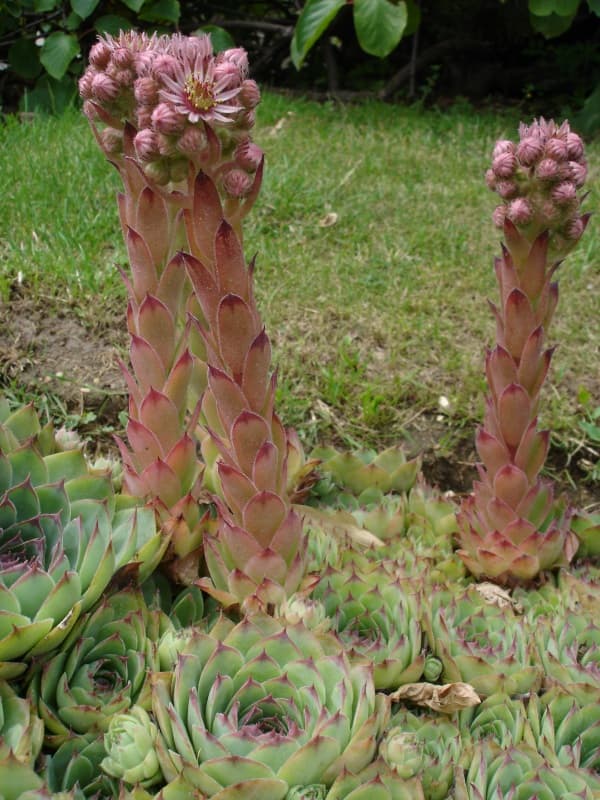
What to do this May
Common houseleek is one of the easiest succulents to establish outdoors in temperate climates. Plant from April through June or in September, avoiding the hottest weeks of summer and the coldest months when the ground may be frozen or waterlogged. Choose a spot in full sun—houseleeks tolerate partial shade but produce their best colour and most compact rosettes in bright, unobstructed light. Soil preparation is critical: houseleeks demand excellent drainage and will rot in heavy, moisture-retentive ground. Sandy or chalky soils are ideal. If your soil is clay or loam, work in plenty of horticultural grit or sharp sand to open up the structure, or plant in raised beds, rockeries, or the crevices of dry-stone walls where water drains away quickly. A thin, poor soil is no problem—houseleeks thrive in lean conditions and actually perform better than in rich ground. Space rosettes 15 cm apart. Planting depth is shallow: scrape away a small depression, set the base of each rosette so the lowest leaves just touch the soil surface, and firm gently around the roots. Don't bury the rosette itself or it may rot. If planting offsets (the small "chicks" that form around the parent rosette), simply press them lightly into the soil surface; they root readily on contact. Water sparingly immediately after planting to settle roots, then leave them alone. Houseleeks establish quickly and need no further watering in most temperate climates. Mulching is unnecessary and can trap moisture against the rosettes, so leave the soil surface bare or top-dress lightly with fine gravel for a tidy finish.