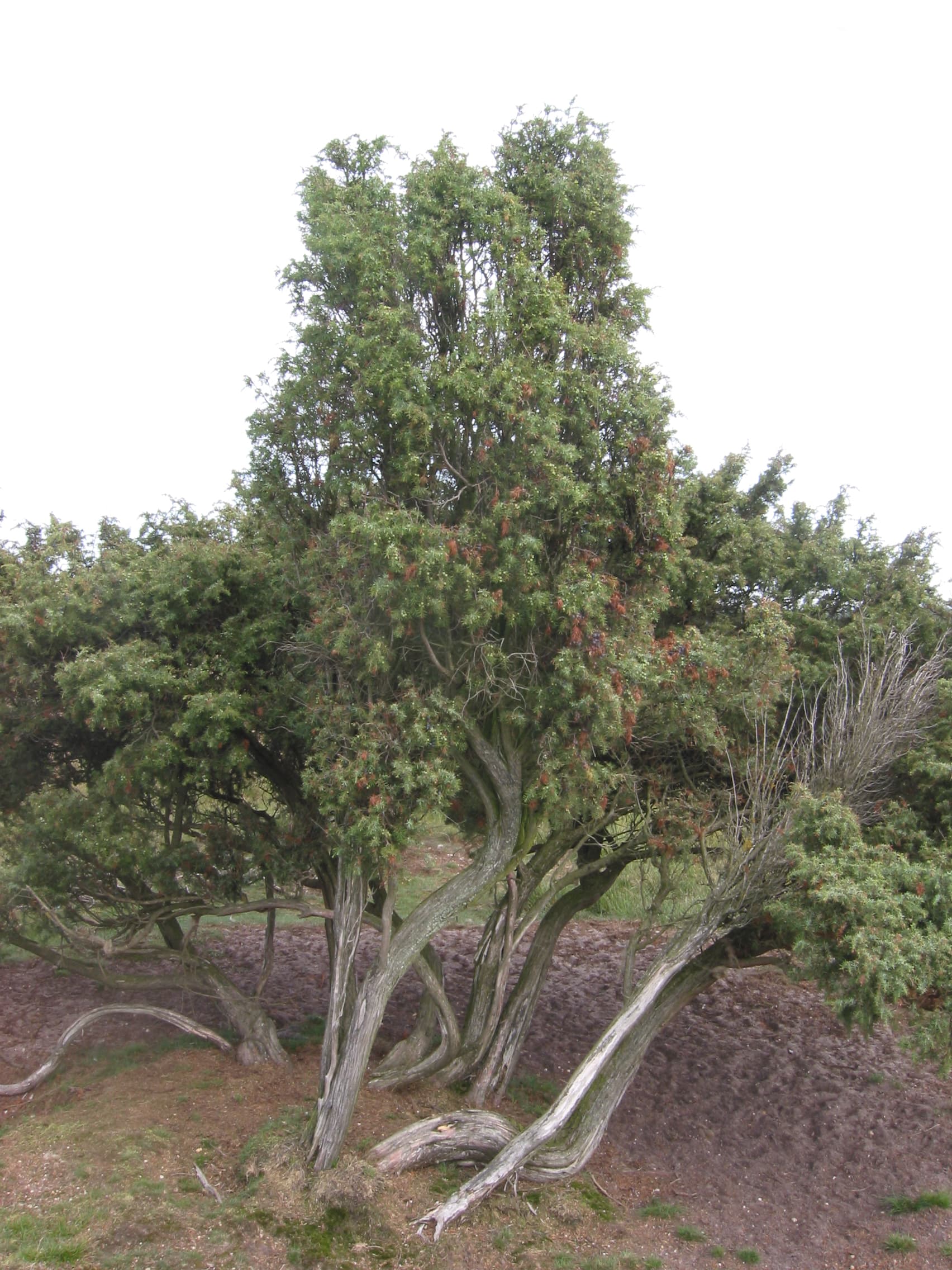
Common juniper
Juniperus communis
Dutch: Jeneverbes
Jeneverbes (Juniperus communis) is a native to the Netherlands, evergreen tree from the Cupressaceae family that grows up to 6 meters tall. This plant thrives in full sun and requires low maintenance. Blooms in spring and attracts birds.
100–600 cm
100–300 cm
full sun
low water needs
sandy soil, loam, chalky soil
low maintenance
spring
Ecologische waarde
Verzorgingskalender
| Taak | Jan | Feb | Mrt | Apr | Mei | Jun | Jul | Aug | Sep | Okt | Nov | Dec |
|---|---|---|---|---|---|---|---|---|---|---|---|---|
| 🌱Planten | ||||||||||||
| ✂️Snoeien | ||||||||||||
| 💧Bemesten |
Care tips
Planting
Common juniper thrives in full sun and tolerates a wide range of well-drained soils, including sandy, loamy, and chalky ground. It dislikes waterlogged conditions, so avoid heavy clay unless you can improve drainage significantly. The best planting times are March and April in spring, or September and October in autumn, when the soil is still workable and the plant can establish roots before temperature extremes arrive. Choose a spot with plenty of space: mature specimens can reach 1–6 metres tall and spread 1–3 metres, depending on the variety. If planting more than one, space them at least 150 cm apart. Dig a hole roughly twice the width of the root ball but no deeper—junipers should sit at the same level they were growing in the pot. Break up compacted soil at the base and sides of the hole to encourage roots to spread. Place the plant in the hole, backfill with the excavated soil mixed with a little garden compost if your ground is very poor, and firm gently to eliminate air pockets. Water thoroughly after planting to settle the soil around the roots, even though common juniper has low water needs once established. A 5 cm layer of mulch (bark chips or gravel) around the base helps retain moisture during the first season and suppresses weeds, but keep it a few centimetres clear of the stem to prevent rot. Staking is rarely necessary unless you're planting in an exposed, windy site. Container-grown plants establish more reliably than bare-root specimens.
Pruning
Common juniper requires very little pruning and resents hard cutting back into old, bare wood, which rarely regenerates. The main pruning window is April, just as new growth begins in spring. At this time you can lightly trim to shape the plant or control its size, but restrict yourself to cutting into green, leafy growth only. Use clean, sharp secateurs or hedging shears depending on the size of the job. Focus on removing any dead, damaged, or diseased branches first—these can be taken out at any time of year for safety and plant health. Then look for wayward shoots that spoil the natural outline or cross and rub against other branches. Junipers generally develop an attractive, informal shape on their own, so heavy shaping is rarely needed and can leave unsightly gaps. If you're growing a columnar variety, you may want to trim lightly to maintain a tidy silhouette, but prostrate forms are best left alone apart from removing dead material. Never cut back into thick, brown stems in the hope of rejuvenation; common juniper will not resprout from bare wood and you'll be left with permanent bald patches. If a plant has become severely overgrown or misshapen, replacement is often a better option than drastic pruning. Wear gloves when handling juniper, as the foliage can irritate skin. After pruning, clear away clippings to reduce the risk of fungal disease, and avoid feeding immediately afterwards to prevent soft, sappy growth.
Maintenance
Once established, common juniper is remarkably undemanding. It has low water needs and tolerates drought well, so you'll only need to water during prolonged dry spells in the first year or two. Mature plants rarely require watering except in extreme conditions. Overwatering or poor drainage is far more harmful than underwatering and can lead to root rot. Feed sparingly in March with a slow-release general-purpose fertiliser or a light scattering of blood, fish, and bone around the root zone. Junipers are adapted to poor soils and excessive feeding encourages lush growth that's prone to disease and winter damage. One feed per year is sufficient; more is counterproductive. Common juniper is fully hardy across temperate Europe (zones 2–8) and needs no winter protection. Being evergreen, it provides year-round structure and interest. Refresh the mulch layer every couple of years to suppress weeds and conserve moisture, keeping it clear of the stem. Pests are uncommon, but watch for juniper aphids in spring and early summer; a strong jet of water usually dislodges them, or use an insecticidal soap if numbers are high. The main disease risk is Phytophthora root rot in poorly drained soil—prevention through good site selection is key. Occasionally, you may see browning foliage caused by juniper scale insects; treat with a winter wash or horticultural oil. Remove and bin any branches affected by fungal dieback promptly to prevent spread. Overall, common juniper is a low-maintenance, resilient evergreen that rewards neglect better than fussing.
More about this plant
Combines well with
Related guides
Common juniper in your garden design?
Make a free garden design with AI advice. Our AI knows Common juniper and 130+ other plants.
Start free design