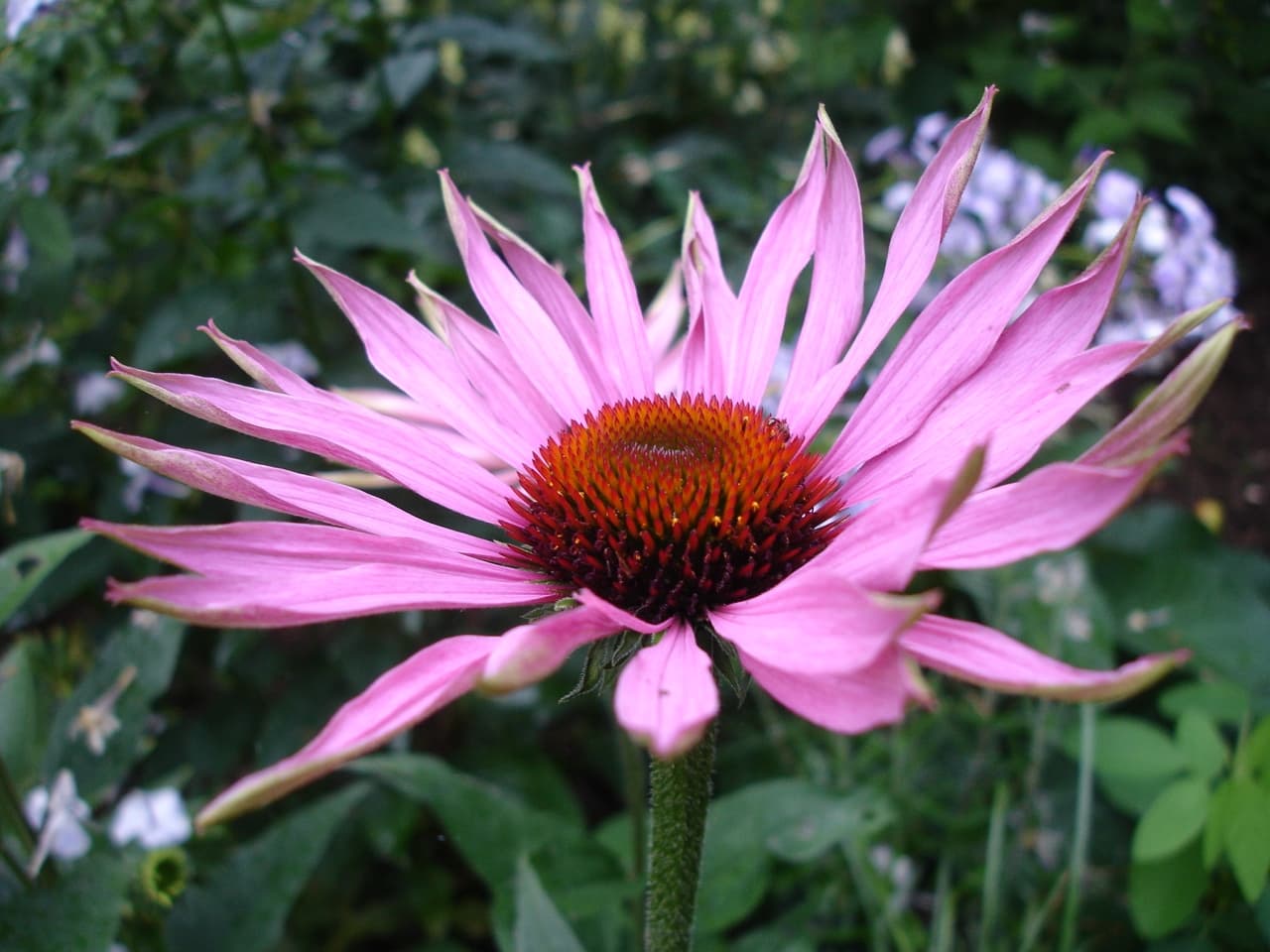
Coneflower 'Hot Papaya'
Echinacea 'Hot Papaya'
Dutch: Zonnehoed 'Hot Papaya'
Zonnehoed 'Hot Papaya' (Echinacea 'Hot Papaya') is a perennial from the Asteraceae family that grows up to 80cm tall. This plant thrives in full sun to partial shade and requires low maintenance. Blooms in summer and late summer and early_autumn with orange, red flowers and attracts bees and butterflies and birds.
60–80 cm
40–50 cm
full sun, partial shade
moderate
loam, sandy soil, clay soil
low maintenance
summer, late summer, early_autumn
orange, red
Ecologische waarde
Verzorgingskalender
| Taak | Jan | Feb | Mrt | Apr | Mei | Jun | Jul | Aug | Sep | Okt | Nov | Dec |
|---|---|---|---|---|---|---|---|---|---|---|---|---|
| 🌱Planten | ||||||||||||
| ✂️Snoeien | ||||||||||||
| 💧Bemesten |
Care tips
Planting
Echinacea 'Hot Papaya' thrives in full sun but tolerates partial shade, though flowering may be less prolific in shadier spots. It adapts to a wide range of soils—loam, sandy soil, and even clay—provided drainage is reasonable. Heavy clay benefits from the addition of grit or well-rotted compost dug in before planting to prevent waterlogging, which echinaceas dislike. Plant container-grown specimens in March, April, May, September, or October. Avoid planting during frosty spells or when the soil is waterlogged. Dig a hole roughly twice the width of the root ball and about the same depth. The crown of the plant (where the stems meet the roots) should sit level with the surrounding soil surface; planting too deep can encourage rot. Space plants 45 cm apart to allow for their mature spread of 40–50 cm and to ensure good air circulation, which helps reduce mildew problems. If you're planting several, arrange them in groups of three or five for the best visual impact in a border. After planting, firm the soil gently around the roots and water thoroughly to settle the plant in and eliminate air pockets. Apply a 5 cm layer of mulch—garden compost, well-rotted manure, or bark chips—around the base, keeping it clear of the crown itself. This conserves moisture and suppresses weeds while the plant establishes. Water regularly during the first growing season, especially in dry weather, until the root system is well developed. Spring plantings will flower the same summer; autumn plantings establish over winter and flower the following year. Echinacea 'Hot Papaya' is fully hardy to zone 4, so no winter protection is needed in temperate European gardens.
Pruning
Echinacea 'Hot Papaya' requires minimal pruning, but a little attention at the right times keeps plants tidy and vigorous. The main pruning window is March and November, though deadheading during the flowering season is beneficial. In November, after flowering has finished and the first frosts have blackened the foliage, you can cut back the spent stems to around 10 cm above ground level. However, many gardeners prefer to leave the seed heads standing over winter. The dried cones provide food for finches and other seed-eating birds, and the skeletal stems add structure and frost-dusted interest to the winter garden. If you choose to leave them, defer cutting back until March. In early March, before new growth emerges in earnest, cut all old stems down to the base using secateurs or hand shears. Remove any dead or damaged material and clear away debris from around the crown to reduce the risk of fungal diseases as the weather warms. During summer and into early autumn, deadhead spent flowers regularly by snipping off the faded blooms just above a set of healthy leaves or side buds. This encourages the plant to produce more flowers rather than putting energy into seed production, extending the display into September. That said, if you want to leave some seed heads for wildlife or to self-seed, stop deadheading in late August. Echinacea 'Hot Papaya' doesn't require shaping or thinning like a shrub. If clumps become congested after three or four years, lift and divide them in March or April rather than pruning, replanting vigorous outer sections and discarding the woody centre.
Maintenance
Once established, Echinacea 'Hot Papaya' has moderate water needs and tolerates short dry spells, but performs best with consistent moisture during the growing season. Water deeply during prolonged dry weather in spring and summer, aiming for the base of the plant rather than overhead to minimise powdery mildew risk. In autumn and winter, natural rainfall is usually sufficient. Feed in April and May to support strong growth and abundant flowering. Apply a general-purpose granular fertiliser such as blood, fish and bone or Growmore around the base of the plant, following packet rates (typically a small handful per plant). Alternatively, use a liquid tomato feed every fortnight from late May through July. Avoid high-nitrogen feeds, which promote leafy growth at the expense of flowers. Refresh the mulch layer each spring, adding a 3–5 cm top-up of garden compost or well-rotted manure around the plant, keeping it clear of the crown. This feeds the soil, conserves moisture, and suppresses weeds. Echinacea 'Hot Papaya' is fully hardy and needs no winter protection in zones 7–9. The main concern is winter wet rather than cold; ensure the crown doesn't sit in waterlogged soil, especially on heavy clay. Watch for powdery mildew, particularly in dry summers or crowded plantings. Improve air circulation and avoid overhead watering. Aphids occasionally cluster on young shoots in spring; squash by hand or tolerate them—ladybirds usually arrive soon after. Slugs may nibble emerging shoots in early spring; use your preferred control method if damage is severe. Otherwise, this cultivar is relatively trouble-free and requires little fuss once settled in.
More about this plant
Combines well with
Related guides
Coneflower 'Hot Papaya' in your garden design?
Make a free garden design with AI advice. Our AI knows Coneflower 'Hot Papaya' and 130+ other plants.
Start free design