Coneflower 'Hot Papaya' in July: monthly care
Month-by-month care — Echinacea 'Hot Papaya'
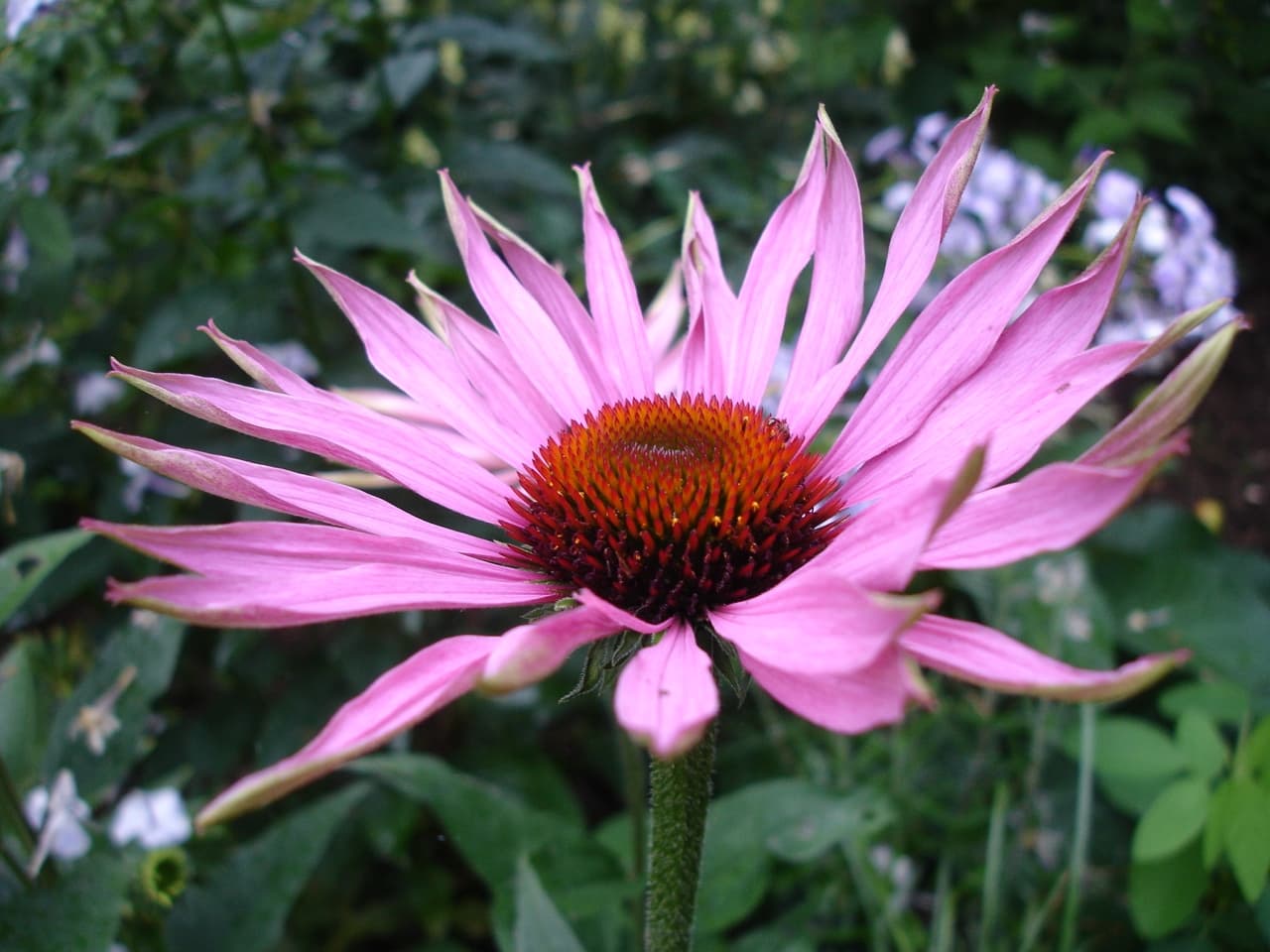
In July your coneflower 'Hot Papaya' needs attention: watch the bloom.
- Blooms
What to do this July
Once established, Echinacea 'Hot Papaya' has moderate water needs and tolerates short dry spells, but performs best with consistent moisture during the growing season. Water deeply during prolonged dry weather in spring and summer, aiming for the base of the plant rather than overhead to minimise powdery mildew risk. In autumn and winter, natural rainfall is usually sufficient. Feed in April and May to support strong growth and abundant flowering. Apply a general-purpose granular fertiliser such as blood, fish and bone or Growmore around the base of the plant, following packet rates (typically a small handful per plant). Alternatively, use a liquid tomato feed every fortnight from late May through July. Avoid high-nitrogen feeds, which promote leafy growth at the expense of flowers. Refresh the mulch layer each spring, adding a 3–5 cm top-up of garden compost or well-rotted manure around the plant, keeping it clear of the crown. This feeds the soil, conserves moisture, and suppresses weeds. Echinacea 'Hot Papaya' is fully hardy and needs no winter protection in zones 7–9. The main concern is winter wet rather than cold; ensure the crown doesn't sit in waterlogged soil, especially on heavy clay. Watch for powdery mildew, particularly in dry summers or crowded plantings. Improve air circulation and avoid overhead watering. Aphids occasionally cluster on young shoots in spring; squash by hand or tolerate them—ladybirds usually arrive soon after. Slugs may nibble emerging shoots in early spring; use your preferred control method if damage is severe. Otherwise, this cultivar is relatively trouble-free and requires little fuss once settled in.