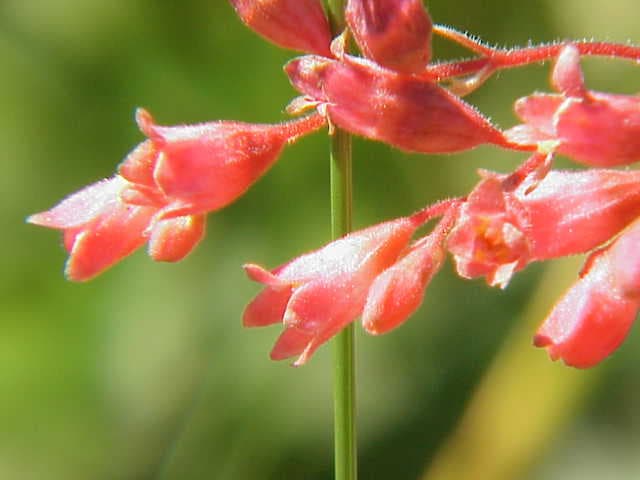
Coral bells 'Lime Marmalade'
Heuchera 'Lime Marmalade'
Dutch: Purperklokje 'Lime Marmalade'
Purperklokje 'Lime Marmalade' (Heuchera 'Lime Marmalade') is a evergreen perennial from the Saxifragaceae family that grows up to 40cm tall. This plant thrives in partial shade to full sun and requires low maintenance. Blooms in late spring and early summer and summer with white, pink flowers and attracts bees.
25–40 cm
30–45 cm
partial shade, full sun
moderate
loam, sandy soil
low maintenance
late spring, early summer, summer
white, pink
Ecologische waarde
Verzorgingskalender
| Taak | Jan | Feb | Mrt | Apr | Mei | Jun | Jul | Aug | Sep | Okt | Nov | Dec |
|---|---|---|---|---|---|---|---|---|---|---|---|---|
| 🌱Planten | ||||||||||||
| ✂️Snoeien | ||||||||||||
| 💧Bemesten |
Care tips
Planting
Heuchera 'Lime Marmalade' thrives in partial shade or full sun, though in hotter gardens a spot with afternoon shade will prevent the chartreuse foliage from scorching. Choose a position with good drainage; heucheras dislike sitting in waterlogged soil, especially over winter. The plant tolerates both loam and sandy soil, making it adaptable to most garden conditions, but avoid heavy clay unless you improve it first with grit and organic matter. Plant in March, April or May for spring establishment, or in September and October for autumn planting. Dig a hole slightly wider than the root ball and set the crown at soil level—planting too deep encourages rot. Space plants 35 cm apart to allow for their mature spread of 30–45 cm. If you're planting several for ground cover or edging, this spacing will give a full, woven effect within a season or two. Before planting, fork over the soil and work in a handful of well-rotted compost or leaf mould to improve structure and moisture retention. After planting, firm the soil gently around the roots and water thoroughly to settle them in. Apply a thin layer of mulch around the base—composted bark or leaf mould works well—but keep it clear of the crown itself to prevent rot. Water regularly for the first few weeks until the plant is established, especially if planting in spring or during dry spells. Autumn-planted heucheras need less attention but should still be kept lightly moist until the roots take hold.
Pruning
Heuchera 'Lime Marmalade' doesn't require traditional pruning, but it does benefit from a tidy-up in early spring to keep it looking fresh and vigorous. In March or April, before new growth begins in earnest, remove any tatty, winter-damaged or browned leaves by cutting them off at the base with secateurs or sharp scissors. This is also the time to clear away any dead foliage that has accumulated over winter. Because this cultivar is evergreen, you'll usually find a mix of tired older leaves and fresh new growth emerging from the crown. If the plant has become congested or the crown is starting to lift above the soil—common in heucheras after a few years—gently scrape away some of the old mulch and top-dress around the base with fresh compost or loam to re-cover any exposed roots. This isn't pruning as such, but it's an essential part of spring maintenance that keeps the plant healthy and prevents dieback. After flowering in late spring and summer, snip off the spent flower stems at the base. The small white or pink blooms are held on wiry stems well above the foliage, and removing them once they fade keeps the plant tidy and may encourage a few late flushes. You don't need to deadhead obsessively, but a quick pass with secateurs every few weeks during the flowering season will improve the overall appearance and direct energy back into the striking lime-yellow foliage that is the real star of this variety.
Maintenance
Heuchera 'Lime Marmalade' has moderate water needs. Water regularly during dry spells in spring and summer, especially in the first year, but avoid overwatering—heucheras prefer soil that is moist but never sodden. In autumn and winter, natural rainfall is usually sufficient; good drainage becomes even more important as wet, cold soil can cause crown rot. Feed in April and May with a balanced general-purpose fertiliser such as blood, fish and bone or a slow-release granular feed scattered around the base of the plant. Avoid high-nitrogen feeds, which promote soft, lush growth at the expense of the foliage colour and can make the plant more prone to slug damage. A light spring feed is all that's needed; heucheras are not heavy feeders. This cultivar is fully hardy in zones 4–9 and requires no special winter protection in temperate Europe. Its evergreen foliage provides year-round interest, though leaves may look tired by late winter. A mulch of leaf mould or compost applied in autumn helps insulate the roots and suppresses weeds, but keep it away from the crown. The main pest to watch for is vine weevil. Adult beetles notch the leaf edges, but it's the larvae that do real damage by eating the roots. If plants suddenly wilt or collapse, tip them out and check for fat, creamy-white grubs. Treat with a biological control (nematodes) in spring or autumn. Slugs and snails may also nibble young foliage in damp weather; use organic pellets or barriers if necessary. Powdery mildew can appear in dry summers on congested plants—thin out old leaves and improve air circulation.
More about this plant
Combines well with
Related guides
Coral bells 'Lime Marmalade' in your garden design?
Make a free garden design with AI advice. Our AI knows Coral bells 'Lime Marmalade' and 130+ other plants.
Start free design