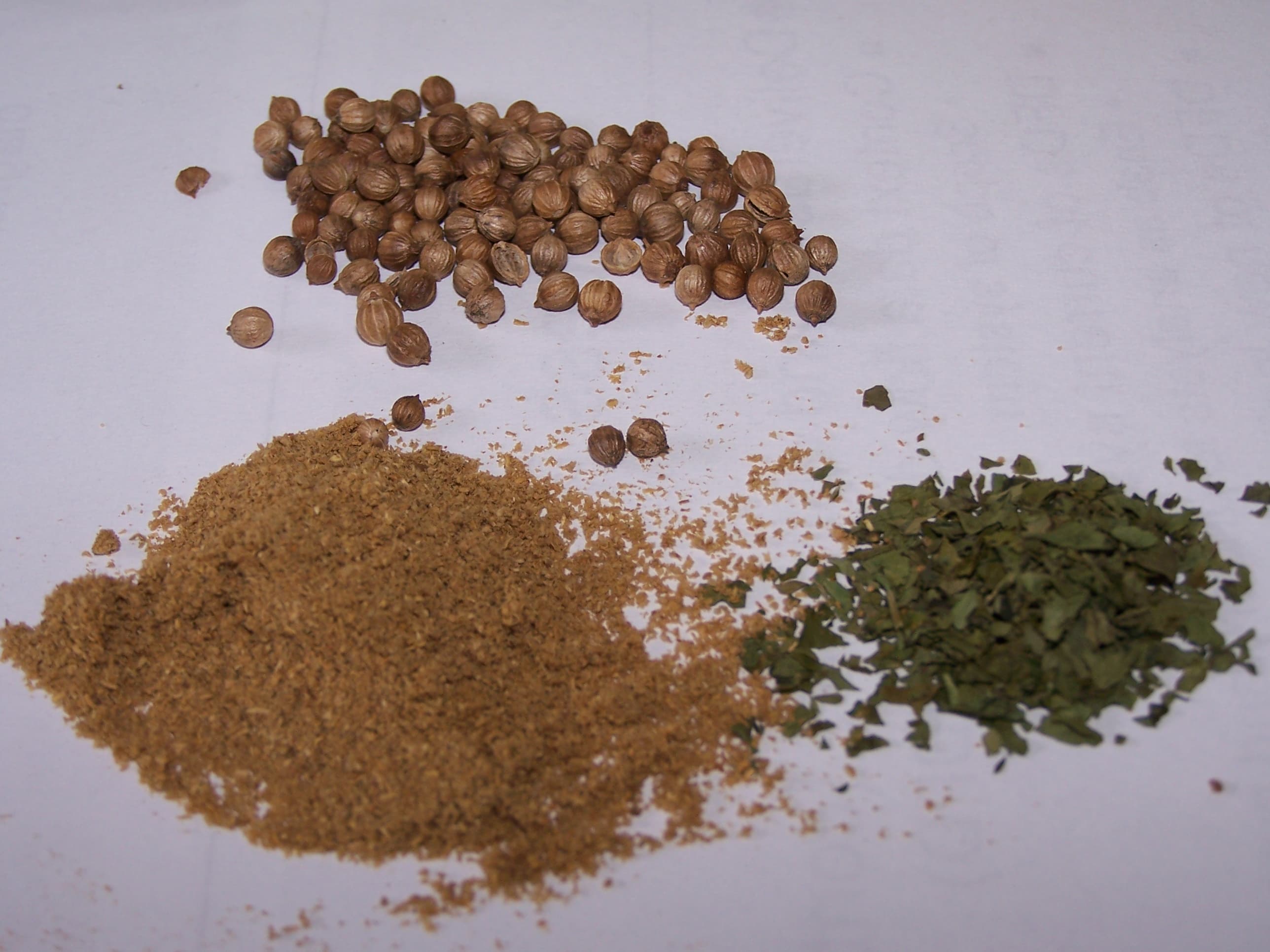
Coriander
Coriandrum sativum
Dutch: Koriander
Koriander (Coriandrum sativum) is a edible herb from the Apiaceae family that grows up to 60cm tall. This plant thrives in full sun to partial shade and requires low maintenance. Blooms in summer with white, pink flowers and attracts bees.
30–60 cm
15–25 cm
full sun, partial shade
moderate
loam, sandy soil
low maintenance
summer
white, pink
Ecologische waarde
Verzorgingskalender
| Taak | Jan | Feb | Mrt | Apr | Mei | Jun | Jul | Aug | Sep | Okt | Nov | Dec |
|---|---|---|---|---|---|---|---|---|---|---|---|---|
| 🌱Planten | ||||||||||||
| 🍎Oogsten |
Care tips
Planting
Coriander thrives in full sun or partial shade and prefers well-drained loam or sandy soil. It dislikes heavy, waterlogged ground, so if your soil is clay-based, work in plenty of grit or sharp sand before sowing. Choose a spot that gets morning sun but some afternoon shade in midsummer, as coriander bolts quickly in hot, dry conditions. Sow seed directly outdoors from April through to August for a continuous supply. Coriander develops a long taproot and resents transplanting, so avoid starting it in modules unless absolutely necessary. Prepare a fine, crumbly seedbed by raking the soil smooth and removing stones. Sow seeds thinly in shallow drills about 1 cm deep, spacing rows roughly 20 cm apart. Water the drill lightly before sowing if the soil is dry. Germination takes ten to fourteen days. Once seedlings have two true leaves, thin them to 20 cm apart; you can use the thinnings in salads. For leaf production, sow little and often—every three weeks—rather than one large batch, because plants run to seed quickly, especially in long, warm days. If you want coriander seed (the spice), sow in late spring and let plants flower and set seed in summer. Water gently after sowing to settle the soil, but avoid washing seeds away. Keep the seedbed moist until germination, then water moderately. Coriander doesn't need staking. A light mulch of compost around established plants helps retain moisture and keeps roots cool, which delays bolting. Avoid sowing in exposed, windy sites, as the delicate foliage can be damaged.
Pruning
Coriander doesn't require pruning in the traditional sense, but regular harvesting and removal of flower stems are essential to prolong the leaf-cropping season. The plant naturally wants to bolt—produce flowers and seed—especially once days lengthen and temperatures rise in late spring and summer. Once it flowers, leaf production stops and the foliage becomes sparse and bitter. To keep your coriander productive, pinch out the growing tips regularly once plants reach about 10–15 cm tall. This encourages bushier, leafier growth and delays flowering. Use your fingers or scissors to snip the top few centimetres of each stem just above a leaf node. Harvest leaves frequently, taking the outer stems first and leaving the central growing point intact. The more you pick, the longer the plant will continue producing foliage, though eventually all coriander will bolt. If you spot a central flower stalk beginning to form, remove it immediately at the base. This buys you a week or two of extra leaf production, but once the plant is determined to flower, it's best to let it go and sow a fresh batch. If you want coriander seed for cooking, allow a few plants to flower freely from June onwards. The small white or pink umbels appear in summer, followed by round green seeds that ripen to brown. Cut the whole seed head once seeds turn beige and hang it upside down in a paper bag to dry and catch the seeds. No special tools are needed—just your fingers or a pair of kitchen scissors. Avoid tearing stems, as ragged wounds can invite rot in damp weather.
Maintenance
Coriander has moderate water needs. Keep the soil consistently moist but not waterlogged, especially during germination and early growth. In dry spells from May to August, water two or three times a week; inconsistent watering or drought stress triggers premature bolting. In cooler, wetter months—April and September—natural rainfall is usually sufficient, though check seedlings regularly. Water at the base of plants in the morning to reduce the risk of fungal issues. Feeding is generally unnecessary. Coriander is a short-lived, fast-growing herb that does perfectly well in average garden soil without added fertiliser. Excessive nitrogen encourages soft, lush foliage that bolts even faster and has less flavour. If your soil is very poor or sandy, a light dressing of garden compost before sowing is enough. The database lists no specific feeding months, and none are needed. Coriander is fully hardy across temperate Europe (zone 2–11) and doesn't require winter protection. However, it's usually grown as a warm-season annual for leaves, sown afresh each year from April. Autumn-sown coriander can overwinter in mild areas and provide early spring leaves, but growth is slow in cold weather. Pests are few. Aphids occasionally cluster on young shoots; rinse them off with water or tolerate them, as coriander is fast-cropping. Slugs may nibble seedlings in damp conditions—use barriers or organic pellets if necessary. Coriander is relatively disease-free, though powdery mildew can appear on stressed plants in hot, dry summers. Good spacing, adequate watering, and air circulation help prevent this. Mulch lightly with compost to keep roots cool and moist.
More about this plant
Combines well with
Related guides
Coriander in your garden design?
Make a free garden design with AI advice. Our AI knows Coriander and 130+ other plants.
Start free design