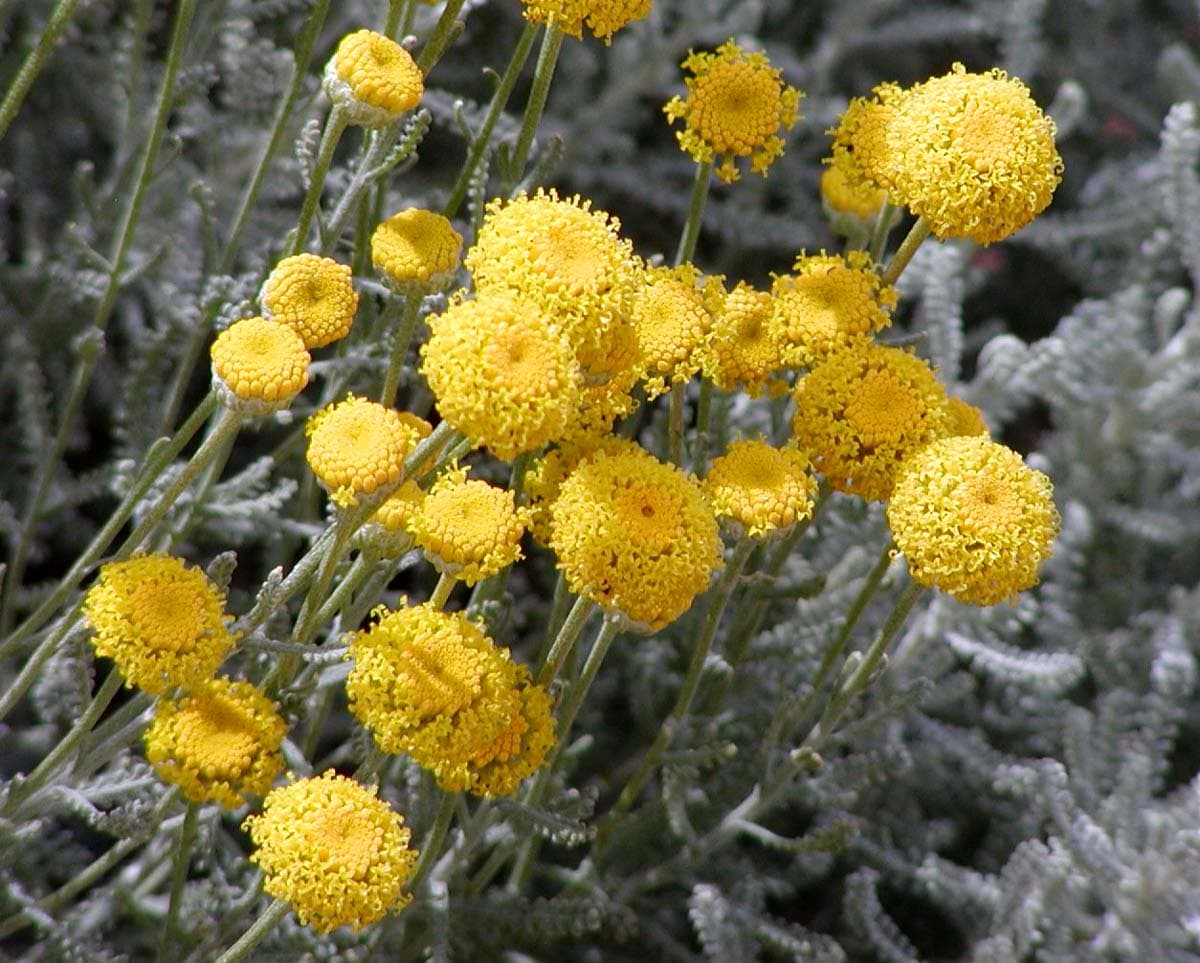
Cotton lavender
Santolina chamaecyparissus
Dutch: Heiligenkruid
Heiligenkruid (Santolina chamaecyparissus) is a evergreen shrub from the Asteraceae family that grows up to 60cm tall. This plant thrives in full sun and requires low maintenance. Blooms in summer with yellow flowers and attracts bees and butterflies.
30–60 cm
60–90 cm
full sun
low water needs
sandy soil, loam, chalky soil
low maintenance
summer
yellow
Ecologische waarde
Verzorgingskalender
| Taak | Jan | Feb | Mrt | Apr | Mei | Jun | Jul | Aug | Sep | Okt | Nov | Dec |
|---|---|---|---|---|---|---|---|---|---|---|---|---|
| 🌱Planten | ||||||||||||
| ✂️Snoeien | ||||||||||||
| 💧Bemesten |
Care tips
Planting
Cotton lavender thrives in full sun and free-draining soil, making it ideal for gravel gardens, Mediterranean-style borders, and sunny banks. It tolerates sandy, loamy, and chalky soils but abhors waterlogging, so avoid heavy clay unless you improve drainage significantly. Choose a spot that receives at least six hours of direct sunlight daily; shade leads to leggy growth and poor flowering. Plant container-grown specimens in April, May, September, or October. Spring planting gives roots time to establish before summer heat, while autumn planting works well if your soil drains freely and winters are not excessively wet. Dig a hole the same depth as the root ball and twice as wide. Break up compacted soil at the base and, if drainage is questionable, work in horticultural grit or sharp sand. Cotton lavender needs no added organic matter—overly rich soil encourages soft growth that is prone to winter damage. Set plants 60 cm apart to allow for their mature spread of 60–90 cm. Position the root ball level with the surrounding soil; planting too deep can cause stem rot. Backfill, firm gently with your heel, and water in thoroughly to settle roots. After planting, apply a 3–5 cm mulch of gravel or grit around the base, keeping it clear of the stems. This suppresses weeds, reflects light, and maintains the dry conditions cotton lavender prefers. Avoid organic mulches like bark or compost, which retain moisture. Water sparingly during the first few weeks if weather is dry, but once established, cotton lavender tolerates drought exceptionally well.
Pruning
Cotton lavender requires pruning twice a year to maintain its compact, silvery mound and prevent it becoming woody and bare at the base. The main prune takes place in April, just as new growth begins to emerge. Using clean, sharp secateurs or shears, cut back all the previous year's growth by about one-third to one-half, shaping the plant into a neat dome. Aim to cut into green, leafy growth rather than old brown wood, as santolina is reluctant to regenerate from bare stems. This spring prune encourages dense, bushy foliage and keeps the plant tidy. The second prune comes in August, immediately after the yellow button flowers fade. Shear off the spent flower heads and the top few centimetres of foliage. This light trim tidies the plant, prevents self-seeding, and promotes a fresh flush of silver-grey leaves that will carry the plant attractively through autumn and winter. If you prefer the architectural look of the dried seed heads, you can delay this August prune until early spring, though the plant may look slightly untidy over winter. Never cut hard back into completely bare, woody stems, as cotton lavender rarely resprouts from old wood. If your plant has become leggy or gappy despite regular pruning, it is usually better to replace it than attempt drastic renovation. Cotton lavender is relatively short-lived—typically five to eight years—and older specimens often lose vigour. Pruning keeps young plants dense and attractive, but cannot indefinitely rejuvenate neglected or aged shrubs.
Maintenance
Cotton lavender is a low-maintenance shrub once established, demanding little water or feeding. Water newly planted specimens during prolonged dry spells in their first summer, but thereafter irrigation is rarely necessary. Established plants tolerate drought remarkably well and actually perform better in dry conditions; overwatering or poorly drained soil leads to root rot and fungal problems. In typical British and Irish summers, rainfall is usually sufficient. If you do water during extreme drought, do so sparingly and avoid wetting the foliage. Feed lightly in April with a general-purpose granular fertiliser or a handful of blood, fish, and bone scattered around the base. Cotton lavender evolved on poor Mediterranean soils and does not need rich feeding—excessive nitrogen produces lush, floppy growth that is vulnerable to frost and disease. A single spring feed is ample; avoid feeding after midsummer, as soft late growth is prone to winter damage. Cotton lavender is evergreen and hardy in zones 6–9, but prolonged wet winters can cause problems, particularly on heavy soils. Good drainage is more critical to survival than cold tolerance. In exposed gardens or colder zones, a gravel mulch helps protect the base, and planting in a sheltered, south-facing spot improves winter resilience. Pests are rare, though aphids occasionally cluster on new shoots in spring; a strong jet of water usually dislodges them. The main disease risk is root or stem rot in waterlogged conditions. Ensure excellent drainage and avoid mulching with moisture-retentive materials. Remove any dead or diseased stems promptly. Cotton lavender's aromatic foliage deters most pests, making it a trouble-free choice for sunny, well-drained gardens.
More about this plant
Combines well with
Related guides
Cotton lavender in your garden design?
Make a free garden design with AI advice. Our AI knows Cotton lavender and 130+ other plants.
Start free design