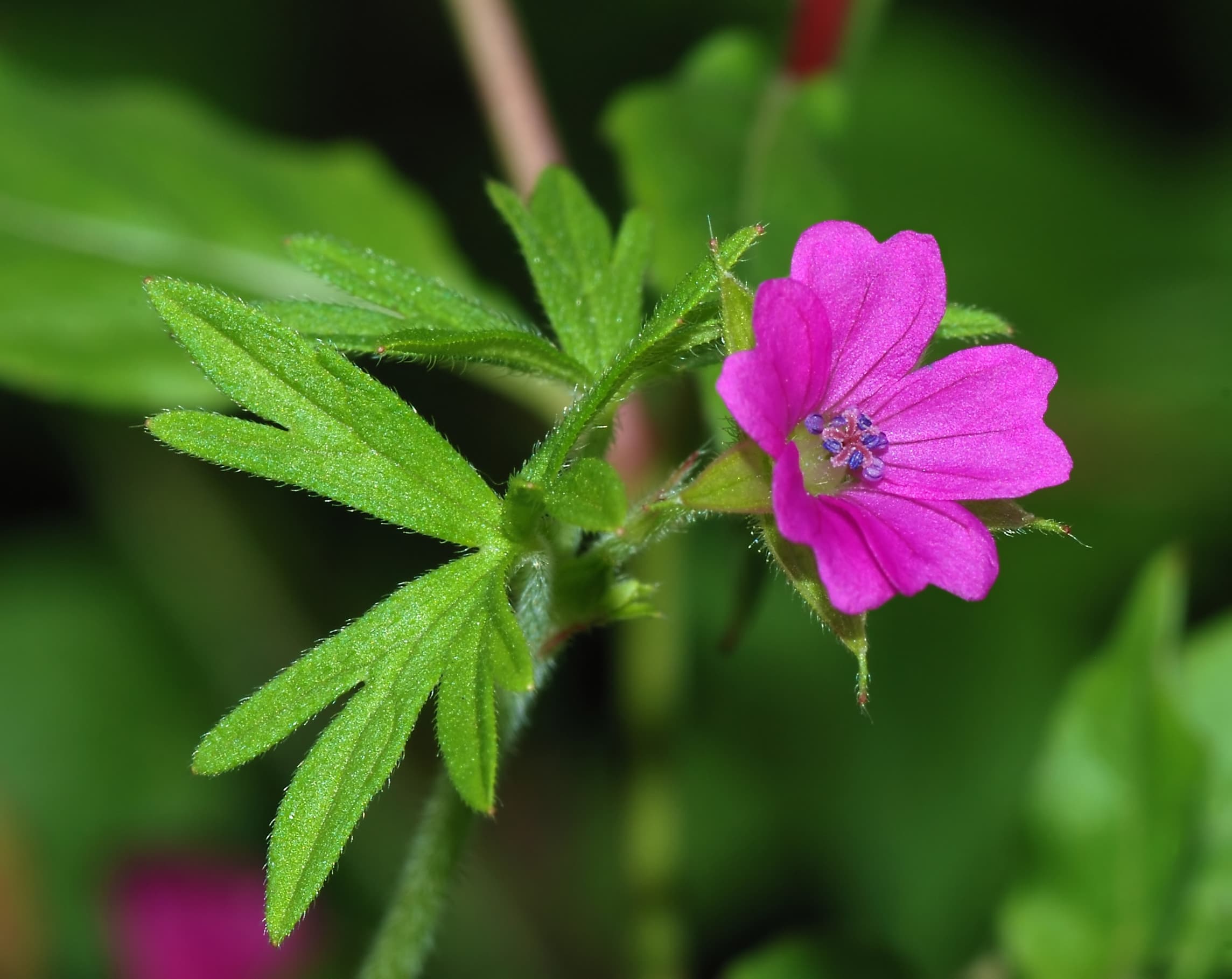
Cranesbill
Geranium 'Rozanne'
Dutch: Ooievaarsbek
Ooievaarsbek (Geranium 'Rozanne') is a native to the Netherlands perennial from the Geraniaceae family that grows up to 50cm tall. This plant thrives in full sun to partial shade and requires low maintenance. Blooms in early summer and summer and late summer and autumn with blue, purple flowers and attracts bees and butterflies.
30–50 cm
40–80 cm
full sun, partial shade
moderate
loam, sandy soil, chalky soil
low maintenance
early summer, summer, late summer, autumn
blue, purple
Ecologische waarde
Verzorgingskalender
| Taak | Jan | Feb | Mrt | Apr | Mei | Jun | Jul | Aug | Sep | Okt | Nov | Dec |
|---|---|---|---|---|---|---|---|---|---|---|---|---|
| 🌱Planten | ||||||||||||
| ✂️Snoeien | ||||||||||||
| 💧Bemesten |
Care tips
Planting
Geranium 'Rozanne' thrives in full sun or partial shade, making it adaptable to a range of garden positions. It performs best in well-drained soil, whether loam, sandy, or chalky, and tolerates most soil types as long as they don't become waterlogged. Before planting, dig over the area and incorporate some well-rotted compost or garden organic matter to improve soil structure and drainage, particularly in heavier soils. Plant 'Rozanne' in March, April, or May for spring planting, or in September and October for autumn planting. Both windows work well, though spring planting gives the roots a full growing season to establish before winter. Space plants 60 cm apart to allow for their eventual spread of 40–80 cm; they will knit together to form excellent ground cover without becoming invasive. Dig a planting hole slightly larger than the root ball and set the plant at the same depth it was growing in its pot—avoid planting too deeply. Firm the soil gently around the roots to eliminate air pockets, then water thoroughly to settle the plant in. Apply a 5 cm layer of mulch around the base, keeping it clear of the crown to prevent rot. This helps retain moisture and suppress weeds while the geranium establishes. Water regularly for the first few weeks, especially during dry spells, until you see strong new growth. Once established, 'Rozanne' is reasonably drought-tolerant but performs best with moderate moisture. No staking is required; the plant forms a low, sprawling mound that supports itself naturally.
Pruning
Geranium 'Rozanne' is exceptionally low-maintenance and doesn't require traditional pruning in the way shrubs do, but a couple of seasonal tidy-ups will keep it flowering prolifically and looking tidy. The main pruning window is in March or November, depending on your preference and local conditions. In November, once flowering has finished and the foliage begins to look tatty after the first frosts, you can cut the whole plant back to ground level using secateurs or garden shears. This autumn cut-back tidies the border for winter and removes old, frost-damaged leaves that can harbour slugs and diseases. Alternatively, if you prefer to leave some winter structure or live in a milder area, delay this job until early March. Cutting back in early spring, just as new growth begins to emerge at the base, works equally well and provides a bit of winter interest. Throughout the long flowering season—from early summer right through to autumn—deadheading is not strictly necessary. 'Rozanne' is sterile and sets no seed, so it continues producing flowers without the need to remove spent blooms. However, if the plant starts to look straggly or tired by midsummer, you can give it a light trim, cutting back flowered stems by about a third. This encourages a fresh flush of foliage and flowers. Use clean, sharp secateurs for any cutting to avoid damaging the crown. There's no complicated technique: simply shear the plant back evenly, and it will regrow vigorously from the base.
Maintenance
Geranium 'Rozanne' has a well-deserved reputation for being undemanding. Water regularly during the first growing season to help roots establish, then reduce frequency once the plant is settled. In summer, water during prolonged dry spells—once or twice a week is usually sufficient if rainfall is scarce. The plant tolerates moderate drought but flowers more freely with consistent moisture. In autumn and winter, natural rainfall is generally adequate, and overwatering should be avoided to prevent root rot. Feed in March or April as new growth begins. A single application of a balanced general-purpose fertiliser (such as blood, fish and bone or a slow-release granular feed) scattered around the base is enough for the season. Avoid high-nitrogen feeds, which promote leafy growth at the expense of flowers. A light top-up in early summer can extend the flowering period, but it's not essential. 'Rozanne' is fully hardy in zones 5a–8b and requires no special winter protection in temperate Europe. The top growth will die back after hard frosts, but the crown survives underground and regrows reliably each spring. A mulch of compost or leaf mould applied in late autumn helps insulate roots and improves soil structure. Pests and diseases are rare. Slugs and snails may nibble young shoots in spring, so check regularly and use your preferred control method. Vine weevil larvae occasionally attack the roots of container-grown plants; if growth suddenly wilts, inspect the root ball. Powdery mildew can appear in very dry conditions, but good spacing and adequate watering usually prevent it. Overall, 'Rozanne' is a robust, trouble-free perennial.
More about this plant
Combines well with
Related guides
Cranesbill in your garden design?
Make a free garden design with AI advice. Our AI knows Cranesbill and 130+ other plants.
Start free design