Caring for Creeping thyme
Complete guide — Thymus serpyllum
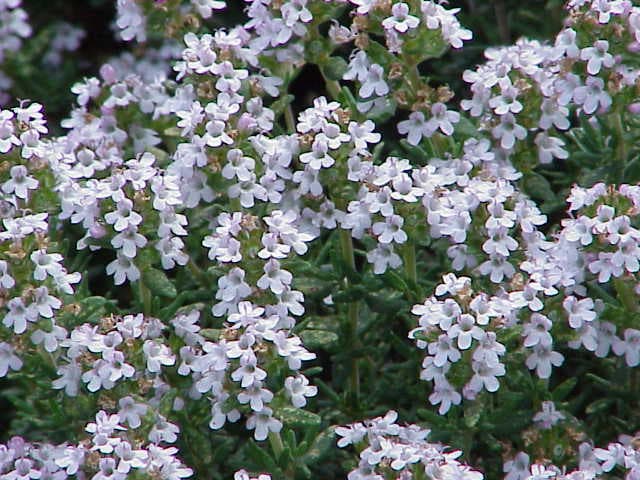
creeping thyme needs low maintenance, a position in full sun on sandy soil / loam / chalky soil and low water needs.
Position
full sun
sandy soil, loam, chalky soil
low water needs
Feeding
Feed in April.
Year-round care
Creeping thyme is one of the easiest perennials to maintain once established. It has low water needs and tolerates drought well, so in most years rainfall alone is sufficient. Water only during prolonged dry spells in summer, and even then sparingly—overwatering or poorly drained soil will cause root rot. The evergreen foliage remains attractive through winter and requires no special protection, as the plant is fully hardy to zone 4. Feed lightly in April with a general-purpose granular fertiliser or a sprinkle of blood, fish and bone. Creeping thyme naturally grows in poor, lean soils and too much fertility encourages soft, lush growth that is prone to disease and less aromatic. A single annual feed is plenty; avoid high-nitrogen fertilisers, which promote foliage at the expense of flowers and flavour. Mulch around plants with a 2–3 cm layer of horticultural grit or fine gravel rather than organic matter. This keeps the neck of the plant dry, improves drainage, suppresses weeds, and reflects light and heat, which thyme loves. Do not use bark or compost mulch, as these retain moisture and can lead to fungal problems. Creeping thyme is generally pest- and disease-free. Occasionally, aphids may cluster on new growth in spring; a strong jet of water or an insecticidal soap will deal with them. Root rot is the main risk, caused by poor drainage or overwatering, so always prioritise sharp drainage over moisture retention. Deadhead spent flowers in August as part of your pruning routine to keep plants tidy and prevent self-seeding, and divide congested clumps every three to four years in spring to maintain vigour.


