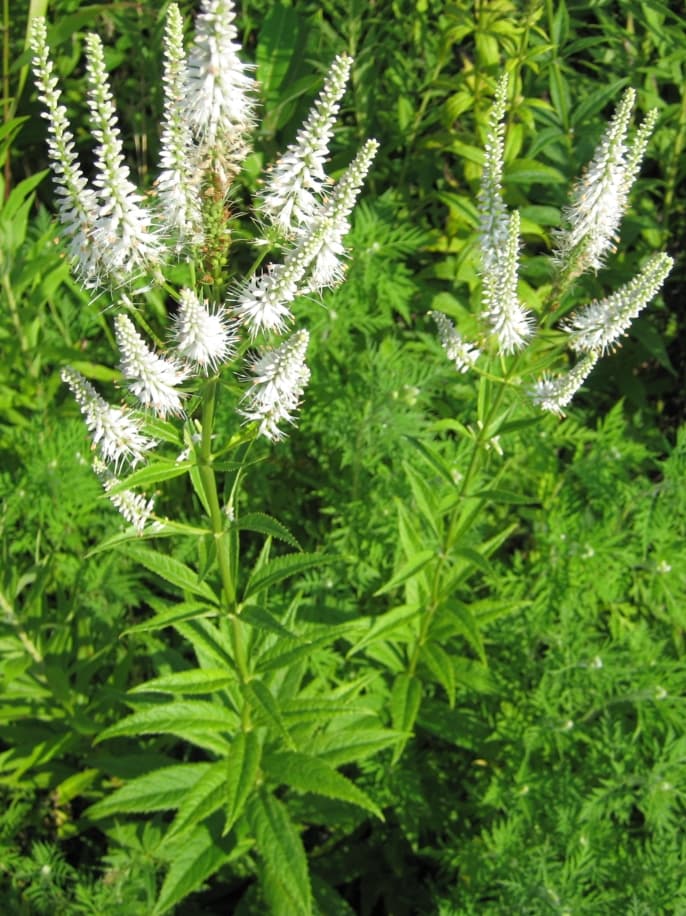
Culver's root
Veronicastrum virginicum
Dutch: Kattenstaart
Kattenstaart (Veronicastrum virginicum) is a perennial from the Plantaginaceae family that grows up to 180cm tall. This plant thrives in full sun to partial shade and requires low maintenance. Blooms in summer and late summer with white, pink flowers and attracts bees and butterflies.
120–180 cm
40–60 cm
full sun, partial shade
moderate
loam, clay soil
low maintenance
summer, late summer
white, pink
Ecologische waarde
Verzorgingskalender
| Taak | Jan | Feb | Mrt | Apr | Mei | Jun | Jul | Aug | Sep | Okt | Nov | Dec |
|---|---|---|---|---|---|---|---|---|---|---|---|---|
| 🌱Planten | ||||||||||||
| ✂️Snoeien | ||||||||||||
| 💧Bemesten |
Care tips
Planting
Veronicastrum virginicum thrives in full sun or partial shade, though flowering is strongest with at least six hours of direct sunlight daily. Choose a position in loam or clay soil that retains moisture without becoming waterlogged; this plant naturally occurs in damp meadows and tolerates heavy ground better than many perennials. Avoid light, sandy soils unless you can commit to regular watering. Prepare the planting area by digging in well-rotted compost or manure to improve soil structure and moisture retention, especially if your soil is on the lighter side. Plant in March, April or May for establishment before summer, or in September and October to take advantage of autumn rains and allow roots to settle before winter. Space plants 50 cm apart to allow for their upright, clump-forming habit and eventual spread of 40–60 cm. Dig a hole slightly larger than the root ball, position the crown at soil level—not buried—and backfill with the excavated soil mixed with compost. Firm gently to eliminate air pockets. Water thoroughly immediately after planting to settle the roots, then keep the soil consistently moist for the first growing season while the plant establishes. Apply a 5 cm layer of organic mulch such as garden compost or bark chips around the base, keeping it clear of the crown itself to prevent rot. Staking is usually unnecessary despite the height; the sturdy stems are self-supporting in all but the most exposed sites, though you may need to provide temporary support in very windy gardens until the root system anchors properly.
Pruning
Veronicastrum virginicum requires minimal pruning, but a tidy-up at the right time keeps plants healthy and looking their best. The main pruning window is November, February or March. Many gardeners prefer to leave the spent flower spikes standing through winter—the architectural seedheads look attractive with frost and provide food and shelter for birds and beneficial insects—then cut back in late February or early March before new growth emerges. If you find the winter structure untidy or live in a very wet climate where dead stems encourage fungal problems, cut back in November after the first hard frosts have blackened the foliage. Use clean, sharp secateurs or hedging shears and cut all stems down to around 5–10 cm above ground level. The plant will reshoot vigorously from the crown in spring. During the growing season, deadheading is optional. Removing faded flower spikes in late summer may encourage a modest second flush of smaller blooms, but many gardeners leave them to develop seedheads. If your veronicastrum becomes floppy or too tall, you can try the "Chelsea chop": in late May, cut back half the stems by one-third to delay flowering on those shoots and create a staggered, more compact display. This technique works well if your plant is in partial shade and stretching for light. Avoid autumn pruning if your soil is heavy and wet; leaving stems intact helps protect the crown from excessive winter moisture. Always clear away and compost or bin the cut material to reduce overwintering pests.
Maintenance
Veronicastrum virginicum is low-maintenance once established, but consistent moisture is key to success. Water regularly during dry spells in spring and summer, especially in the first year. The moderate water need means the soil should stay evenly moist but not saturated; plants in clay soil usually cope well, but those in loam may need weekly watering during prolonged dry periods. Reduce watering in autumn as growth slows. Mulching with compost or bark in spring helps retain moisture and suppresses weeds around the shallow roots. Feed in March or April as new shoots emerge. A single application of general-purpose granular fertiliser such as blood, fish and bone or Growmore, scattered around the base at the rate recommended on the packet, is sufficient. Alternatively, apply a 3–5 cm layer of well-rotted manure or garden compost as a mulch; this feeds and mulches in one go. Avoid high-nitrogen feeds later in the season, which promote soft growth prone to flopping. Veronicastrum is fully hardy to zone 3, so overwintering in temperate Europe is straightforward. No protection is needed; simply leave the crown undisturbed and ensure the soil doesn't become waterlogged in winter, which can cause rot in heavy clay. Pests are rare. Slugs and snails occasionally nibble young spring shoots; use organic pellets, barriers or evening patrols if damage is severe. Powdery mildew can appear on foliage in late summer, especially in dry conditions or crowded plantings—ensure good air circulation and water at the base rather than overhead. The plant is otherwise disease-resistant and rarely troubled, making it an excellent choice for naturalistic or low-input borders.
More about this plant
Combines well with
Related guides
Culver's root in your garden design?
Make a free garden design with AI advice. Our AI knows Culver's root and 130+ other plants.
Start free design