Culver's root in February: monthly care
Month-by-month care — Veronicastrum virginicum
In February your culver's root needs attention: prune.
- Prune
What to do this February
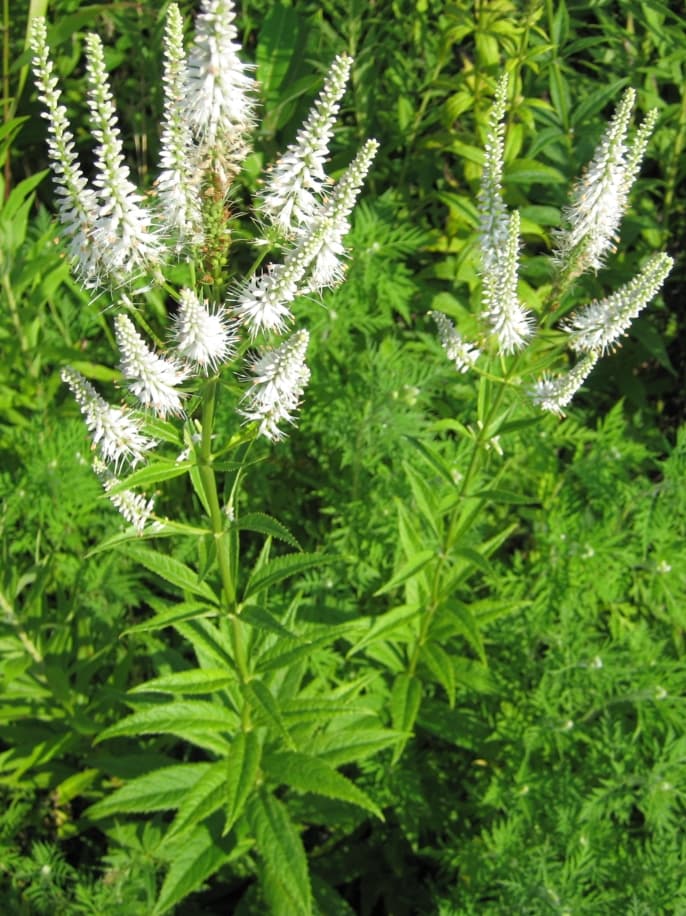
Veronicastrum virginicum requires minimal pruning, but a tidy-up at the right time keeps plants healthy and looking their best. The main pruning window is November, February or March. Many gardeners prefer to leave the spent flower spikes standing through winter—the architectural seedheads look attractive with frost and provide food and shelter for birds and beneficial insects—then cut back in late February or early March before new growth emerges. If you find the winter structure untidy or live in a very wet climate where dead stems encourage fungal problems, cut back in November after the first hard frosts have blackened the foliage. Use clean, sharp secateurs or hedging shears and cut all stems down to around 5–10 cm above ground level. The plant will reshoot vigorously from the crown in spring. During the growing season, deadheading is optional. Removing faded flower spikes in late summer may encourage a modest second flush of smaller blooms, but many gardeners leave them to develop seedheads. If your veronicastrum becomes floppy or too tall, you can try the "Chelsea chop": in late May, cut back half the stems by one-third to delay flowering on those shoots and create a staggered, more compact display. This technique works well if your plant is in partial shade and stretching for light. Avoid autumn pruning if your soil is heavy and wet; leaving stems intact helps protect the crown from excessive winter moisture. Always clear away and compost or bin the cut material to reduce overwintering pests.