Caring for Culver's root
Complete guide — Veronicastrum virginicum
culver's root needs low maintenance, a position in full sun or partial shade on loam / clay soil and moderate.
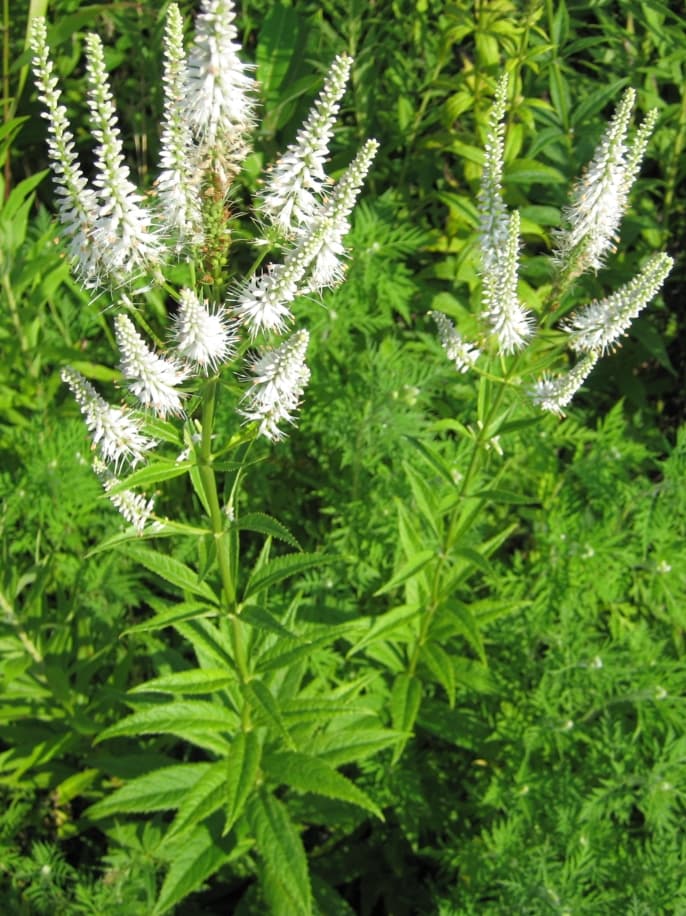
Position
full sun, partial shade
loam, clay soil
moderate
Feeding
Feed in March and April.
Year-round care
Veronicastrum virginicum is low-maintenance once established, but consistent moisture is key to success. Water regularly during dry spells in spring and summer, especially in the first year. The moderate water need means the soil should stay evenly moist but not saturated; plants in clay soil usually cope well, but those in loam may need weekly watering during prolonged dry periods. Reduce watering in autumn as growth slows. Mulching with compost or bark in spring helps retain moisture and suppresses weeds around the shallow roots. Feed in March or April as new shoots emerge. A single application of general-purpose granular fertiliser such as blood, fish and bone or Growmore, scattered around the base at the rate recommended on the packet, is sufficient. Alternatively, apply a 3–5 cm layer of well-rotted manure or garden compost as a mulch; this feeds and mulches in one go. Avoid high-nitrogen feeds later in the season, which promote soft growth prone to flopping. Veronicastrum is fully hardy to zone 3, so overwintering in temperate Europe is straightforward. No protection is needed; simply leave the crown undisturbed and ensure the soil doesn't become waterlogged in winter, which can cause rot in heavy clay. Pests are rare. Slugs and snails occasionally nibble young spring shoots; use organic pellets, barriers or evening patrols if damage is severe. Powdery mildew can appear on foliage in late summer, especially in dry conditions or crowded plantings—ensure good air circulation and water at the base rather than overhead. The plant is otherwise disease-resistant and rarely troubled, making it an excellent choice for naturalistic or low-input borders.


