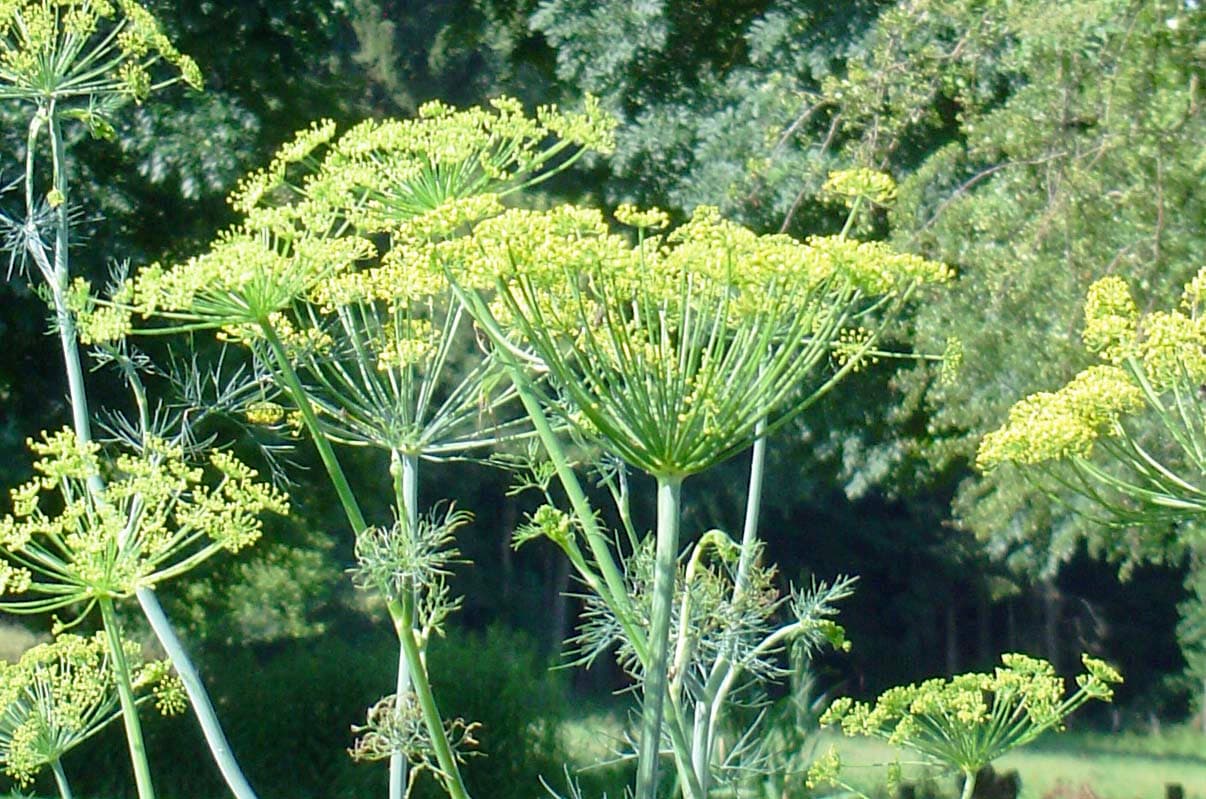
Dill
Anethum graveolens
Dutch: Dille
Dille (Anethum graveolens) is a edible herb from the Apiaceae family that grows up to 120cm tall. This plant thrives in full sun and requires low maintenance. Blooms in summer with yellow flowers and attracts bees and butterflies.
60–120 cm
20–30 cm
full sun
moderate
loam, sandy soil
low maintenance
summer
yellow
Ecologische waarde
Verzorgingskalender
| Taak | Jan | Feb | Mrt | Apr | Mei | Jun | Jul | Aug | Sep | Okt | Nov | Dec |
|---|---|---|---|---|---|---|---|---|---|---|---|---|
| 🌱Planten | ||||||||||||
| 🍎Oogsten |
Care tips
Planting
Dill thrives in full sun and well-drained soil, making it ideal for open beds, vegetable patches, or large containers. Choose a sheltered spot if possible, as dill's tall, hollow stems can be vulnerable to wind damage. Loam or sandy soil is perfect; heavy clay should be improved with grit or compost to ensure good drainage. Dill dislikes root disturbance, so sow seed directly where you want it to grow rather than transplanting. Sow from April through to July for a succession of fresh leaves and seeds. Prepare the soil by raking it to a fine tilth and removing weeds. Sow seeds thinly in shallow drills about 1 cm deep, or scatter them lightly over the surface and rake in gently. Space rows roughly 25 cm apart. Germination usually takes ten to fourteen days. Once seedlings are large enough to handle, thin them to 25 cm apart; crowded plants will compete for light and nutrients, resulting in weaker growth. Water the seedbed gently after sowing to settle the soil, taking care not to wash seeds away. Keep the soil lightly moist until seedlings are established. Dill has a long taproot and doesn't transplant well, so avoid disturbing the roots once plants are growing. If you want a continuous harvest, sow a fresh batch every three to four weeks from April to July. Dill will bolt quickly in hot, dry conditions, so early and late sowings often perform better than midsummer ones. No staking is usually needed unless your site is very exposed.
Pruning
Dill does not require pruning in the traditional sense. There are no pruning months listed for this herb because it is grown as an annual and managed through harvesting rather than cutting back. However, how and when you harvest will directly affect the plant's productivity and longevity, so it's worth understanding the process. Begin harvesting leaves once plants are around 20 cm tall, typically from June onwards. Pinch or snip individual fronds from the outside of the plant, leaving the central growing tip intact to encourage bushier growth and延长 the harvest period. Use sharp scissors or secateurs to avoid bruising the delicate stems. Regular, light harvesting encourages the plant to produce more foliage and delays flowering. If you want to harvest dill seed, allow some plants to flower and set seed from late summer into early autumn. The flat, yellow umbels appear in summer and are followed by aromatic seeds. Once the seed heads turn brown, cut the stems and hang them upside down in a paper bag in a dry, airy place to catch the seeds as they drop. Removing flower heads as soon as they appear will prolong leaf production, but bear in mind that dill naturally wants to flower and set seed, especially in warm weather. If you prioritise fresh leaves, sow successionally and remove any bolting plants to make space for younger, leafier ones. Deadheading spent flowers is only worthwhile if you want to extend the leafy phase slightly; otherwise, let the plant complete its cycle or pull it up and sow again.
Maintenance
Dill has moderate water needs. Water regularly during dry spells, especially while plants are young and establishing their taproots. Once mature, dill is reasonably drought-tolerant, but prolonged dryness will cause it to bolt prematurely and reduce leaf quality. Aim to keep the soil evenly moist rather than saturated; overwatering or waterlogged conditions can lead to root rot and fungal issues. In high summer, water in the early morning or evening to reduce evaporation. Feeding is not necessary for dill. This herb grows well in average soil and excessive nitrogen will promote lush, soft growth that is more prone to pest damage and has less flavour. If your soil is very poor, a light application of general-purpose organic fertiliser or well-rotted compost at planting time is sufficient. Avoid feeding once plants are growing. Dill is an annual and will not survive winter, so there is no need for overwintering protection. Allow a few plants to self-seed if you want volunteers next spring, though these may appear later than deliberately sown crops. Clear spent plants in autumn to prevent debris harbouring pests or disease. Aphids are the most common pest, clustering on young shoots and flower stems. Spray them off with water or encourage natural predators like ladybirds and hoverflies. Carrot root fly can occasionally affect dill, as both belong to the Apiaceae family; growing dill away from carrots reduces risk. Powdery mildew may appear in dry conditions or on overcrowded plants; thin seedlings properly and water at the base to keep foliage dry. Mulching is generally unnecessary, but a light layer of compost in spring helps retain moisture and suppress weeds without smothering shallow roots.
More about this plant
Combines well with
Related guides
Dill in your garden design?
Make a free garden design with AI advice. Our AI knows Dill and 130+ other plants.
Start free design