Pruning Feather Reed Grass
When and how — Calamagrostis × acutiflora 'Karl Foerster'
Prune your feather Reed Grass in March — the optimal month is usually March.
The next pruning window is March next year.
When to prune?
The ornamental grass feather Reed Grass is pruned in March.
Cut ornamental grasses once a year, at exactly the right moment.
Ornamental grasses split into two groups with very different needs. Warm-season grasses (Miscanthus, Panicum, Pennisetum) die back above ground over winter and are cut down to about a fist's height in February or March. Those dry stems provide winter interest and protect the crown from frost and rain. Cool-season grasses (Stipa, Carex, Festuca, Deschampsia) stay green or semi-evergreen and must NOT be cut back hard — a spring tidy where you comb out the old dead blades with gloved hands is enough. Hard-prune a Stipa and whole tufts can rot out and die.
How to prune feather Reed Grass
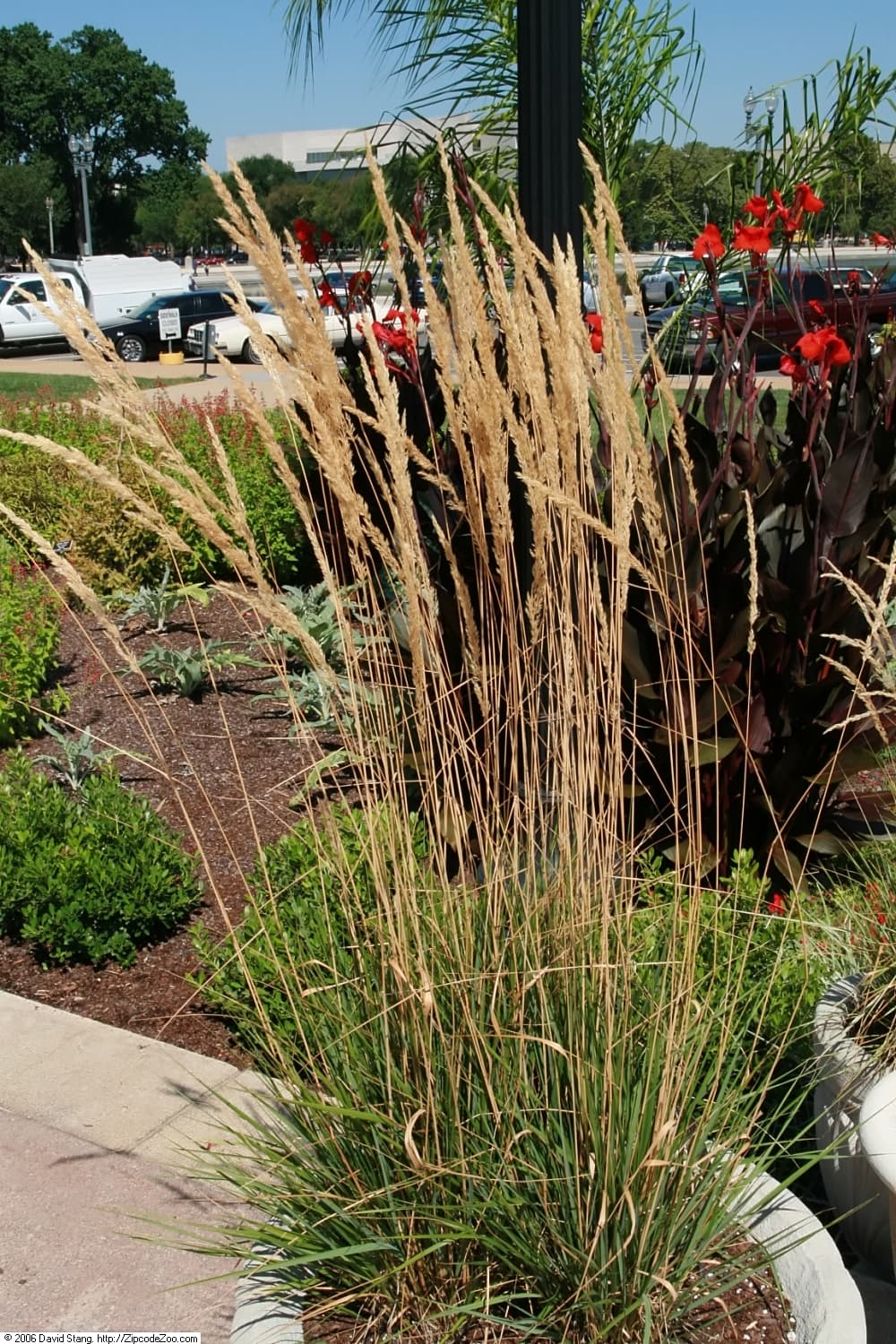
Feather reed grass requires very little pruning, but an annual cut-back is essential to keep it looking tidy and to make way for fresh growth. The best time to prune is March, just before new shoots emerge in spring. Many gardeners leave the dried foliage and seed heads standing over winter—they provide structure, movement, and interest in the dormant garden, and the bleached stems look striking after frost or snow. In early to mid-March, cut the entire clump down to about 10–15 cm above ground level. Use sharp bypass secateurs for smaller clumps or a pair of hedging shears for larger, established plants. Some gardeners find it easier to gather the stems together with string or a bungee cord before cutting, which makes clearing up simpler. The old foliage can be composted if it's disease-free, or left as mulch around other plants. Avoid cutting back in autumn. The dead foliage protects the crown from winter wet and cold, and many beneficial insects overwinter in the hollow stems. If you find the dried grass unsightly or it has collapsed in wet weather, you can tidy it lightly, but a full cut-back should wait until spring. 'Karl Foerster' is a sterile cultivar, so it won't self-seed, and there's no need to deadhead for tidiness or to prevent spread. Simply enjoy the feathery beige plumes through summer and autumn, then cut everything back once in March.
Common mistakes
✗ Cutting warm-season grasses down in October
You lose the winter silhouette AND the crown drowns without the protective dry stems. Wait until late February or early March, just before new growth starts.
✗ Hard-cutting cool-season grasses
Species like Stipa tenuissima and Festuca tolerate it poorly and may rot out. Combing with gloves is the right approach.
Too late this year? Here's what to do
Better to wait than prune at the wrong moment. The next optimal window is March next year. Until then: leave the plant alone — only remove dead or diseased wood (which you can do year-round).


