Garden phlox 'Bright Eyes' in November: monthly care
Month-by-month care — Phlox paniculata 'Bright Eyes'
In November your garden phlox 'Bright Eyes' needs attention: prune.
- Prune
What to do this November
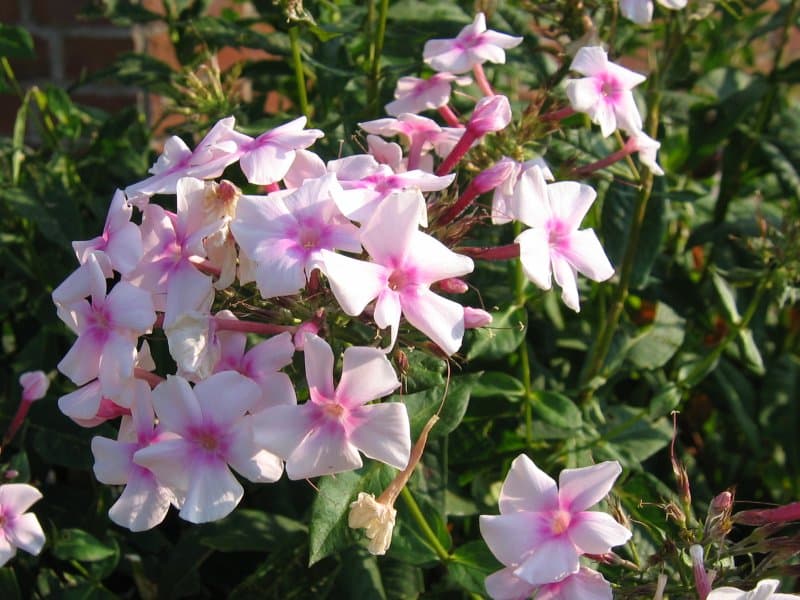
Phlox paniculata 'Bright Eyes' benefits from two distinct pruning sessions. The main cut-back happens in November after flowering has finished and foliage begins to die back. Use clean secateurs or garden shears to cut all stems down to ground level, removing the entire top growth. This autumn tidy-up eliminates overwintering sites for pests and diseases, particularly powdery mildew spores, and keeps the border neat through winter. Bag up and bin (do not compost) any mildewed material. In March, as new shoots emerge, carry out a second, lighter intervention. Thin out the weakest shoots when they reach about 10–15 cm tall, leaving four to six of the strongest stems per clump. This improves air circulation through the plant and channels energy into fewer, sturdier flowering stems with larger flower heads. Some gardeners also pinch out the growing tips of half the remaining stems in late May to delay flowering on those shoots by two to three weeks, extending the overall display, though this reduces individual flower size slightly. Deadheading is not strictly pruning but makes a real difference. Remove spent flower heads throughout summer and into early autumn by cutting back to the nearest side shoot or leaf joint. This encourages a second, smaller flush of blooms and prevents self-seeding, which produces inferior seedlings that can crowd out the named variety. If you want to reduce height or prevent flopping, you can cut back all stems by one-third in late May, though this delays flowering by a week or two.