Caring for Garden phlox 'David'
Complete guide — Phlox paniculata 'David'
garden phlox 'David' needs moderate maintenance, a position in full sun or partial shade on loam / clay soil and moderate.
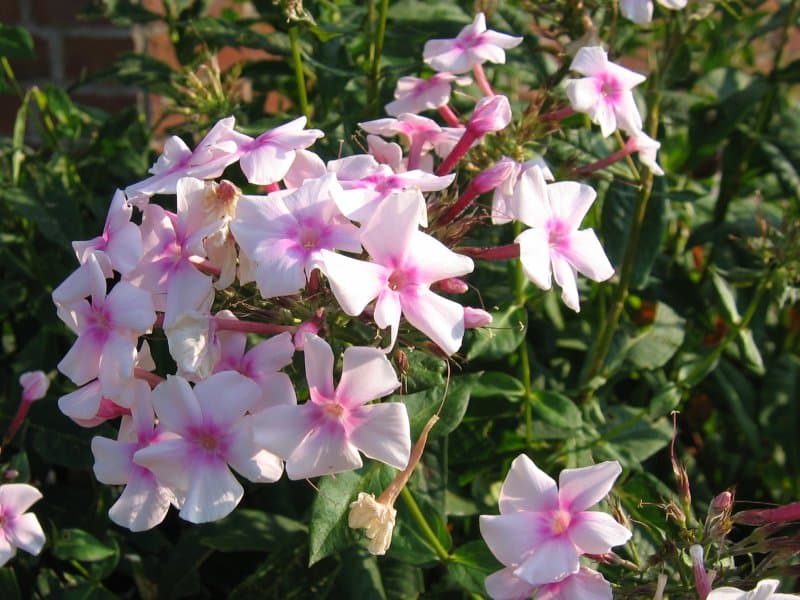
Position
full sun, partial shade
loam, clay soil
moderate
Feeding
Feed in April, May and June.
Year-round care
Water phlox paniculata 'David' regularly during dry spells, especially from late spring through summer when it's in active growth and flower. The moderate water requirement means the soil should stay consistently moist but never sodden; aim for a deep soak once or twice a week rather than frequent shallow watering. Mulching helps retain moisture and keeps roots cool. Reduce watering in autumn as growth slows, and avoid overhead watering if possible—wet foliage encourages powdery mildew, the most common problem with border phlox. Feed in April with a general-purpose granular fertiliser such as blood, fish and bone, scattering a handful around the base of each clump and lightly forking it in. Apply a second feed in May as flower buds form, and a final application in June to sustain the long flowering period through summer and late summer. Avoid high-nitrogen feeds after June, as soft late growth is more vulnerable to winter damage. Powdery mildew often appears as a white coating on leaves in late summer, particularly in dry conditions or where air circulation is poor. 'David' is notably more resistant than many phlox cultivars, but if mildew does develop, remove affected leaves and ensure plants aren't overcrowded. Phlox eelworm can cause distorted leaves and stunted growth; if you spot symptoms, lift and destroy affected plants—do not compost them—and avoid replanting phlox in that spot for several years. This perennial is fully hardy in zones 4–8 and requires no winter protection in temperate Europe. Refresh the mulch layer each spring after cutting back, and divide congested clumps every three to four years to maintain vigour and flowering performance.


