Caring for Bigleaf ligularia
Complete guide — Ligularia dentata
bigleaf ligularia needs moderate maintenance, a position in partial shade or full shade on loam / clay soil and high water needs.
Position
partial shade, full shade
loam, clay soil
high water needs
Feeding
Feed in April, May and June.
Year-round care
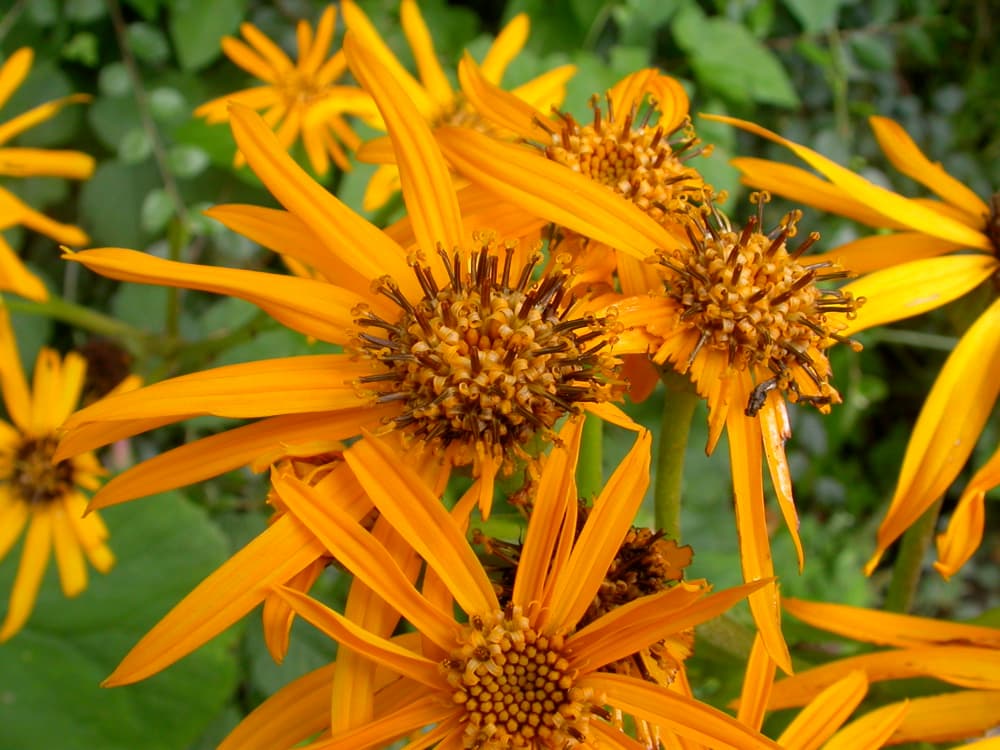
Ligularia dentata has high water needs and will not tolerate drought. Water regularly throughout the growing season, particularly during dry spells in late spring and summer. The large, kidney-shaped leaves wilt visibly when the plant is thirsty—a useful indicator, though it's better to water before this happens. In hot weather, even well-watered plants may wilt temporarily in midday sun, but they usually recover by evening. Mulching helps retain soil moisture, so top up the mulch layer each spring. Feed in April, May and June to support the lush foliage and summer flowering. Apply a balanced general-purpose fertiliser (such as blood, fish and bone) or a slow-release granular feed in early spring, and consider a liquid feed once or twice during the growing season if growth seems sluggish. Avoid high-nitrogen feeds late in the season, as this encourages soft growth vulnerable to frost. Ligularia is fully hardy in zones 4–8 and needs no special winter protection in temperate Europe. The crown will die back completely, re-emerging in spring. Mulch helps insulate roots during cold snaps, but this is more about moisture retention than frost protection. Slugs and snails are the main pests, particularly in spring when tender new shoots emerge. Use organic pellets, barriers or hand-picking to protect young growth. Powdery mildew can occur in dry conditions, though this is less common if the soil stays moist. Remove affected leaves promptly. Otherwise, ligularia is relatively trouble-free, rewarding consistent moisture and shade with bold foliage and striking orange or yellow daisy flowers in summer and late summer.


