Caring for Toad lily
Complete guide — Tricyrtis hirta
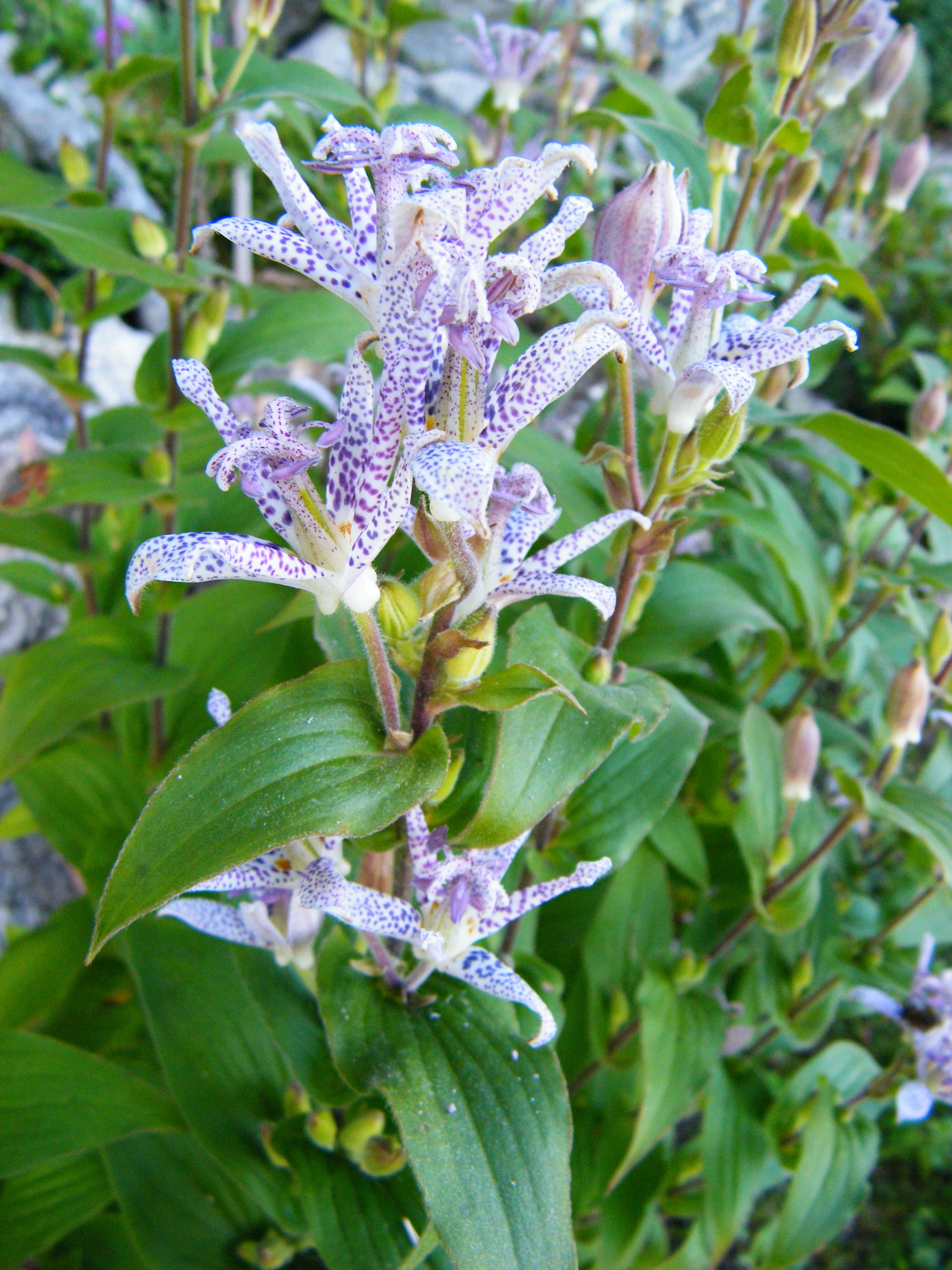
toad lily needs moderate maintenance, a position in partial shade or full shade on loam / clay soil and moderate.
Position
partial shade, full shade
loam, clay soil
moderate
Feeding
Feed in April, May and June.
Year-round care
Toad lilies need consistent moisture throughout the growing season, particularly from spring through to autumn when they're in active growth and flower. Water regularly during dry spells, aiming to keep the soil evenly moist but not waterlogged. Clay and loam soils help retain moisture, but in prolonged dry periods you may need to water twice weekly. Reduce watering after flowering finishes in late autumn, as the plant enters dormancy. Feed in April, May, and June to support the long growing season and late flowering. Apply a balanced slow-release fertiliser such as blood, fish and bone in early spring, or use a general-purpose granular feed. A second application in late May or early June encourages strong stem growth and abundant flowers. Avoid high-nitrogen feeds, which promote leafy growth at the expense of blooms. A spring top-up of well-rotted compost or leaf mould also provides gentle, sustained nutrition. Refresh the mulch layer each spring to conserve moisture and suppress weeds. Toad lilies are hardy to zone 5, so they tolerate winter cold in temperate Europe without protection. However, a mulch layer over the crown in exposed gardens offers extra insurance against hard frosts. Slugs and snails are the main pests, particularly in spring when new shoots emerge. Check regularly and use organic pellets, beer traps, or hand-picking. The plants are generally disease-free, though prolonged wet conditions can occasionally cause leaf spot or crown rot—good drainage and air circulation help prevent this. Toad lilies are slow-growing and dislike root disturbance, so avoid unnecessary transplanting. Clumps can remain undisturbed for many years, gradually increasing in size and flowering performance.


