When to plant Garden phlox 'David'?
Best month and method — Phlox paniculata 'David'
Plant your garden phlox 'David' in March, April, May, September and October — the optimal month is usually May.
You're in the planting season right now — a good moment to start.
Spacing
50 cm
≈ 4 plants
For an X m² border, calculate: X × 4 plants.
Step by step: plant garden phlox 'David'
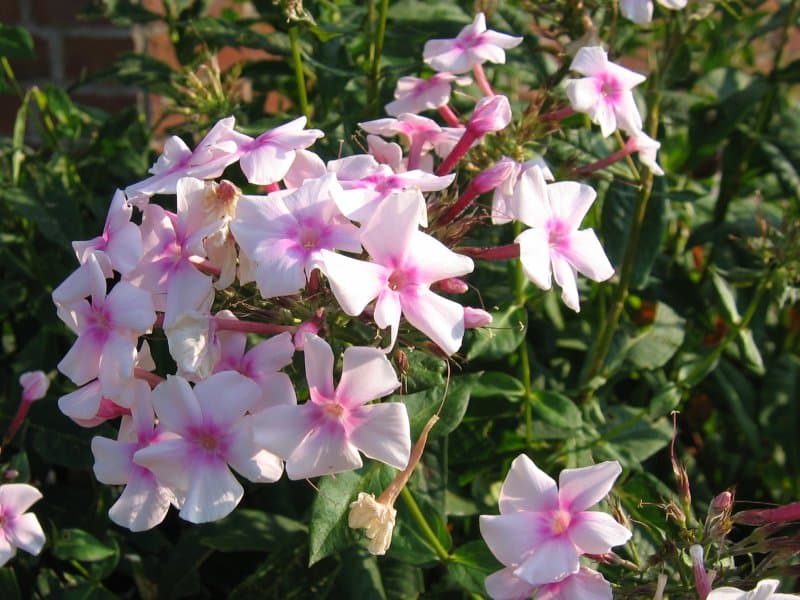
Phlox paniculata 'David' thrives in full sun or partial shade, though flowering is strongest with at least six hours of direct sunlight daily. Choose a spot with good air circulation to reduce the risk of powdery mildew, a common issue with border phlox. The soil should be moisture-retentive but well-drained; loam and clay soils are ideal, provided they don't become waterlogged in winter. Prepare the planting area by digging in plenty of well-rotted compost or manure to improve fertility and moisture retention. If your soil is heavy clay, work in some horticultural grit to improve drainage. Plant in March, April or May for establishment before summer, or in September and October when the soil is still warm and autumn rains help roots settle in. Dig a hole slightly larger than the root ball and plant so the crown sits level with the surrounding soil surface—avoid burying it too deeply. Space plants 50 cm apart to allow for their mature spread of 50–70 cm and to ensure good airflow between clumps. If planting multiple specimens, stagger them slightly rather than in rigid rows for a more natural effect. Water thoroughly after planting to settle the soil around the roots and eliminate air pockets. Apply a 5 cm layer of organic mulch such as garden compost or well-rotted manure around the base, keeping it clear of the stems to prevent rot. In exposed sites or if your soil is particularly rich, consider placing a support hoop or canes around young plants in spring; 'David' can reach 80–120 cm and heavy flower heads may flop after rain.


