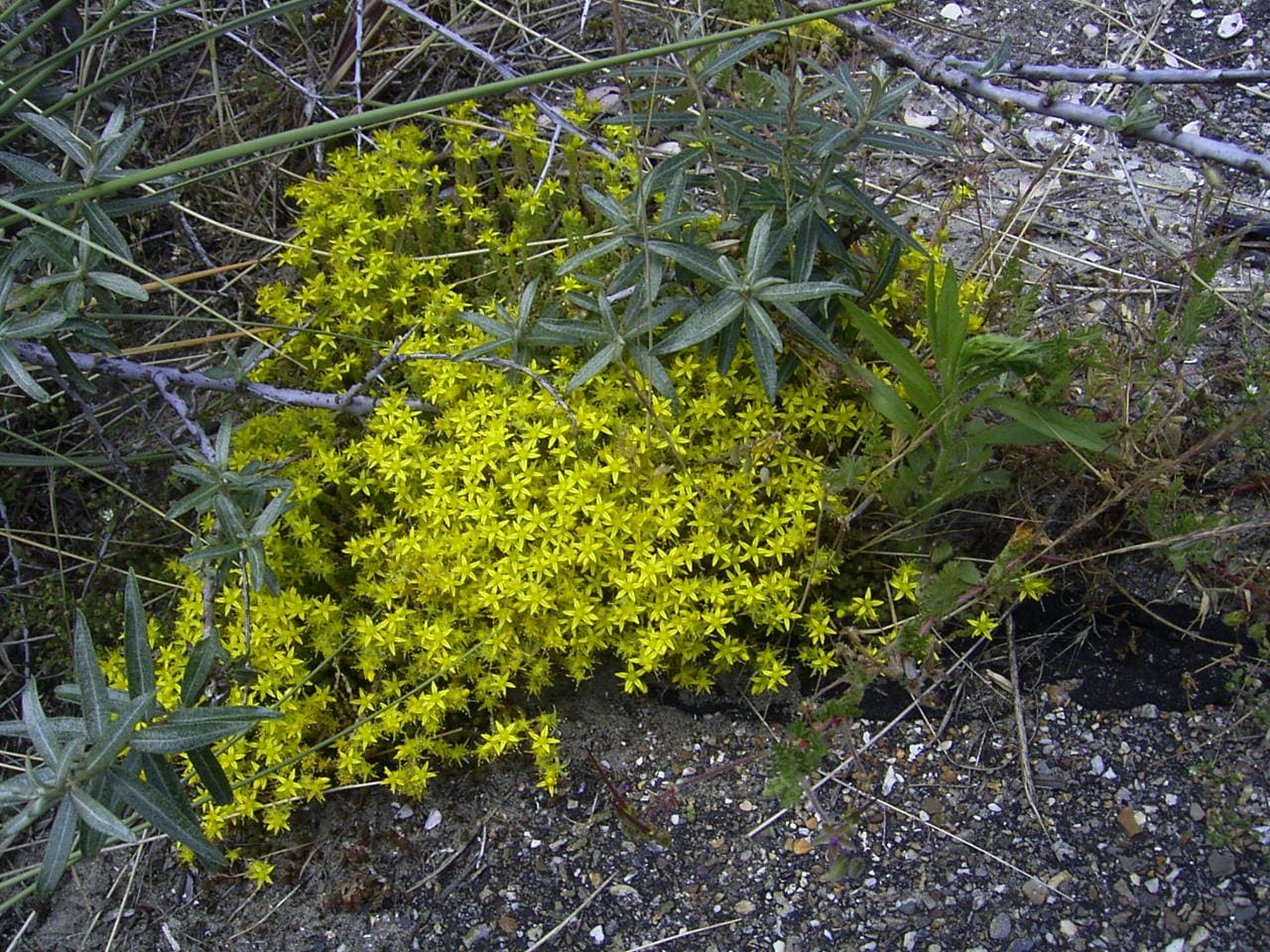
Goldmoss stonecrop
Sedum acre
Dutch: Muurpeper
Muurpeper (Sedum acre) is a native to the Netherlands, evergreen ground cover from the Crassulaceae family that grows up to 10cm tall. This plant thrives in full sun and requires low maintenance. Blooms in early summer and summer with yellow flowers and attracts bees and butterflies.
5–10 cm
20–40 cm
full sun
low water needs
sandy soil, chalky soil
low maintenance
early summer, summer
yellow
Ecologische waarde
Verzorgingskalender
| Taak | Jan | Feb | Mrt | Apr | Mei | Jun | Jul | Aug | Sep | Okt | Nov | Dec |
|---|---|---|---|---|---|---|---|---|---|---|---|---|
| 🌱Planten |
Care tips
Planting
Goldmoss stonecrop thrives in full sun and excels in free-draining, poor soils—sandy or chalky ground is ideal. It tolerates drought and thin soil better than most plants, making it perfect for rockeries, gravel gardens, green roofs, and cracks in paving. Avoid heavy clay or anywhere prone to winter waterlogging, as this can cause rot. Plant in March, April, May, or September when the soil is workable. Spring planting gives the roots time to establish before summer heat, while autumn planting allows the plant to settle in before winter. Prepare the site by removing weeds and loosening compacted soil, but there's no need to enrich it—goldmoss stonecrop actually prefers lean conditions and can become leggy in fertile ground. Space plants 20 cm apart to allow for their spreading habit; they will knit together into a dense mat over one or two seasons. Planting depth is minimal: simply press small plants or rooted cuttings into the soil surface so the roots are covered and the foliage sits just above ground level. This shallow-rooted succulent establishes quickly. Water lightly immediately after planting to settle the roots, but don't saturate the soil. Goldmoss stonecrop is extremely drought-tolerant once established and needs no further watering in most temperate climates. Mulching is unnecessary and can trap moisture around the crowns, increasing the risk of rot. If planting on a slope or in gravel, a light top-dressing of grit or fine gravel will help suppress weeds and complement the plant's natural habitat.
Pruning
Goldmoss stonecrop requires no routine pruning. Its low, mat-forming growth habit and compact size mean it naturally maintains a tidy appearance without intervention. The plant is evergreen, retaining its fleshy, bright green foliage year-round, so there's no seasonal die-back to clear away. After flowering finishes in summer, the spent flower stems will fade from bright yellow to brown. While the plant will tolerate these old stems without harm, many gardeners prefer to tidy them away for aesthetic reasons. Simply snip or pinch off the dried flower heads at the base using your fingers or a pair of small scissors. This light deadheading keeps the mat looking fresh and prevents self-seeding if you want to control spread, though goldmoss stonecrop rarely becomes invasive in well-drained sites. If the mat becomes patchy, uneven, or starts to encroach beyond its intended area, you can trim it back lightly in late spring or early summer after flowering. Use shears or scissors to shear the whole mat back by a third, cutting just above the foliage. This encourages denser regrowth and rejuvenates older clumps. Avoid cutting back in autumn or winter, as the evergreen foliage provides year-round interest and some frost protection for the crowns. Occasionally, individual stems may die back due to waterlogging or damage. Pull these out gently by hand to maintain air circulation. Overall, goldmoss stonecrop is one of the least demanding ground covers you can grow, thriving on benign neglect rather than active management.
Maintenance
Goldmoss stonecrop is exceptionally low-maintenance once established. Its succulent leaves store water, making it highly drought-tolerant. In temperate climates with regular rainfall, established plants need no supplementary watering. Even during dry spells in summer, the plant will cope without irrigation. Only water newly planted specimens lightly if the soil becomes bone-dry in their first few weeks; after that, leave them alone. Feeding is not required. Goldmoss stonecrop is adapted to nutrient-poor soils and will grow leggy and lose its compact habit if given fertiliser. Avoid planting it near areas where lawn feed or general fertilisers are applied, as runoff can encourage weak, floppy growth. The plant is evergreen and fully hardy to zone 3, so it needs no winter protection in temperate Europe. It will sail through frost, snow, and cold winds without damage. In fact, cold weather often enhances the foliage colour, adding bronze or reddish tints. Pests and diseases are rare. Goldmoss stonecrop's thick, waxy leaves deter most insects, and its preference for dry conditions means fungal problems are uncommon. The main threat is root rot caused by waterlogged soil, particularly in winter. If you notice blackened, mushy stems, improve drainage immediately or move the plant to a drier spot. Mulching is unnecessary and should be avoided, as organic mulches retain moisture and can smother the low foliage. If weeds appear, hand-pull them carefully to avoid disturbing the shallow roots. Once the mat fills in, it will suppress most weeds naturally, creating a maintenance-free carpet of evergreen foliage and cheerful yellow summer flowers.
More about this plant
Combines well with
Related guides
Goldmoss stonecrop in your garden design?
Make a free garden design with AI advice. Our AI knows Goldmoss stonecrop and 130+ other plants.
Start free design