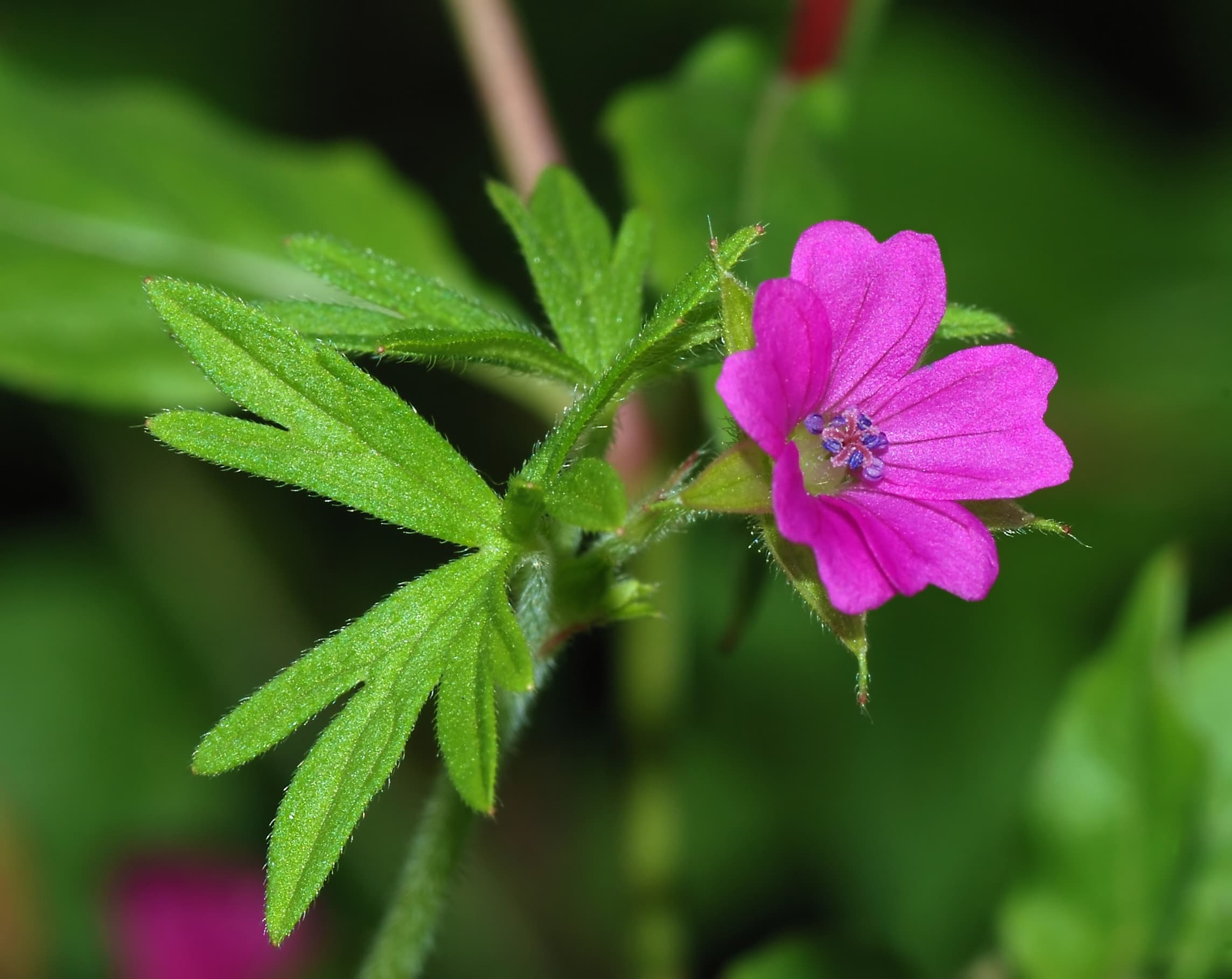
Hardy Geranium Rozanne
Geranium 'Rozanne'
Dutch: Geranium 'Rozanne'
Geranium 'Rozanne' (Geranium 'Rozanne') is a perennial from the Geraniaceae family that grows up to 50cm tall. This plant thrives in full sun to partial shade and requires low maintenance. Blooms in autumn and summer with blue, purple flowers and attracts bees and butterflies.
30–50 cm
60–90 cm
full sun, partial shade
moderate
loam, clay soil, sandy soil
low maintenance
autumn, summer
blue, purple
Ecologische waarde
Verzorgingskalender
| Taak | Jan | Feb | Mrt | Apr | Mei | Jun | Jul | Aug | Sep | Okt | Nov | Dec |
|---|---|---|---|---|---|---|---|---|---|---|---|---|
| 🌱Planten | ||||||||||||
| ✂️Snoeien | ||||||||||||
| 💧Bemesten |
Care tips
Planting
Geranium 'Rozanne' thrives in full sun or partial shade, making it adaptable to most garden positions. It performs best with morning sun and light afternoon shade in warmer spots, though it will flower profusely in full sun if the soil retains moisture. This hardy geranium tolerates a wide range of soil types—loam, clay, or sandy—provided drainage is reasonable. Avoid waterlogged ground, but don't worry about achieving perfect conditions; 'Rozanne' is famously forgiving. Plant in March, April, September, or October when the soil is workable and temperatures are mild. Dig a hole roughly twice the width of the root ball and the same depth. Loosen the soil at the base to encourage roots to spread. Set the plant so the crown sits level with the surrounding soil—planting too deep can lead to rot. Space plants 60 cm apart; 'Rozanne' spreads vigorously to 60–90 cm, so give it room to sprawl without smothering neighbours. Backfill with the excavated soil, firming gently to eliminate air pockets. Water thoroughly after planting to settle the roots, even if the soil feels damp. A 5 cm layer of organic mulch—garden compost or well-rotted manure—around the base helps retain moisture and suppress weeds, but keep it clear of the crown itself. If planting in autumn, mulch will also provide a little extra insulation over the first winter, though 'Rozanne' is reliably hardy to zone 5a. No staking is needed; the stems are self-supporting and form a low, spreading mound.
Pruning
Geranium 'Rozanne' requires very little pruning, which is part of its appeal. Unlike many perennials, it flowers continuously from early summer through to the first frosts without deadheading. The plant is essentially self-cleaning, dropping spent blooms and producing new ones on fresh growth, so there's no need to snip off faded flowers to keep it going. The main pruning task is a single tidy-up in March, just as new growth begins to emerge. Cut back all the previous year's stems to within a few centimetres of the base, removing the tired, straggly foliage that will have browned over winter. Use clean, sharp secateurs or garden shears for speed if you have several plants. This hard cut stimulates vigorous new shoots and ensures a tidy, compact habit for the coming season. If you leave old growth in place, the plant becomes congested and flowering may be reduced. In mild winters, 'Rozanne' can remain semi-evergreen, but the foliage will look tatty by spring and is best removed regardless. If the plant sprawls untidily during the growing season or flops over neighbouring plants, you can trim back wayward stems by up to a third in mid-summer; this encourages bushier regrowth and a fresh flush of flowers. Avoid autumn pruning—the top growth provides some protection to the crown over winter, and you risk exposing tender new shoots to frost damage.
Maintenance
Geranium 'Rozanne' has moderate water needs and tolerates short dry spells once established, but performs best with consistent moisture during summer. Water deeply during prolonged dry periods, especially in full sun or sandy soil, aiming for once or twice a week rather than frequent shallow watering. In partial shade or heavier clay soil, natural rainfall is usually sufficient except in drought. Reduce watering from autumn as growth slows. Feed in early spring—March or April—with a general-purpose granular fertiliser such as blood, fish and bone or a balanced NPK feed (e.g. 10-10-10). Scatter a small handful around the base of each plant and lightly fork it into the soil surface. This supports the long flowering season without encouraging excessive leafy growth at the expense of blooms. A second, lighter feed in early summer can be beneficial if growth seems weak, but 'Rozanne' is not a heavy feeder. Avoid high-nitrogen fertilisers, which produce lush foliage and fewer flowers. Mulch annually in spring with garden compost or well-rotted manure to conserve moisture and suppress weeds. Keep mulch a few centimetres clear of the crown to prevent rot. 'Rozanne' is generally pest- and disease-free. Vine weevil larvae occasionally attack the roots in pots or dry soil; look for wilting despite watering and treat with biological nematodes in spring or autumn. Powdery mildew can appear in very dry conditions; improve air circulation and water at the base rather than overhead. No winter protection is needed in zones 7–9; the plant is fully hardy and will reshoot reliably each spring.
More about this plant
Combines well with
Related guides
Hardy Geranium Rozanne in your garden design?
Make a free garden design with AI advice. Our AI knows Hardy Geranium Rozanne and 130+ other plants.
Start free design