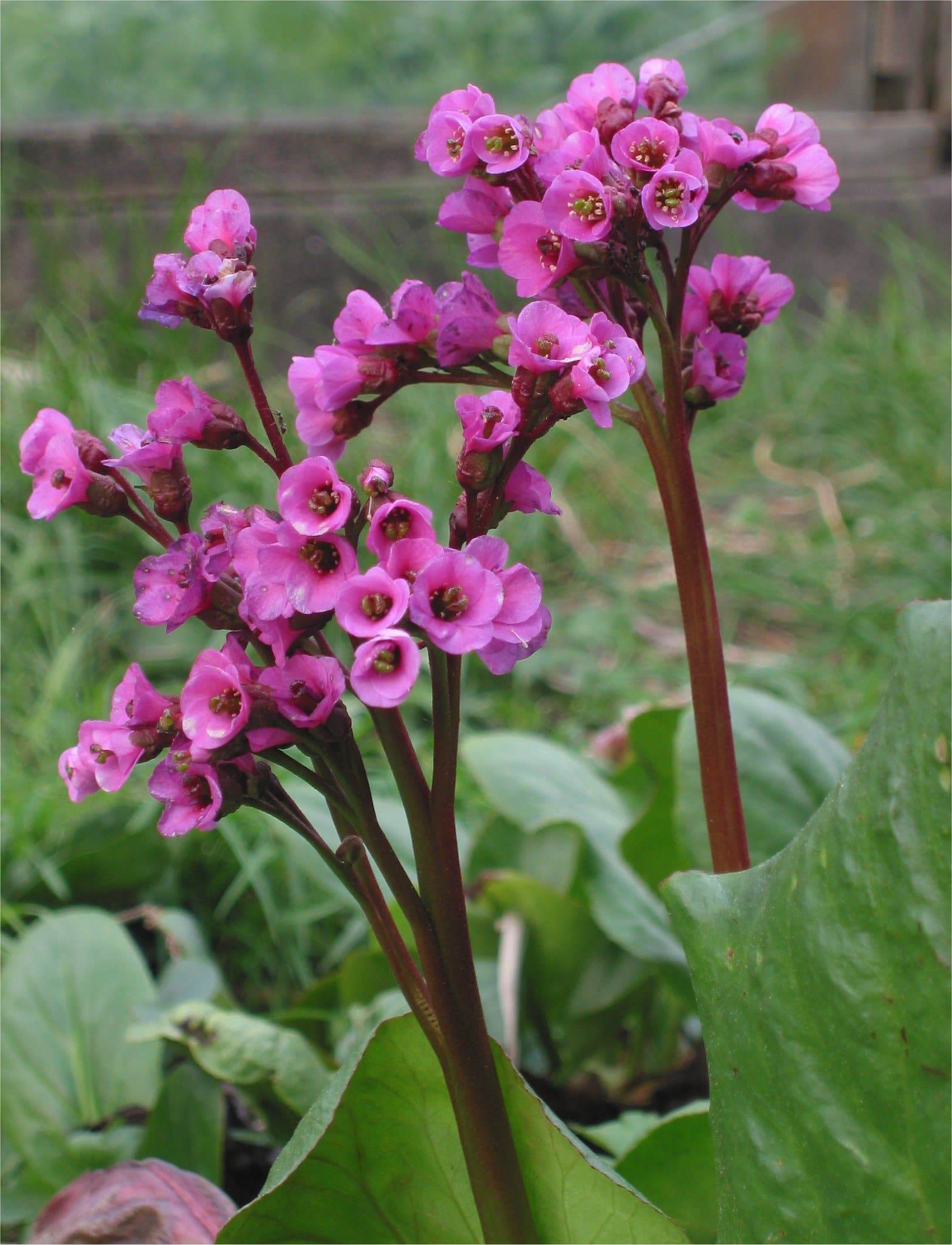
Heartleaf bergenia
Bergenia cordifolia
Dutch: Schoenlappersplant
Schoenlappersplant (Bergenia cordifolia) is a evergreen perennial from the Saxifragaceae family that grows up to 50cm tall. This plant thrives in full sun to partial shade and requires low maintenance. Blooms in early spring and spring with pink flowers and attracts bees.
30–50 cm
45–60 cm
full sun, partial shade
moderate
loam, clay soil, sandy soil
low maintenance
early spring, spring
pink
Ecologische waarde
Verzorgingskalender
| Taak | Jan | Feb | Mrt | Apr | Mei | Jun | Jul | Aug | Sep | Okt | Nov | Dec |
|---|---|---|---|---|---|---|---|---|---|---|---|---|
| 🌱Planten | ||||||||||||
| ✂️Snoeien | ||||||||||||
| 💧Bemesten |
Care tips
Planting
Bergenia cordifolia thrives in both full sun and partial shade, making it a versatile choice for many garden situations. In hotter, drier spots, afternoon shade helps prevent leaf scorch, whilst in shadier positions the plant will still perform well though flowering may be slightly less abundant. It tolerates a wide range of soil types—loam, clay, and sandy soils all suit it—but the ground must be reasonably well-drained. Avoid waterlogged sites, as the thick rhizomes can rot in persistently wet conditions. Plant bergenia in March, April, September, or October. Spring planting allows the roots to establish before summer, whilst autumn planting takes advantage of warm soil and autumn rains. Prepare the soil by digging in some garden compost or well-rotted manure to improve structure and moisture retention, especially on sandy soils. Space plants 45 cm apart to allow for their eventual spread of 45–60 cm; they will gradually form dense, weed-suppressing clumps. Dig a planting hole slightly wider than the root ball and at the same depth—bergenia rhizomes should sit at or just below the soil surface, not buried deeply. Firm the plant in gently and water thoroughly to settle the roots. Apply a 5 cm layer of mulch around (but not touching) the crown to conserve moisture and suppress weeds. Water regularly during the first growing season to help establishment, especially if planting in spring or during dry spells. Once established, bergenia is remarkably drought-tolerant and low-maintenance, making it ideal for ground cover in borders, woodland edges, or the front of beds.
Pruning
Bergenia cordifolia requires very little pruning, which is part of its appeal as a low-maintenance evergreen perennial. The main task is tidying rather than cutting back hard. In April or May, after the spring flowers have faded and before new growth accelerates, remove spent flower stems by cutting them back to the base of the plant with secateurs or sharp snips. This keeps the plant looking neat and prevents energy being wasted on seed production. At the same time, inspect the foliage. Bergenia leaves are large, leathery, and evergreen, but older outer leaves often become tatty, browned, or damaged over winter—especially after hard frosts or in exposed positions. Cut these unsightly leaves off at the base, close to the rhizome, to make way for fresh spring growth. You don't need to remove all the old foliage, only what looks ragged or diseased. The glossy new leaves that emerge in spring will quickly fill any gaps. Every three to five years, if clumps become congested or flowering declines, you can lift and divide bergenia in April or May. Use a spade or knife to separate sections of rhizome, each with healthy roots and shoots, then replant immediately at the same depth. This rejuvenates the plant and provides new stock for elsewhere in the garden. No other pruning is necessary. Avoid cutting bergenia back hard or shearing it like a shrub; it doesn't respond well to severe pruning and the evergreen foliage is ornamental year-round, especially in winter when the leaves often take on attractive bronze or purple tints.
Maintenance
Once established, bergenia is remarkably undemanding. Water moderately during the growing season, especially in prolonged dry spells in late spring and summer. The thick rhizomes store some moisture, so the plant tolerates short droughts well, but consistent moisture encourages better foliage and flowering. In autumn and winter, natural rainfall is usually sufficient; avoid overwatering, particularly on heavy clay soils where waterlogging can cause rhizome rot. Feed bergenia lightly in March or April as growth resumes. A general-purpose granular fertiliser such as blood, fish and bone or a balanced slow-release feed scattered around the base of the clump is adequate. Avoid high-nitrogen feeds, which promote lush foliage at the expense of flowers. One application per year is enough; bergenia is not a heavy feeder and over-fertilising can lead to soft, disease-prone growth. Mulch around plants in spring with garden compost, leaf mould, or bark chips to suppress weeds and retain moisture, but keep mulch clear of the rhizomes to prevent rot. Bergenia is fully hardy (zone 3–9) and needs no winter protection in temperate Europe. The evergreen leaves often develop attractive red or purple tones in cold weather, adding winter interest. Pests are rarely a problem, though vine weevil larvae occasionally chew the rhizomes; look for notched leaf edges and consider biological controls if damage is severe. Leaf spot and fungal diseases can occur in very damp, shaded conditions with poor air circulation—remove affected leaves promptly and avoid overhead watering. Slugs and snails may nibble young spring foliage but seldom cause serious harm. Overall, bergenia is a robust, trouble-free plant requiring minimal intervention.
More about this plant
Combines well with
Related guides
Heartleaf bergenia in your garden design?
Make a free garden design with AI advice. Our AI knows Heartleaf bergenia and 130+ other plants.
Start free design