Caring for Heartleaf bergenia
Complete guide — Bergenia cordifolia
heartleaf bergenia needs low maintenance, a position in full sun or partial shade on loam / clay soil / sandy soil and moderate.
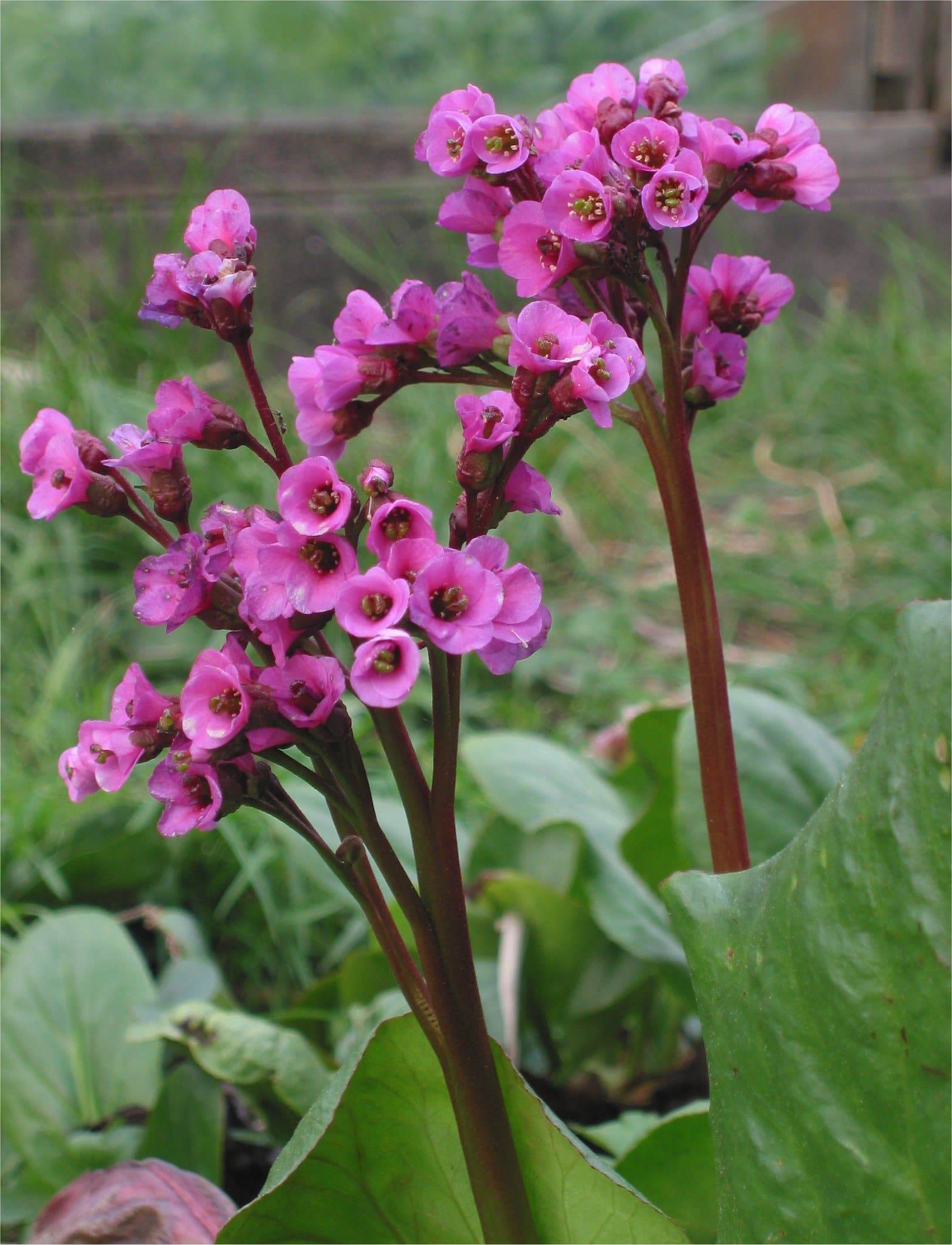
Position
full sun, partial shade
loam, clay soil, sandy soil
moderate
Feeding
Feed in March and April.
Year-round care
Once established, bergenia is remarkably undemanding. Water moderately during the growing season, especially in prolonged dry spells in late spring and summer. The thick rhizomes store some moisture, so the plant tolerates short droughts well, but consistent moisture encourages better foliage and flowering. In autumn and winter, natural rainfall is usually sufficient; avoid overwatering, particularly on heavy clay soils where waterlogging can cause rhizome rot. Feed bergenia lightly in March or April as growth resumes. A general-purpose granular fertiliser such as blood, fish and bone or a balanced slow-release feed scattered around the base of the clump is adequate. Avoid high-nitrogen feeds, which promote lush foliage at the expense of flowers. One application per year is enough; bergenia is not a heavy feeder and over-fertilising can lead to soft, disease-prone growth. Mulch around plants in spring with garden compost, leaf mould, or bark chips to suppress weeds and retain moisture, but keep mulch clear of the rhizomes to prevent rot. Bergenia is fully hardy (zone 3–9) and needs no winter protection in temperate Europe. The evergreen leaves often develop attractive red or purple tones in cold weather, adding winter interest. Pests are rarely a problem, though vine weevil larvae occasionally chew the rhizomes; look for notched leaf edges and consider biological controls if damage is severe. Leaf spot and fungal diseases can occur in very damp, shaded conditions with poor air circulation—remove affected leaves promptly and avoid overhead watering. Slugs and snails may nibble young spring foliage but seldom cause serious harm. Overall, bergenia is a robust, trouble-free plant requiring minimal intervention.


