Caring for Hop
Complete guide — Humulus lupulus
hop needs moderate maintenance, a position in full sun or partial shade on loam and moderate.
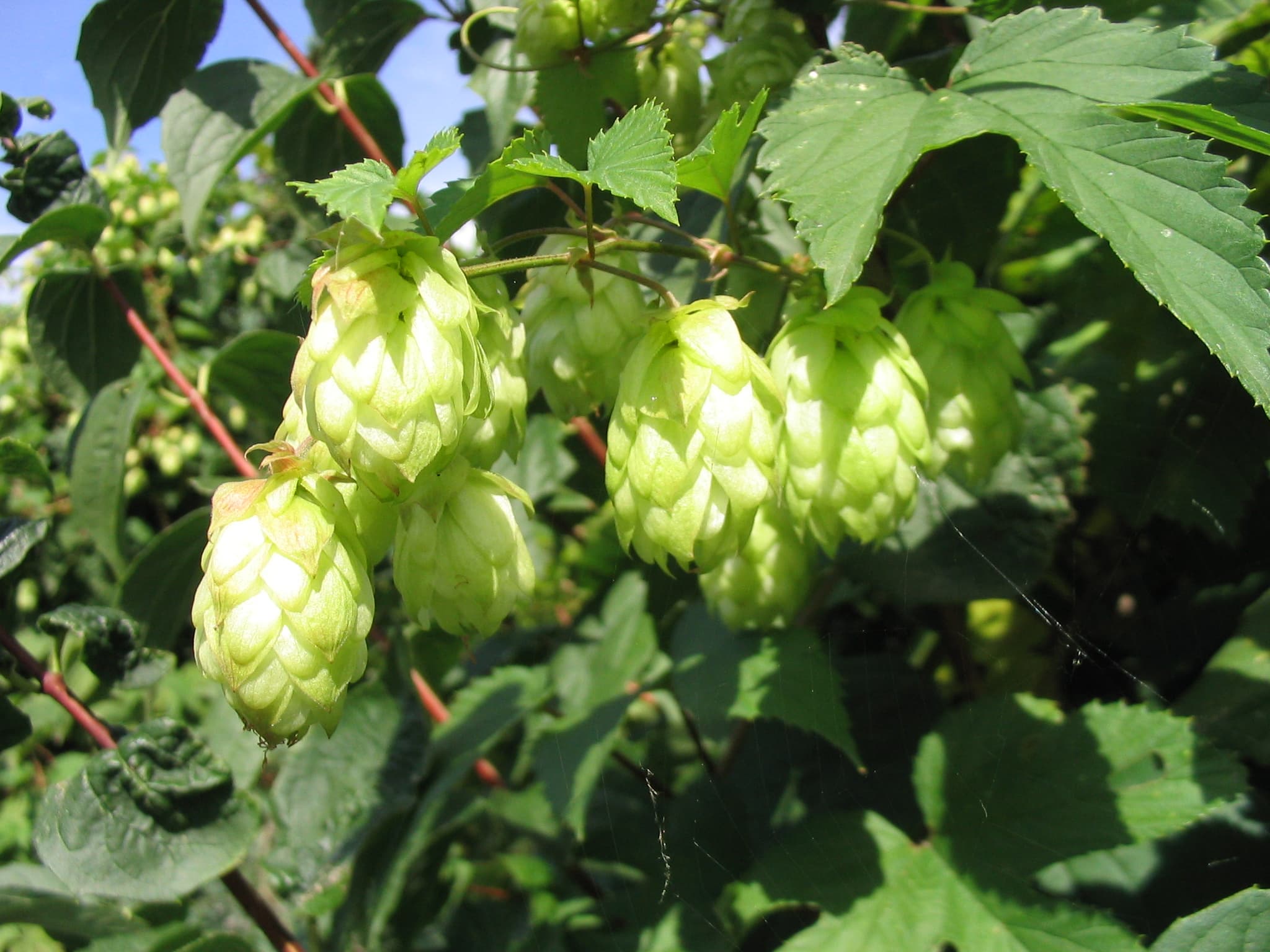
Position
full sun, partial shade
loam
moderate
Feeding
Feed in March and June.
Year-round care
Hops have moderate water needs and perform best with consistent moisture, especially during the rapid growth phase from April to July. Water deeply once or twice a week during dry spells in spring and summer, ensuring the soil remains evenly moist but not waterlogged. Reduce watering after the cones have formed in late summer, and stop altogether once the foliage begins to die back in autumn. Mulch annually in early spring with garden compost or well-rotted manure to conserve moisture, suppress weeds and feed the soil. Feed twice a year: apply a balanced general-purpose fertiliser or blood, fish and bone in March as new growth begins, then give a second feed in June with a potassium-rich fertiliser (such as tomato feed) to encourage cone development. Avoid high-nitrogen feeds after June, as these promote leafy growth at the expense of flowers. Hops are fully hardy (zone 3–8) and need no winter protection in temperate Europe. The crown survives underground and resprouts reliably each spring. Common pests include aphids, which cluster on young shoots and the undersides of leaves in early summer—spray with insecticidal soap or encourage natural predators. Red spider mite can be troublesome in hot, dry conditions; increase humidity by watering and misting. Powdery mildew and downy mildew may appear in damp summers; ensure good air circulation, avoid overhead watering, and remove affected leaves promptly. Slugs and snails can damage emerging shoots in spring, so protect young growth with barriers or organic pellets.


