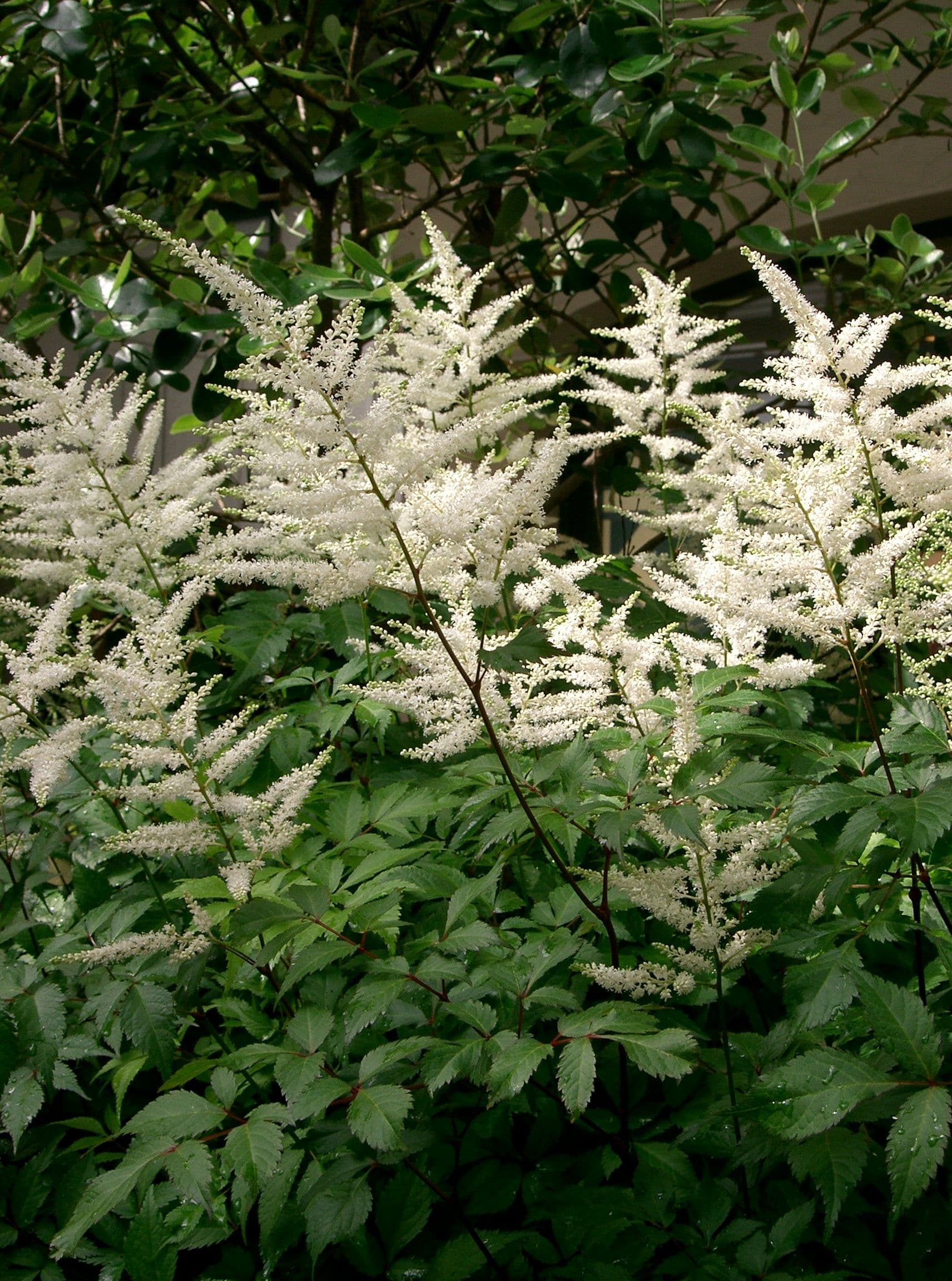
Japanese astilbe
Astilbe japonica
Dutch: Prachtspirea
Prachtspirea (Astilbe japonica) is a perennial from the Saxifragaceae family that grows up to 60cm tall. This plant thrives in partial shade to shade and requires moderate maintenance. Blooms in late spring and early summer with white, pink flowers and attracts bees and butterflies.
40–60 cm
30–45 cm
partial shade, full shade
high water needs
loam, clay soil, peat soil
moderate maintenance
late spring, early summer
white, pink
Ecologische waarde
Verzorgingskalender
| Taak | Jan | Feb | Mrt | Apr | Mei | Jun | Jul | Aug | Sep | Okt | Nov | Dec |
|---|---|---|---|---|---|---|---|---|---|---|---|---|
| 🌱Planten | ||||||||||||
| ✂️Snoeien | ||||||||||||
| 💧Bemesten |
Care tips
Planting
Astilbe japonica thrives in partial to full shade, making it ideal for borders under trees, woodland gardens, or the shadier corners of your plot where many flowering perennials struggle. It tolerates some morning sun but avoid hot, exposed positions, which will scorch the foliage and stress the plant. Plant in March, April or May for spring establishment, or in September and October for autumn planting; both windows work well provided you keep the soil moist. Soil preparation is critical. Astilbe demands moisture-retentive ground, so dig in plenty of organic matter—well-rotted compost, leaf mould, or manure—especially if your soil is light or free-draining. It performs best in loam, clay, or peat-based soils that hold water without becoming waterlogged. Space plants 35 cm apart to allow for their mature spread of 30–45 cm and to encourage good air circulation. Plant so the crown (where shoots meet roots) sits just below the soil surface, typically 3–5 cm deep. Astilbe roots are fleshy and should not dry out during planting; if bare-root, soak them for an hour beforehand. Firm the soil gently around the roots to eliminate air pockets, then water thoroughly. Apply a 5 cm layer of mulch—bark chips, compost, or leaf mould—around the base to conserve moisture and suppress weeds, keeping it clear of the crown itself. Water again if the weather is dry; establishment depends on consistent moisture in the first growing season.
Pruning
Astilbe japonica does not require pruning in the traditional sense—there are no woody stems to cut back for shape or vigour—but it does benefit from seasonal tidying to keep it healthy and looking its best. The main pruning windows are March and November, and what you do depends on your garden style and local conditions. In November, after flowering has finished and the foliage begins to collapse with the first frosts, you can cut back the spent flower plumes and dying leaves to ground level. This tidies the border and removes potential hiding places for slugs and snails over winter. However, many gardeners prefer to leave the dried flower heads standing through winter for structure and interest, especially when rimmed with frost. If you take this approach, delay the cut-back until March, just before new growth emerges in spring. Use clean secateurs or garden shears and cut all top growth down to within a few centimetres of the crown. Remove any dead or damaged material and clear away debris to reduce disease risk. March is also the time to divide congested clumps if the centre has become woody or flowering has declined—lift the plant, split it into sections with a spade or knife (each with healthy roots and shoots), and replant immediately with added compost. Division rejuvenates astilbe and is best done every three to four years. No other pruning is needed; focus instead on mulching and moisture.
Maintenance
Astilbe japonica has high water needs and will not tolerate drought. In spring and summer, especially during flowering from late spring into early summer, water regularly and deeply if rainfall is scarce. The soil should remain consistently moist but not saturated. In dry spells, water two to three times a week; mulch helps enormously by reducing evaporation. Reduce watering in autumn as growth slows, but never let the roots dry out completely, even in winter. Feed in March, April, or May as new shoots appear. Apply a balanced general-purpose fertiliser (such as blood, fish and bone or a granular NPK feed) around the base at the manufacturer's recommended rate, or top-dress with a 3 cm layer of well-rotted compost or manure, which feeds and mulches in one go. Avoid high-nitrogen feeds later in the season, which promote soft growth at the expense of flowers. Astilbe is fully hardy to zone 4, so overwintering in temperate Europe is straightforward. Mulch crowns in late autumn with compost or leaf mould to protect them from hard frosts and prevent heaving, particularly in exposed gardens or heavy clay that freezes solid. Common pests include slugs and snails, which target emerging shoots in spring; use organic pellets, barriers, or hand-pick in the evening. Powdery mildew can occur in dry conditions or where air circulation is poor—ensure adequate spacing and moisture. Vine weevil larvae occasionally damage roots; look for notched leaf edges and treat compost with biological controls if suspected.
More about this plant
Combines well with
Related guides
Japanese astilbe in your garden design?
Make a free garden design with AI advice. Our AI knows Japanese astilbe and 130+ other plants.
Start free design