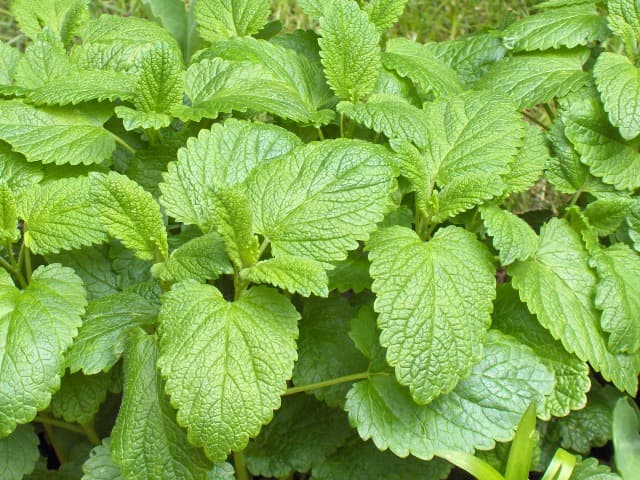
Lemon balm
Melissa officinalis
Dutch: Citroenmelisse
Citroenmelisse (Melissa officinalis) is a edible herb from the Lamiaceae family that grows up to 80cm tall. This plant thrives in full sun to partial shade and requires low maintenance. Blooms in summer with white flowers and attracts bees and butterflies.
40–80 cm
40–60 cm
full sun, partial shade
moderate
loam, sandy soil
low maintenance
summer
white
Ecologische waarde
Verzorgingskalender
| Taak | Jan | Feb | Mrt | Apr | Mei | Jun | Jul | Aug | Sep | Okt | Nov | Dec |
|---|---|---|---|---|---|---|---|---|---|---|---|---|
| 🌱Planten | ||||||||||||
| ✂️Snoeien | ||||||||||||
| 💧Bemesten | ||||||||||||
| 🍎Oogsten |
Care tips
Planting
Lemon balm thrives in full sun or partial shade, making it a versatile herb for most garden positions. It tolerates a range of soils but performs best in loam or sandy soil that drains freely. Before planting, dig over the soil to a spade's depth and incorporate a generous amount of garden compost or well-rotted manure to improve structure and fertility. Avoid heavy clay that stays waterlogged, as this can lead to root rot. Plant lemon balm in April, May, or September when the soil is workable and temperatures are mild. If you're planting pot-grown plants, dig a hole slightly larger than the root ball, set the plant at the same depth it was growing in its container, and firm the soil gently around the roots. Space plants 50 cm apart to allow for their mature spread of 40–60 cm; lemon balm can become quite bushy and will fill out quickly in good conditions. You can also sow seed directly outdoors in April or May once the risk of hard frost has passed. Sow thinly in shallow drills about 1 cm deep, then thin seedlings to 50 cm apart once they're large enough to handle. Germination can be slow and erratic, so starting plants indoors in modules a few weeks earlier often gives more reliable results. Water newly planted lemon balm thoroughly to settle the roots, and keep the soil evenly moist for the first few weeks until the plant is established. A light mulch of compost around the base helps retain moisture and suppress weeds, but keep it clear of the stems to prevent rot. Lemon balm establishes quickly and will begin producing harvestable leaves within a few weeks.
Pruning
Lemon balm benefits from regular pruning to keep it productive, compact, and prevent it from becoming straggly or self-seeding prolifically around the garden. The main pruning periods are June and August, which coincide with the plant's vigorous growth and flowering phases during summer. In June, once the plant has put on substantial leafy growth, cut it back by about half to two-thirds of its height using clean, sharp secateurs or garden shears. This encourages a fresh flush of tender, flavourful leaves and delays flowering if you want to prioritise foliage production over blooms. If you allow lemon balm to flower—which is beneficial for pollinators—deadhead the spent flower spikes promptly to prevent prolific self-seeding. The small white flowers are attractive but the plant can become invasive if allowed to set seed freely. Prune again in August after the main flowering period. Cut the whole plant back hard to about 10–15 cm above ground level. This rejuvenates the plant, promotes bushy regrowth, and provides a final harvest of fresh leaves before autumn. The new growth will be more compact and less prone to mildew, which can affect older, congested foliage in damp conditions. Use sharp tools to make clean cuts and avoid tearing the stems. You don't need specialist equipment—kitchen scissors or secateurs work perfectly well. If your lemon balm looks tired or diseased at any point during the growing season, don't hesitate to cut it back hard; it recovers quickly and will reward you with healthy new growth within a few weeks.
Maintenance
Lemon balm is a low-maintenance herb once established, requiring only moderate watering and minimal feeding. Water regularly during dry spells in spring and summer, aiming to keep the soil evenly moist but never waterlogged. In hot weather, plants in full sun may need watering once or twice a week, while those in partial shade or heavier soils will need less. Reduce watering significantly in autumn and winter when growth slows. Mulching around the base in spring with garden compost helps retain moisture and adds a gentle nutrient boost. Feed lemon balm lightly in April with a general-purpose organic fertiliser or a sprinkling of blood, fish and bone worked into the soil surface. Avoid high-nitrogen feeds later in the season, as these promote soft, sappy growth that is more susceptible to disease and less hardy going into winter. Lemon balm is not a heavy feeder and too much fertiliser can reduce the intensity of its lemon fragrance. This herb is fully hardy in zones 4–9 and requires no special winter protection in temperate Europe. The top growth dies back in late autumn; cut it down to ground level in November and the plant will reshoot vigorously from the base in spring. A light mulch of compost over the crown provides extra insulation in colder areas but is not essential. Lemon balm is generally pest-free, though aphids occasionally cluster on young shoots in spring—wash them off with a jet of water. Powdery mildew can appear on older leaves in humid conditions, particularly if plants are overcrowded or not pruned regularly. Good air circulation and cutting back congested growth in June and August minimise this problem.
More about this plant
Combines well with
Related guides
Lemon balm in your garden design?
Make a free garden design with AI advice. Our AI knows Lemon balm and 130+ other plants.
Start free design