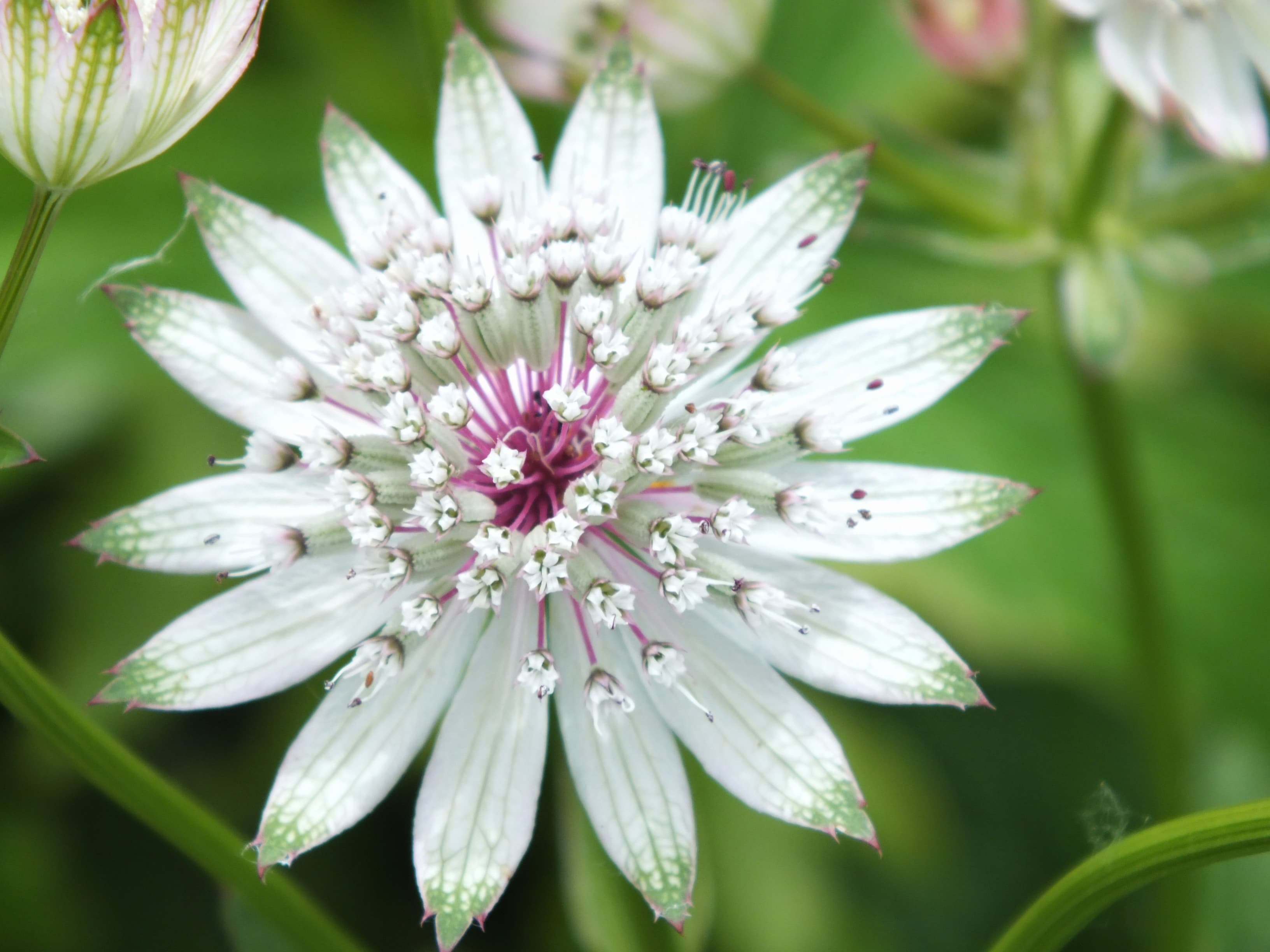
Masterwort 'Roma'
Astrantia major 'Roma'
Dutch: Zevenblad 'Roma'
Zevenblad 'Roma' (Astrantia major 'Roma') is a perennial from the Apiaceae family that grows up to 70cm tall. This plant thrives in partial shade to full sun and requires low maintenance. Blooms in early summer and summer and late summer with pink, red flowers and attracts bees and butterflies.
50–70 cm
40–50 cm
partial shade, full sun
moderate
loam, clay soil
low maintenance
early summer, summer, late summer
pink, red
Ecologische waarde
Verzorgingskalender
| Taak | Jan | Feb | Mrt | Apr | Mei | Jun | Jul | Aug | Sep | Okt | Nov | Dec |
|---|---|---|---|---|---|---|---|---|---|---|---|---|
| 🌱Planten | ||||||||||||
| ✂️Snoeien | ||||||||||||
| 💧Bemesten |
Care tips
Planting
Astrantia major 'Roma' thrives in partial shade or full sun, though it performs best with some afternoon shade in warmer gardens. Choose a spot with loam or clay soil that retains moisture without becoming waterlogged. Before planting, dig over the soil to a spade's depth and work in plenty of organic matter—well-rotted compost or manure—to improve structure and moisture retention, especially if your soil is on the lighter side. Plant container-grown astrantias in March, April, September, or October. Autumn planting gives roots time to establish before winter, while spring planting suits colder or wetter sites. Dig a hole slightly wider than the root ball and the same depth, ensuring the crown sits level with the surrounding soil surface. Space plants 40 cm apart to allow for their mature spread of 40–50 cm; this spacing also encourages good air circulation. After planting, firm the soil gently around the roots and water thoroughly to settle the plant in and eliminate air pockets. Apply a 5 cm layer of organic mulch—leaf mould, garden compost, or well-rotted manure—around the base, keeping it clear of the crown itself to prevent rot. This mulch conserves moisture and suppresses weeds, both important for astrantias, which dislike drying out. Water regularly during the first growing season until the plant is fully established. Astrantia major 'Roma' is hardy to zone 4 and will tolerate winter cold without protection in temperate Europe. No staking is usually needed; the stems are sturdy enough to support the distinctive pink-to-red pincushion flowers that appear from early summer onwards.
Pruning
Astrantia major 'Roma' requires minimal pruning, but a couple of well-timed interventions will keep it flowering longer and looking tidy. The main task is deadheading. Once the first flush of flowers fades in mid to late summer, cut back the spent flower stems to just above the basal foliage. This encourages a second, smaller flush of blooms in late summer or early autumn and prevents the plant from putting energy into seed production. Use clean secateurs or garden snips and remove the entire flowering stem rather than just the flower head. In November, after flowering has finished and the foliage begins to die back, cut down all the old stems and leaves to ground level. This autumn tidy-up reduces the risk of fungal diseases overwintering in dead foliage and keeps the border looking neat. Alternatively, if you prefer to leave some structure for winter interest or to provide habitat for insects, delay this cut-back until March, just before new growth emerges. Either timing works well; choose based on your garden style and local slug pressure, as slugs can shelter in old foliage. In early March, whether or not you've already cut back in autumn, remove any remaining dead material and check for emerging shoots. Astrantias are clump-forming perennials, and if your plant becomes congested after three or four years, you can lift and divide it in March or April. This isn't pruning as such, but it rejuvenates flowering and gives you extra plants. Simply dig up the clump, tease or cut it into sections with healthy roots and shoots, and replant immediately.
Maintenance
Astrantia major 'Roma' has moderate water needs and dislikes drying out, especially during the growing and flowering season. Water regularly from spring through summer, particularly during dry spells; aim to keep the soil consistently moist but not saturated. In partial shade or heavy clay, natural rainfall may be sufficient, but in sunnier spots or free-draining loam, check weekly and water deeply if the top few centimetres of soil feel dry. Reduce watering in autumn and winter when the plant is dormant. Feed in March or April as new growth appears. Apply a balanced general-purpose fertiliser such as blood, fish and bone or pelleted chicken manure around the base of the plant, following packet rates. Alternatively, top-dress with a 3–5 cm layer of well-rotted compost or manure, which feeds the soil and helps retain moisture. A second, lighter feed in late spring can boost flowering, but avoid overfeeding, which encourages soft, leafy growth at the expense of flowers. Astrantia major 'Roma' is fully hardy in zones 4–8 and needs no winter protection in temperate Europe. Mulch around the crown in autumn to conserve moisture and suppress weeds, but keep mulch clear of the crown itself to prevent rot. Pests are rarely a problem, though slugs and snails may damage young shoots in spring; use organic pellets, barriers, or hand-picking if necessary. Powdery mildew can occur in dry conditions or overcrowded clumps, showing as white patches on leaves. Improve air circulation, water at the base rather than overhead, and remove affected foliage promptly. Overall, 'Roma' is a low-maintenance perennial that rewards consistent moisture and an annual tidy with months of elegant, long-lasting flowers.
More about this plant
Combines well with
Related guides
Masterwort 'Roma' in your garden design?
Make a free garden design with AI advice. Our AI knows Masterwort 'Roma' and 130+ other plants.
Start free design