Nasturtium in June: monthly care
Month-by-month care — Tropaeolum majus
In June your nasturtium needs attention: plant / sow and watch the bloom.
- Plant / sow
- Blooms
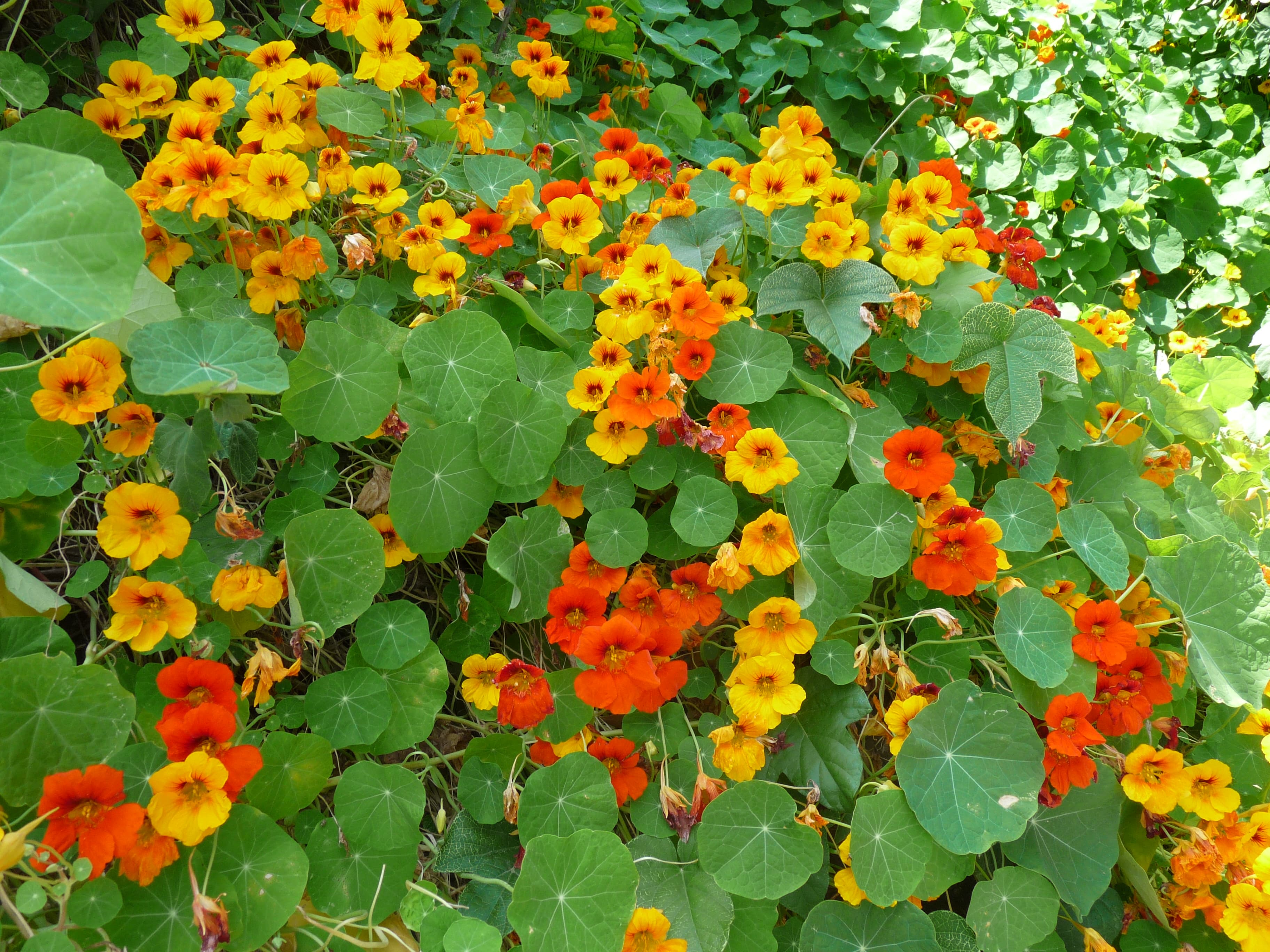
What to do this June
Nasturtiums thrive in full sun or partial shade and prefer sandy or loamy soil that drains freely. They actually perform better in poorer soils—overly rich ground encourages lush foliage at the expense of flowers. Avoid adding compost or manure before planting; the soil can be left as-is or lightly forked over to break up any compaction. Sow nasturtium seeds directly outdoors from April through June, once the risk of hard frost has passed. The large seeds are easy to handle. Plant them 1.5–2 cm deep and space them 30 cm apart to allow for their spreading habit. Trailing varieties can spread up to a metre, while dwarf bush types stay more compact. If you're planting near a fence, trellis, or wall, position seeds at the base so the plants can scramble upwards. Nasturtiums dislike root disturbance, so direct sowing is more reliable than transplanting. If you do start them indoors in modules (from late March under cover), sow one seed per pot and plant out carefully in May without breaking the rootball. Water the soil gently after sowing to settle the seeds in. Germination usually takes 7–14 days. Once seedlings emerge, water sparingly. Nasturtiums tolerate dry conditions well and actually flower more profusely when not pampered. Overwatering or planting in heavy, wet soil can lead to root rot and poor performance. These annuals are versatile: use them as ground cover, in containers, trailing from hanging baskets, or as a colourful edging. Their low water requirement and unfussy nature make them ideal for sunny, free-draining spots where other plants might struggle.
Nasturtiums are genuinely low-maintenance once established. Water sparingly—these plants have low water needs and tolerate dry spells well. In fact, keeping the soil on the dry side encourages better flowering. During prolonged dry weather in summer, a light watering once a week is usually sufficient. Avoid overhead watering if possible, as wet foliage can encourage fungal issues. Container-grown nasturtiums will need more frequent watering than those in open ground, but let the compost dry out slightly between waterings. Feeding is not necessary and is often counterproductive. Nasturtiums flower most abundantly in poor to moderately fertile soil. Adding fertiliser, especially nitrogen-rich feeds, results in excessive leafy growth and few flowers. If your soil is very poor or plants are in containers, a single application of a balanced liquid feed at half strength in mid-summer can be given, but it's rarely needed. Nasturtiums are annuals and will not survive winter frosts. They are hardy across a wide range of zones during the growing season but are killed by the first hard frost in autumn. No overwintering measures are required; simply clear away dead plants in late autumn. Common pests include blackfly (aphids), which cluster on shoot tips and the undersides of leaves, and caterpillars of cabbage white butterflies, which can shred foliage rapidly. Inspect plants regularly and squash aphids by hand or spray with water. Pick off caterpillars as you spot them. Nasturtiums are sometimes used as sacrificial companion plants to lure aphids away from vegetables. Mulching is unnecessary. These plants prefer drier conditions and cope well without it.