Ornamental Pear in February: monthly care
Month-by-month care — Pyrus calleryana 'Chanticleer'
In February your ornamental Pear needs attention: prune.
- Prune
What to do this February
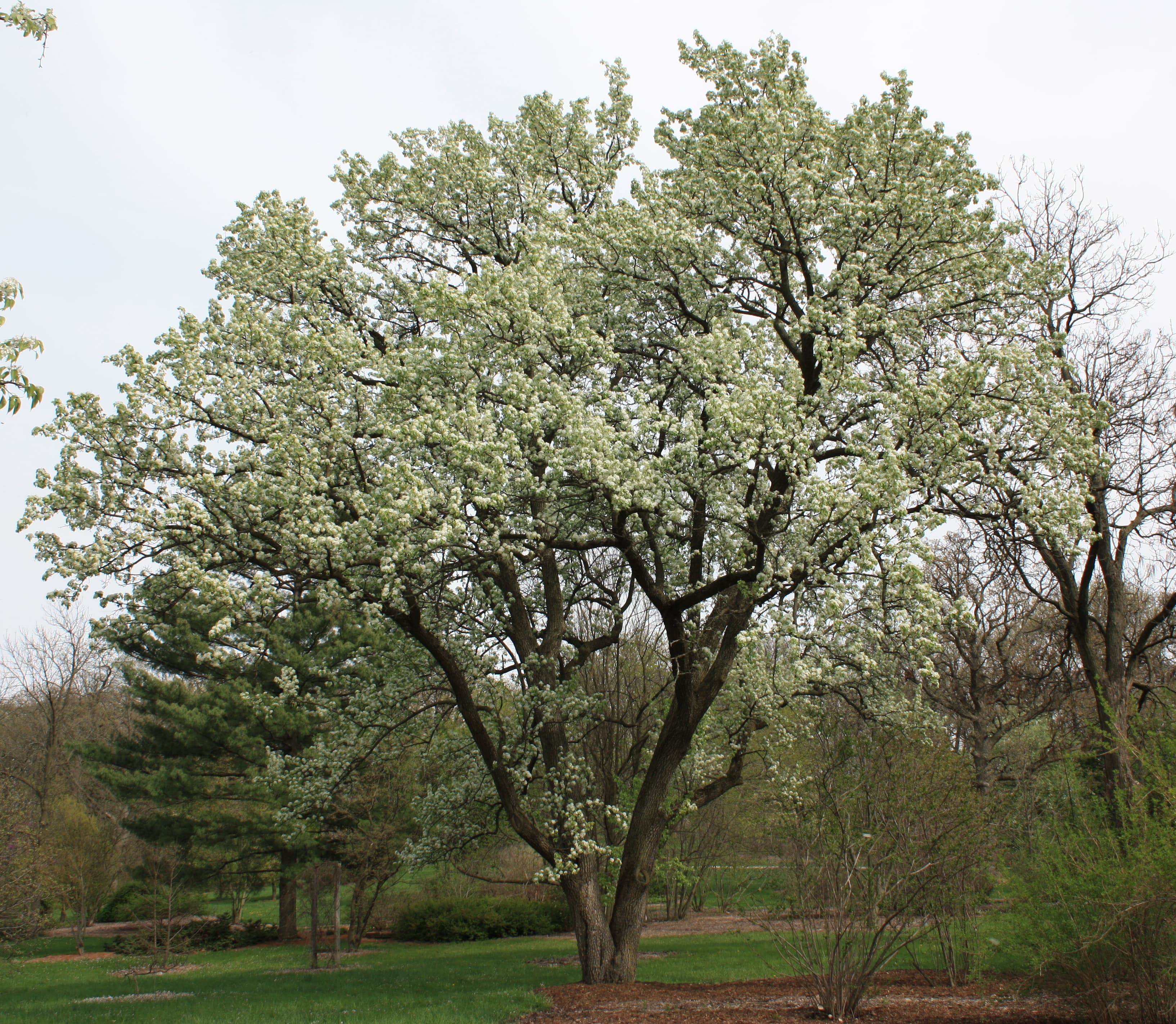
Ornamental pear 'Chanticleer' requires minimal pruning thanks to its naturally tidy, columnar shape. The best time to prune is during dormancy in December, January, or February, when the tree is leafless and you can clearly see its structure. Avoid pruning in late spring or summer, as fresh cuts can attract bacterial diseases, particularly fireblight, which affects Pyrus species. Use clean, sharp secateurs for small branches and a pruning saw for anything thicker than your thumb. Start by removing any dead, damaged, or diseased wood, cutting back to healthy tissue just above an outward-facing bud or lateral branch. Check for crossing or rubbing branches and remove the weaker of the two to prevent bark wounds. If any vigorous upright shoots (water sprouts) have grown from the main trunk or scaffold branches, cut these back to their point of origin—they spoil the tree's elegant silhouette and rarely produce flowers. 'Chanticleer' naturally forms a strong central leader, so resist the temptation to top or heavily shape the crown. If the tree develops a competing leader (a second upright stem), remove the weaker one cleanly at the base. Thin out overcrowded growth in the canopy only if necessary to improve air circulation, but be conservative—over-pruning can stimulate excessive leafy regrowth at the expense of spring blossom. Once the tree is mature, you may need to lift the lower canopy by removing a few low branches to maintain clearance beneath, but this is optional and depends on your garden layout.