Pincushion flower 'Butterfly Blue' in August: monthly care
Month-by-month care — Scabiosa columbaria 'Butterfly Blue'
In August your pincushion flower 'Butterfly Blue' needs attention: prune and watch the bloom.
- Prune
- Blooms
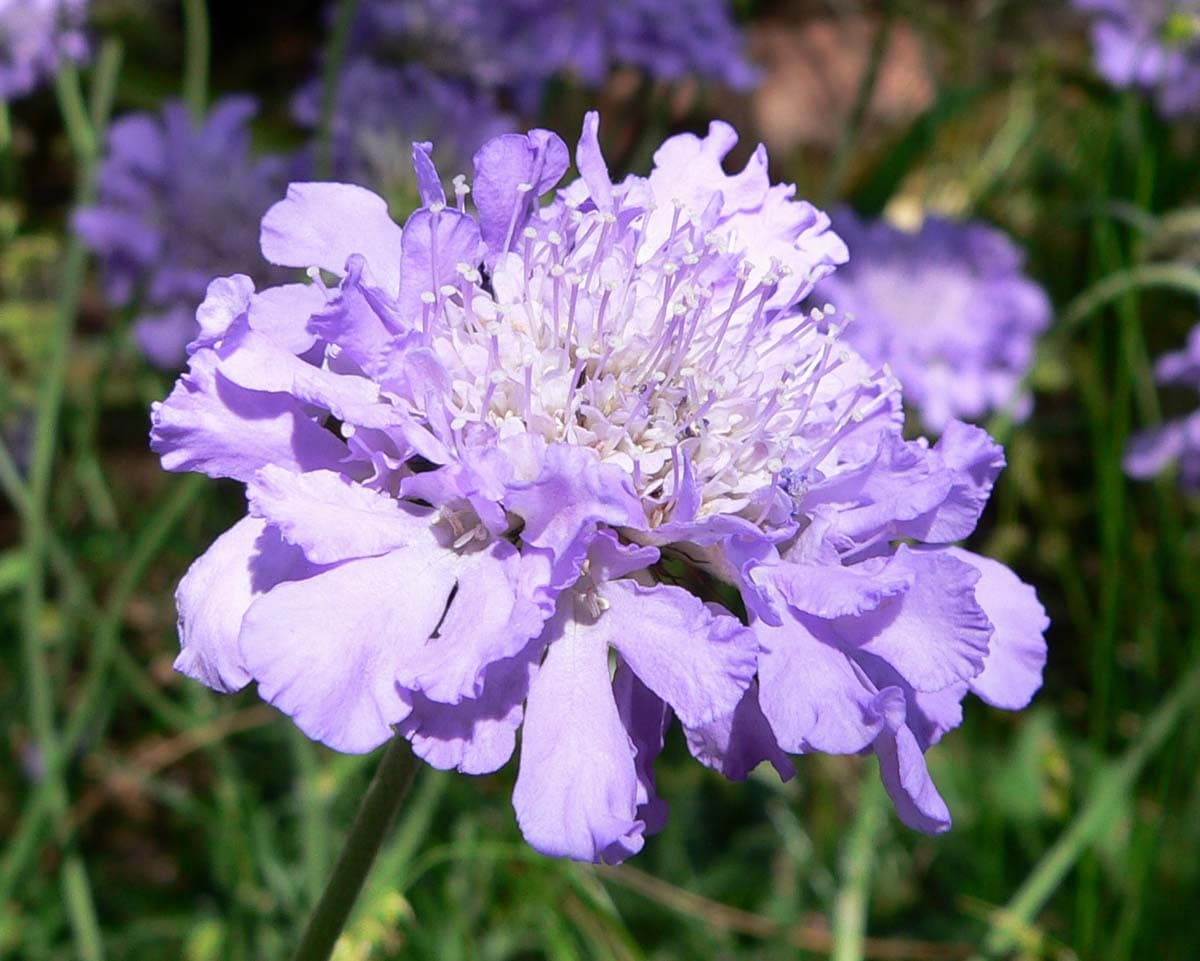
What to do this August
Scabiosa 'Butterfly Blue' flowers prolifically from late spring through to autumn, and regular deadheading is the most important task to keep blooms coming. Snip off spent flowers with secateurs or sharp scissors just above a set of leaves or side shoot; this prevents seed formation and encourages the plant to produce fresh buds. During peak season in July and August, you may need to deadhead two or three times a week. In March, before new growth begins in earnest, cut back all the old stems and tired foliage to within a few centimetres of the crown. This tidies the plant, removes any winter-damaged material, and makes way for vigorous spring growth. If you prefer a neater winter garden, you can do a light tidy in late autumn, but leaving some structure over winter provides habitat for beneficial insects and a degree of crown protection in harsh weather. A mid-season trim in July or early August can rejuvenate plants that have become straggly or whose flowering has slowed. Cut the whole clump back by about half; this stimulates a flush of fresh foliage and a second wave of flowers in late summer and autumn. Water and feed lightly after this harder cut to support regrowth. No specialist tools are needed—bypass secateurs are ideal for all pruning tasks. Avoid tearing or bruising stems, as ragged cuts can invite disease. There is no need to prune for shape; 'Butterfly Blue' naturally forms a neat, low mound.
Once established, scabious has moderate water needs. In spring and early summer, water during dry spells to support flowering, aiming for a deep soak once a week rather than frequent shallow watering. In high summer, established plants cope well with drought, though prolonged dryness will reduce flower production. Ease off watering in autumn as growth slows, and avoid winter waterlogging, which is more harmful than cold. Feed sparingly. In April or May, apply a balanced granular fertiliser such as blood, fish, and bone or a general-purpose feed at half the recommended rate. Scabious performs best in lean to moderately fertile soil; overfed plants produce lush foliage at the expense of flowers and become prone to flopping. A light spring mulch of garden compost provides gentle, slow-release nutrients and improves soil structure without overfeeding. 'Butterfly Blue' is hardy to zone 4 and requires no special winter protection in temperate Europe. Good drainage is more critical than insulation. In heavy or wet soils, a gravel mulch around the crown helps prevent winter rot. Leave old stems standing until March to protect the crown and shelter overwintering insects. Pests are rarely a problem. Aphids may cluster on young shoots in spring; a strong jet of water or an insecticidal soap usually suffices. Powdery mildew can appear in late summer, especially in dry conditions or crowded plantings; improve air circulation and avoid overhead watering. Slugs occasionally nibble emerging shoots in spring—use your preferred control method if damage is severe. Overall, maintenance is low, and 'Butterfly Blue' is a reliable, long-flowering perennial for sunny borders and gravel gardens.