Pruning Pincushion flower 'Butterfly Blue'
When and how — Scabiosa columbaria 'Butterfly Blue'
Prune your pincushion flower 'Butterfly Blue' in March, July and August — the optimal month is usually July.
The next pruning window is March next year.
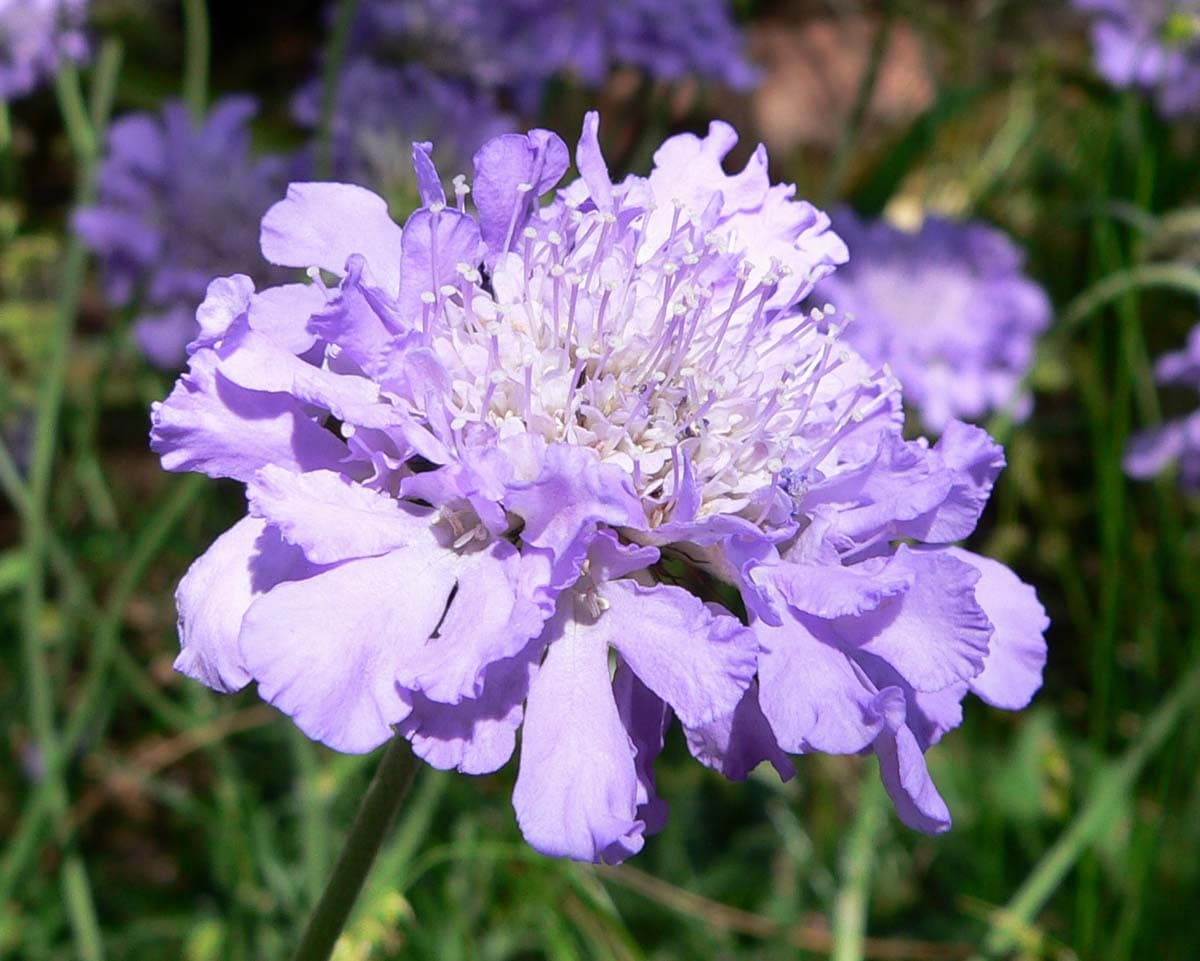
When to prune?
The perennial pincushion flower 'Butterfly Blue' is pruned in March, July and August.
With perennials, pruning is really seasonal management.
You don't prune perennials the way you prune shrubs. The work happens at three moments: (1) deadheading spent flower stems during the season to encourage repeat bloom, (2) optionally cutting back to about 10–15 cm above ground in late autumn, and (3) clearing all the old foliage in March before the new shoots emerge. Many gardeners now deliberately leave the old growth standing through winter — it protects the crown and shelters overwintering insects. Which approach to choose depends on taste and species: evergreen perennials (hellebore, bergenia) look better left alone, while wet-rotting species (hosta) need to come down after the first frost.
How to prune pincushion flower 'Butterfly Blue'
Scabiosa 'Butterfly Blue' flowers prolifically from late spring through to autumn, and regular deadheading is the most important task to keep blooms coming. Snip off spent flowers with secateurs or sharp scissors just above a set of leaves or side shoot; this prevents seed formation and encourages the plant to produce fresh buds. During peak season in July and August, you may need to deadhead two or three times a week. In March, before new growth begins in earnest, cut back all the old stems and tired foliage to within a few centimetres of the crown. This tidies the plant, removes any winter-damaged material, and makes way for vigorous spring growth. If you prefer a neater winter garden, you can do a light tidy in late autumn, but leaving some structure over winter provides habitat for beneficial insects and a degree of crown protection in harsh weather. A mid-season trim in July or early August can rejuvenate plants that have become straggly or whose flowering has slowed. Cut the whole clump back by about half; this stimulates a flush of fresh foliage and a second wave of flowers in late summer and autumn. Water and feed lightly after this harder cut to support regrowth. No specialist tools are needed—bypass secateurs are ideal for all pruning tasks. Avoid tearing or bruising stems, as ragged cuts can invite disease. There is no need to prune for shape; 'Butterfly Blue' naturally forms a neat, low mound.
Common mistakes
✗ Cutting back too early in spring
Late frost can still strike and the old foliage protects the crown. Wait until the first new shoots are visible (usually mid-March) — then you know the season has actually started.
✗ Skipping deadheading
Hardy geranium, salvia, lupin and delphinium will give a second flush if you cut spent stems back to just above a pair of healthy leaves as soon as the first flowers fade.
✗ Cutting ornamental grasses down in autumn
The dry stems are the whole point of winter interest, AND they protect the crown from frost and waterlogging. Cut down to a fist's height only in late February.
Too late this year? Here's what to do
Better to wait than prune at the wrong moment. The next optimal window is March next year. Until then: leave the plant alone — only remove dead or diseased wood (which you can do year-round).


