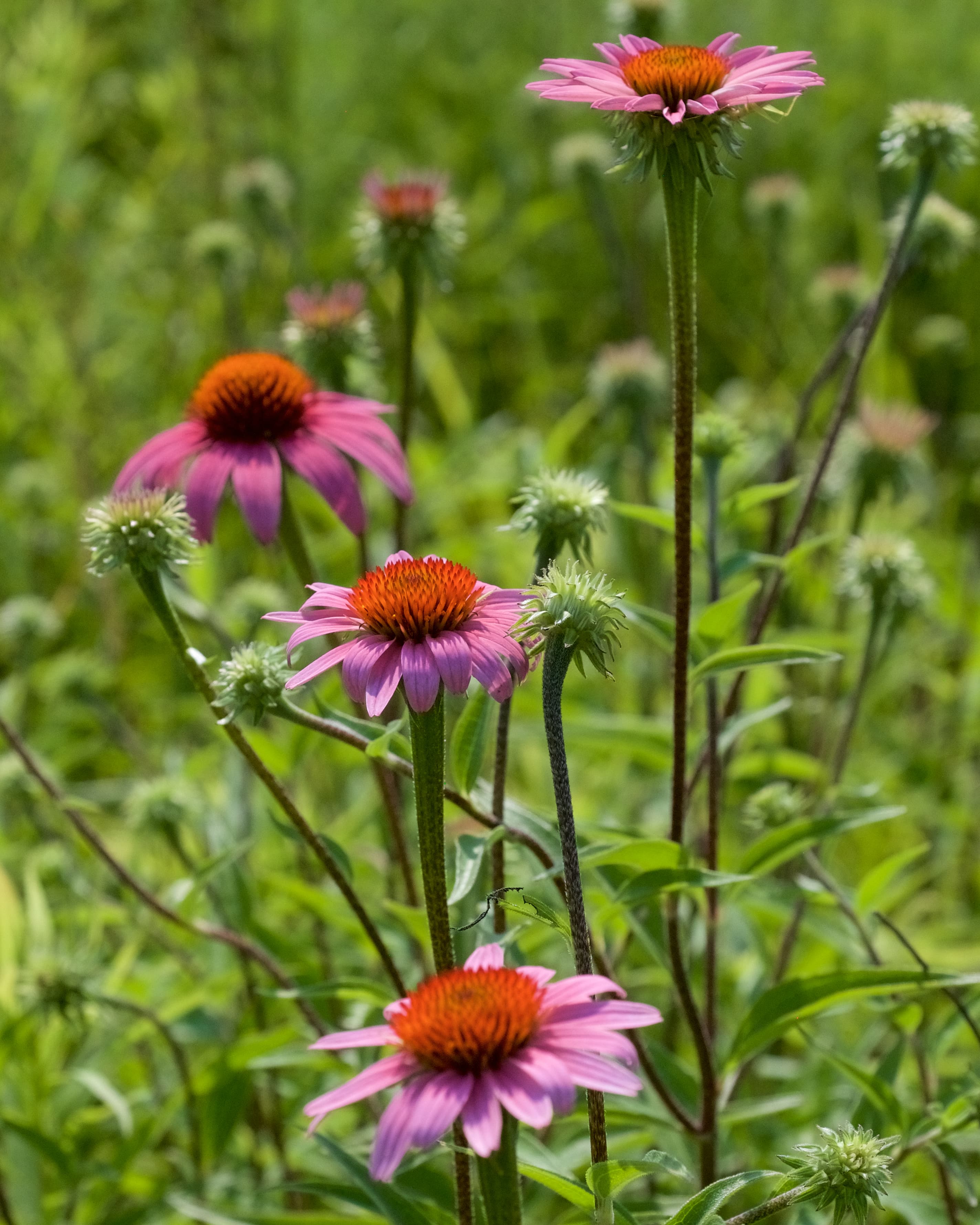
Purple coneflower 'White Swan'
Echinacea purpurea 'White Swan'
Dutch: Zonnehoed 'White Swan'
Zonnehoed 'White Swan' (Echinacea purpurea 'White Swan') is a perennial from the Asteraceae family that grows up to 60cm tall. This plant thrives in full sun to partial shade and requires low maintenance. Blooms in summer and late summer with white, orange flowers and attracts bees and butterflies and birds.
50–60 cm
40–50 cm
full sun, partial shade
moderate
loam, sandy soil, clay soil
low maintenance
summer, late summer
white, orange
Ecologische waarde
Verzorgingskalender
| Taak | Jan | Feb | Mrt | Apr | Mei | Jun | Jul | Aug | Sep | Okt | Nov | Dec |
|---|---|---|---|---|---|---|---|---|---|---|---|---|
| 🌱Planten | ||||||||||||
| ✂️Snoeien | ||||||||||||
| 💧Bemesten |
Care tips
Planting
Echinacea purpurea 'White Swan' thrives in full sun but tolerates partial shade, though flowering may be less prolific in shadier spots. It adapts to a wide range of soil types—loam, sandy soil, and clay—provided drainage is reasonable. Heavy clay benefits from the addition of grit or organic matter to prevent winter waterlogging, which can rot the crown. Plant container-grown specimens in March, April, or May for establishment before summer, or in September and October to take advantage of warm soil and autumn rain. Space plants 45 cm apart to allow for their mature spread of 40–50 cm and good air circulation, which helps reduce mildew. Dig a hole slightly larger than the root ball and loosen the soil at the base. Set the plant so the crown sits at the same level it was in the pot—planting too deep invites rot. Backfill with the excavated soil, firming gently to eliminate air pockets, then water thoroughly to settle the roots. After planting, apply a 5 cm layer of mulch around the base, keeping it clear of the crown itself. This conserves moisture during establishment and suppresses weeds. Water regularly for the first growing season, especially during dry spells, until the root system is well developed. Once established, 'White Swan' is reasonably drought-tolerant but performs best with moderate, consistent moisture. Staking is rarely necessary given the sturdy stems and modest height of 50–60 cm, though exposed sites with heavy soil may benefit from discreet support in the first year.
Pruning
Echinacea 'White Swan' does not require heavy pruning, but thoughtful deadheading and seasonal tidying improve performance and appearance. The main pruning windows are March and November, each serving a different purpose. During the flowering period in summer and late summer, regularly remove spent blooms by cutting back to a lateral bud or leaf joint. This encourages further flowering and prevents the plant exhausting itself in seed production. However, many gardeners leave some seedheads intact from late summer onward: the distinctive orange-brown cones are attractive through autumn and winter, provide food for finches, and add structural interest to the border when frosted. In November, once flowering has completely finished and the foliage begins to collapse, you can cut back the stems to around 10 cm above ground level. This tidies the plant and reduces the risk of fungal diseases overwintering in dead foliage. Alternatively, leave the stems standing through winter for wildlife value and cut them back in early spring instead. The key spring prune takes place in March. Remove all remaining dead stems and foliage down to the emerging basal growth, taking care not to damage the new shoots. Clear away any debris around the crown to improve air circulation. If clumps have become congested after three or four years, March is also the time to lift and divide them: use a sharp spade or knife to split the crown into sections with healthy roots and shoots, then replant immediately at the original spacing.
Maintenance
Echinacea 'White Swan' is low-maintenance once established. Water moderately during the growing season, increasing frequency in prolonged dry spells—aim for a deep soak once a week rather than frequent shallow watering, which encourages surface rooting. In autumn and winter, natural rainfall is usually sufficient; avoid waterlogged conditions, particularly on clay soils, as this can cause crown rot. Feed in April or May as new growth emerges. A single application of a balanced granular fertiliser (such as blood, fish and bone) or a general-purpose slow-release feed is adequate. Scatter it around the base of the plant and water in. Avoid high-nitrogen feeds, which promote soft, leafy growth at the expense of flowers. Established plants on reasonably fertile soil often perform well without additional feeding. This cultivar is fully hardy across zones 3–9 and requires no winter protection in temperate Europe. The crown is dormant below ground through winter, so don't be alarmed by the complete die-back of top growth. Common pests include aphids on young shoots in spring; a strong jet of water or insecticidal soap usually resolves this. Slugs may nibble emerging foliage in damp springs—use organic pellets or barriers if damage is severe. Powdery mildew can appear on leaves in late summer, particularly in dry conditions or crowded plantings; improve spacing and air flow, and remove affected foliage. Aster yellows, a viral disease spread by leafhoppers, occasionally causes distorted growth and discoloured flowers—remove and destroy affected plants promptly to prevent spread. Refresh mulch annually in spring to suppress weeds and retain moisture.
More about this plant
Combines well with
Related guides
Purple coneflower 'White Swan' in your garden design?
Make a free garden design with AI advice. Our AI knows Purple coneflower 'White Swan' and 130+ other plants.
Start free design