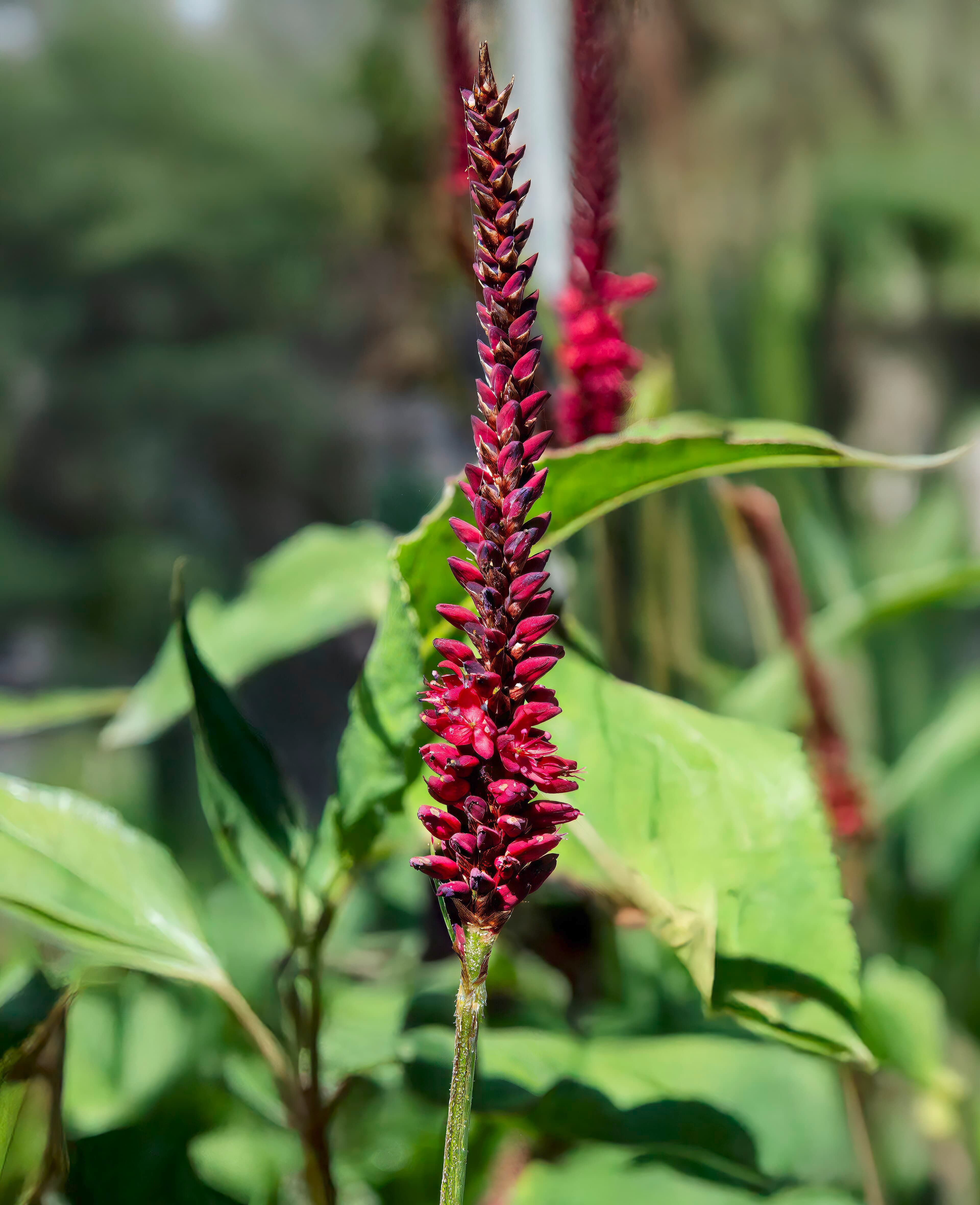
Red bistort 'Rosea'
Persicaria amplexicaulis 'Rosea'
Dutch: Duizendknoop 'Rosea'
Duizendknoop 'Rosea' (Persicaria amplexicaulis 'Rosea') is a perennial from the Polygonaceae family that grows up to 120cm tall. This plant thrives in full sun to partial shade and requires low maintenance. Blooms in early summer and summer and late summer and autumn with pink flowers and attracts bees and butterflies.
80–120 cm
60–90 cm
full sun, partial shade
high water needs
loam, clay soil
low maintenance
early summer, summer, late summer, autumn
pink
Ecologische waarde
Verzorgingskalender
| Taak | Jan | Feb | Mrt | Apr | Mei | Jun | Jul | Aug | Sep | Okt | Nov | Dec |
|---|---|---|---|---|---|---|---|---|---|---|---|---|
| 🌱Planten | ||||||||||||
| ✂️Snoeien | ||||||||||||
| 💧Bemesten |
Care tips
Planting
Persicaria amplexicaulis 'Rosea' thrives in full sun or partial shade, making it a versatile choice for borders and damp spots in the garden. It performs best in moisture-retentive soils, particularly loam or clay, which hold water well—essential for this thirsty perennial. Avoid dry, sandy soils unless you can commit to frequent watering. Plant in March, April or May for spring planting, or in September and October for autumn planting. Both windows work well, though autumn planting allows roots to establish over winter. Before planting, dig over the soil and incorporate plenty of organic matter—well-rotted compost or manure—to improve moisture retention and fertility, especially if your soil is on the lighter side. Space plants 60 cm apart to allow for their mature spread of 60–90 cm. Dig a planting hole slightly larger than the root ball, set the plant at the same depth it was growing in its pot, and firm the soil gently around the roots. Water thoroughly immediately after planting to settle the soil and eliminate air pockets. Apply a 5 cm layer of organic mulch around the base of each plant, keeping it clear of the stems. This helps retain moisture—critical for persicaria—and suppresses weeds while the plant establishes. In the first few weeks, check soil moisture regularly and water whenever the top few centimetres feel dry. Once established, 'Rosea' will tolerate brief dry spells but always performs best with consistent moisture, particularly during its long flowering season from early summer through to autumn.
Pruning
Persicaria amplexicaulis 'Rosea' requires very little pruning, which is part of its appeal as a low-maintenance perennial. The main task is cutting back old growth once a year, and you have two timing options depending on your garden style and local wildlife considerations. The traditional approach is to cut back in November, once flowering has finished and the foliage begins to collapse with the first frosts. Use secateurs or garden shears to cut all stems down to ground level, removing the entire top growth. This tidies the border for winter and prevents the dead stems from becoming soggy and harbouring slugs or disease. Alternatively, delay pruning until March. Leaving the spent flower spikes and stems standing over winter provides structure in the dormant garden, seed for birds, and shelter for overwintering insects. The dried seedheads can look attractive when rimmed with frost. In early March, before new growth emerges strongly, cut everything back to the base. Clear away the debris to allow fresh shoots to push through unimpeded. Whichever timing you choose, use clean, sharp tools and cut just above ground level. There's no need for complex shaping or selective pruning—a simple annual chop is all that's required. During the growing season, deadheading is optional. 'Rosea' produces long, slender flower spikes continuously from early summer to autumn, and while removing spent blooms can encourage a few more, the plant flowers so freely that most gardeners leave it to its own devices without any noticeable loss of display.
Maintenance
Watering is the most important ongoing task for Persicaria amplexicaulis 'Rosea'. This is a moisture-loving perennial with high water needs, especially during the growing and flowering season. In spring and summer, water deeply whenever the top few centimetres of soil dry out—typically once or twice a week in dry weather, more often during hot spells. Clay and loam soils help, but don't assume they'll do all the work; check regularly. In autumn, as growth slows, reduce watering frequency but don't let the soil dry out completely. Winter rainfall is usually sufficient for dormant plants. Feed in early spring to support the long flowering season ahead. In March, scatter a general-purpose granular fertiliser such as blood, fish and bone or Growmore around the base of each plant, following packet rates. A second, lighter feed in April or May gives an extra boost as flower buds form, though this is optional if your soil is reasonably fertile. Mulch annually in spring with a 5 cm layer of garden compost or well-rotted manure. This conserves moisture, suppresses weeds, and slowly feeds the soil—all beneficial for this vigorous grower. Persicaria amplexicaulis 'Rosea' is fully hardy in zones 4–9 and needs no winter protection in temperate Europe. It dies back completely and re-emerges reliably each spring. Pests and diseases are rarely a problem. Slugs and snails may nibble young shoots in spring, so protect new growth with grit, copper rings or organic pellets if they're an issue in your garden. Otherwise, this is a robust, trouble-free plant that rewards minimal effort with months of pink flower spikes.
More about this plant
Combines well with
Related guides
Red bistort 'Rosea' in your garden design?
Make a free garden design with AI advice. Our AI knows Red bistort 'Rosea' and 130+ other plants.
Start free design