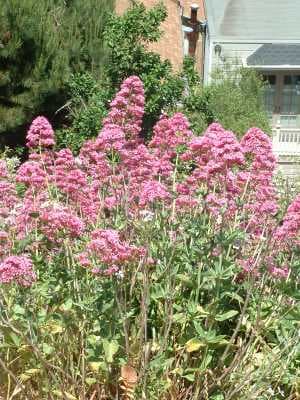
Red valerian 'Albus'
Centranthus ruber 'Albus'
Dutch: Spoorbloem 'Albus'
Spoorbloem 'Albus' (Centranthus ruber 'Albus') is a perennial from the Caprifoliaceae family that grows up to 90cm tall. This plant thrives in full sun to partial shade and requires low maintenance. Blooms in late spring and early summer and summer and late summer with white flowers and attracts bees and butterflies.
60–90 cm
40–60 cm
full sun, partial shade
low water needs
sandy soil, loam, chalky soil
low maintenance
late spring, early summer, summer, late summer
white
Ecologische waarde
Verzorgingskalender
| Taak | Jan | Feb | Mrt | Apr | Mei | Jun | Jul | Aug | Sep | Okt | Nov | Dec |
|---|---|---|---|---|---|---|---|---|---|---|---|---|
| 🌱Planten | ||||||||||||
| ✂️Snoeien | ||||||||||||
| 💧Bemesten |
Care tips
Planting
Centranthus ruber 'Albus' thrives in full sun or partial shade and is particularly well suited to free-draining soils. It performs best in sandy, loamy or chalky ground and tolerates poor, alkaline conditions better than most perennials. If your soil is heavy clay, dig in plenty of grit or sharp sand before planting to improve drainage—waterlogged roots are the main cause of failure with this plant. Plant in March, April or May for establishment before summer, or in September and October to give roots time to settle before winter. Space plants 45 cm apart to allow for their mature spread of 40–60 cm. Dig a hole slightly larger than the root ball, set the crown at the same level it was growing in the pot, and backfill with soil mixed with a little compost if your ground is very poor. Firm gently and water in well. After planting, water regularly for the first few weeks until you see new growth, then reduce frequency—Centranthus has low water needs once established and actually prefers drier conditions. A light mulch of gravel or grit around the base helps suppress weeds and keeps the crown well drained, which is especially useful on heavier soils. Avoid organic mulches like bark, which can retain too much moisture. This perennial self-seeds freely, so if you want to control spread, deadhead spent flowers before seed sets. Otherwise, allow a few flower spikes to mature and you'll find seedlings appearing in cracks in paving and gravel—often in the most unlikely spots, which is part of the plant's charm.
Pruning
Centranthus ruber 'Albus' benefits from two pruning sessions each year to keep it tidy, encourage repeat flowering, and prevent it becoming too woody at the base. The main prune takes place in March, just as new growth begins to emerge at ground level. Cut back all the previous year's stems to within 5–10 cm of the base, removing the old woody growth entirely. This hard prune rejuvenates the plant, promotes bushy new shoots, and prevents the centre from becoming bare and leggy. Use clean, sharp secateurs or garden shears for the job. The second prune comes in August, immediately after the first main flush of flowers fades. Shear back the spent flower stems by about half their length, cutting just above a set of leaves. This tidies the plant, stops it self-seeding everywhere (unless you want seedlings), and often triggers a second, smaller flush of white blooms in early autumn. If you prefer a more natural look or want to encourage wildlife, you can leave some spent heads for finches, which enjoy the seeds. Centranthus doesn't require complex pruning techniques—it's very forgiving. If you miss the August cut, simply remove any tatty or damaged stems as you notice them. Avoid autumn pruning after September, as the old stems provide some frost protection to the crown over winter. If the plant becomes very woody and sparse after several years despite regular pruning, it's often easier to replace it or allow self-sown seedlings to take over, as Centranthus is relatively short-lived, typically performing well for four to six years.
Maintenance
Once established, Centranthus ruber 'Albus' is a low-maintenance perennial that tolerates neglect and dry conditions remarkably well. Water sparingly—only during prolonged dry spells in summer, and even then, established plants often manage without help. Overwatering or planting in poorly drained soil encourages root rot and reduces flowering, so err on the side of dryness. Feed lightly in April or May with a general-purpose granular fertiliser or a handful of blood, fish and bone scattered around the base. Avoid high-nitrogen feeds, which produce lush foliage at the expense of flowers. On poor, chalky or stony soils, Centranthus actually flowers more profusely with minimal feeding—rich soil can make growth soft and floppy. If your plant is thriving, you can skip feeding altogether. This perennial is fully hardy in zones 5–9 and needs no special winter protection in temperate Europe. The old stems die back naturally, and new shoots emerge from the crown in spring. A gravel mulch year-round helps with drainage and keeps the crown dry, which is more important than warmth. Pests are rarely a problem. Aphids occasionally cluster on young shoots in spring; a strong jet of water or a spray of soapy water usually deals with them. Slugs and snails generally leave the foliage alone. Powdery mildew can appear on leaves in late summer, especially in dry conditions, but it's mostly cosmetic—good air circulation and the August prune help minimise it. Root rot is the main risk, caused by winter wet in heavy soil, so drainage is your priority throughout the year.
More about this plant
Combines well with
Related guides
Red valerian 'Albus' in your garden design?
Make a free garden design with AI advice. Our AI knows Red valerian 'Albus' and 130+ other plants.
Start free design