Red valerian in August: monthly care
Month-by-month care — Centranthus ruber
In August your red valerian needs attention: prune and watch the bloom.
- Prune
- Blooms
What to do this August
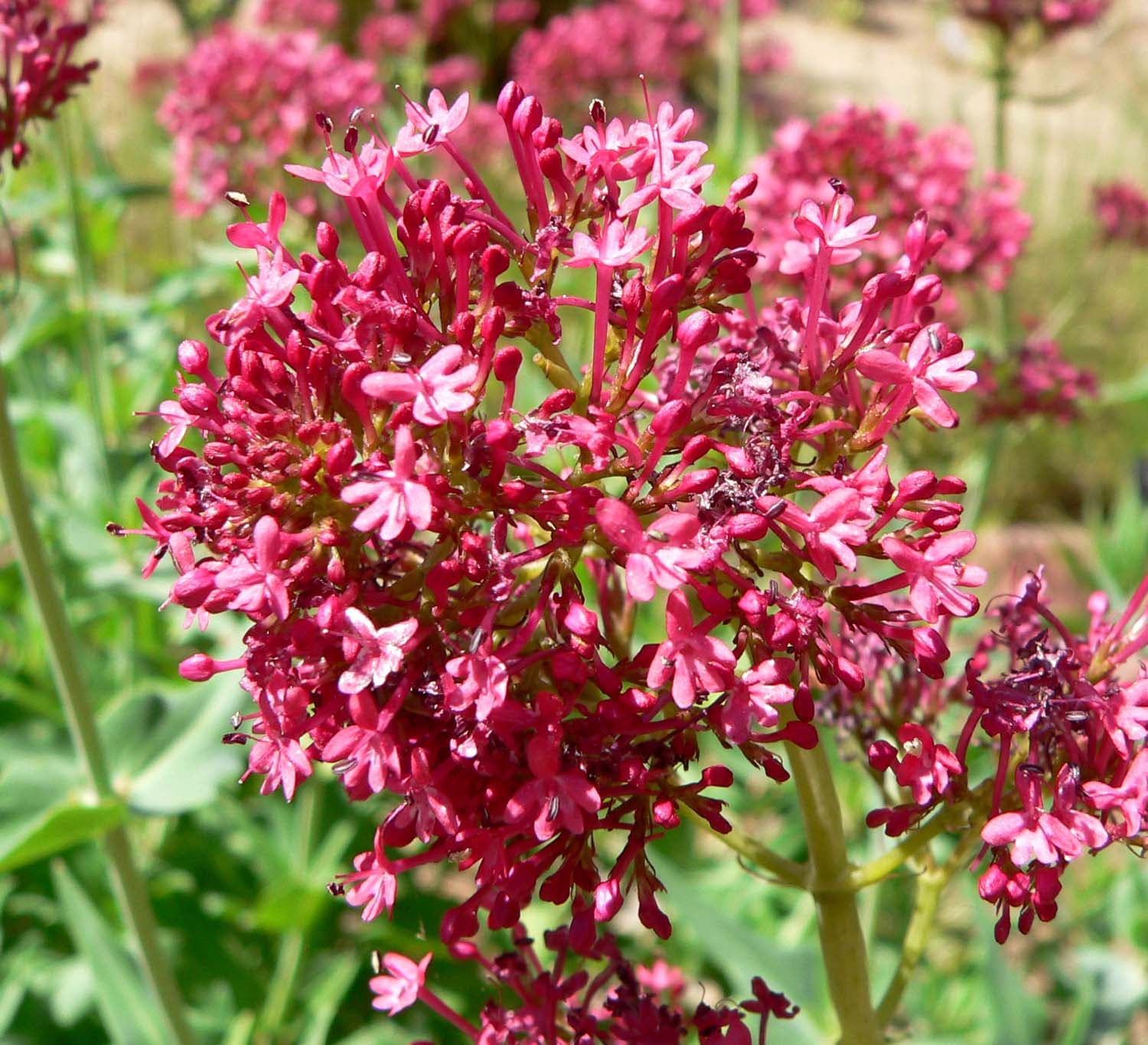
Spoorbloem flowers from late spring through to late summer, producing dense clusters of small tubular blooms on upright stems. To keep plants tidy and encourage a second flush of flowers, deadhead or cut back hard in August after the main flowering period. Use secateurs or garden shears to trim the whole plant back by about half to two-thirds, removing spent flower stems and any straggly growth. This August prune stimulates fresh basal foliage and often a modest second flowering in early autumn, while also preventing excessive self-seeding if that's a concern in your garden. In March, carry out a light tidy-up to remove any winter-damaged stems and old foliage. Cut back dead or frost-damaged growth to just above emerging new shoots at the base. Spoorbloem is semi-evergreen in milder winters but can look tatty by late winter, so this spring prune refreshes the plant and promotes vigorous new growth. Avoid cutting into woody older stems at the base unless you're rejuvenating a very old clump, as Centranthus can be slow to reshoot from hard, bare wood. The plant naturally forms a bushy, somewhat sprawling habit and doesn't require complex shaping. If it becomes too large or floppy, especially in richer soils or shadier spots, cut it back more severely in March. Spoorbloem is short-lived as perennials go, typically lasting four to six years, so take cuttings or allow some self-seeding to maintain a succession of young plants.
Centranthus ruber is a low-maintenance perennial well suited to dry, sunny spots. Water sparingly once established; the plant is drought-tolerant and dislikes sitting in wet soil. In summer, water only during extended dry periods—overwatering encourages soft, disease-prone growth. In autumn and winter, natural rainfall is almost always sufficient, and good drainage is more important than moisture. Feed lightly in April or May with a general-purpose granular fertiliser or a handful of blood, fish, and bone around the base of each plant. Avoid high-nitrogen feeds or rich soil amendments, as spoorbloem flowers best in lean conditions. Overfed plants produce lush foliage but fewer blooms and are more prone to flopping. In most garden soils, especially chalky or sandy types, feeding can be skipped altogether without harm. Spoorbloem is fully hardy in zones 5–9 and requires no special winter protection in temperate Europe. In very cold or wet winters, plants may die back to the crown but will reshoot reliably in spring. Mulching is unnecessary and can cause crown rot in damp conditions. Pests are rarely a problem. Aphids occasionally cluster on young shoots in spring; a strong jet of water or an insecticidal soap usually resolves this. Powdery mildew can appear on foliage in dry summers, particularly in crowded plantings with poor air circulation—thin congested clumps and ensure adequate spacing. Spoorbloem self-seeds enthusiastically, especially in gravel or paving cracks. Weed out unwanted seedlings promptly, or embrace the informal, cottage-garden effect they create.