Red valerian in March: monthly care
Month-by-month care — Centranthus ruber
In March your red valerian needs attention: plant / sow and prune.
- Plant / sow
- Prune
What to do this March
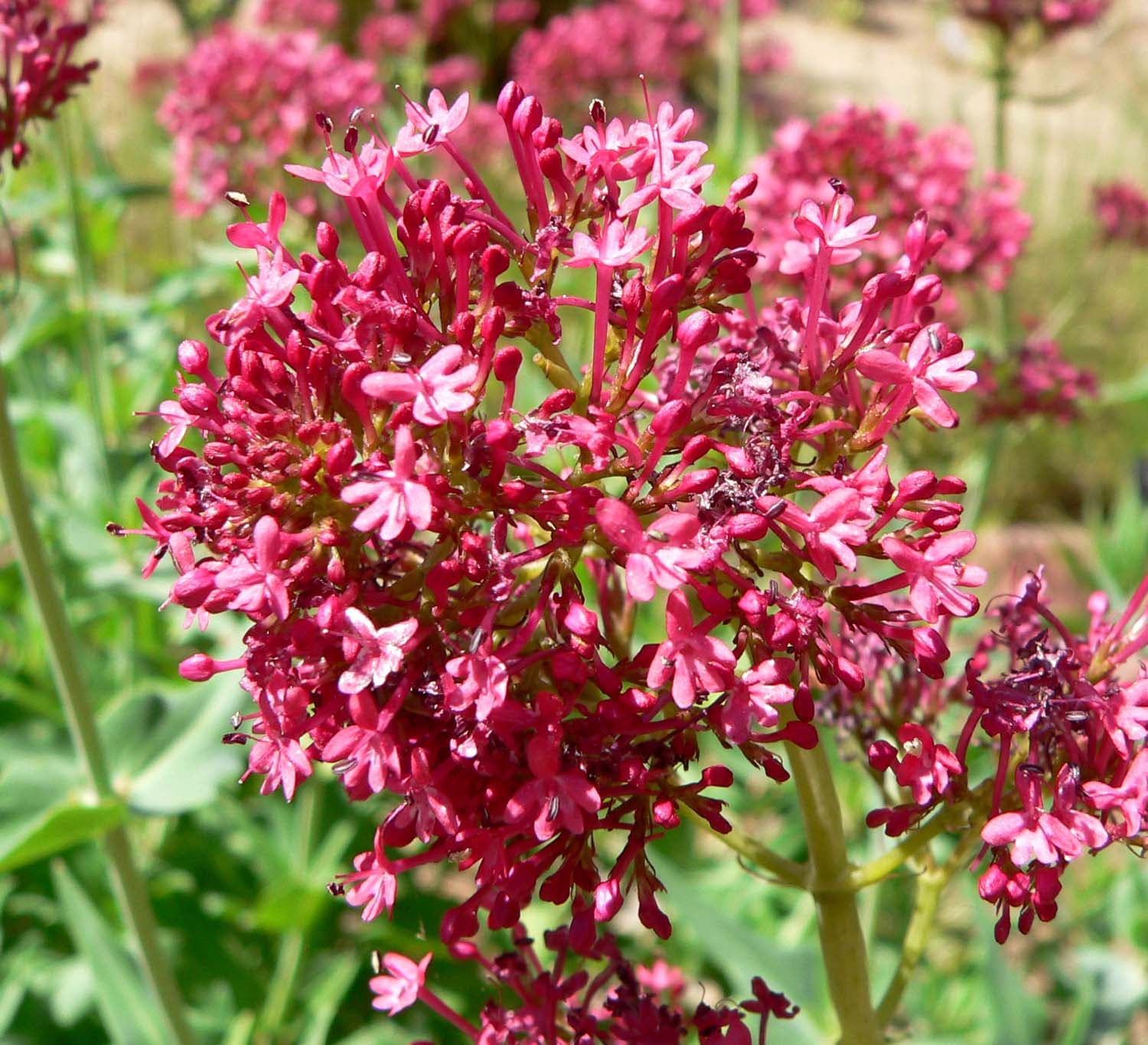
Centranthus ruber, commonly known as red valerian or spoorbloem, thrives in full sun or partial shade and is remarkably unfussy about soil. It performs best in well-drained sandy, loamy, or chalky soils and actually prefers lean, alkaline conditions—avoid rich, heavy ground that stays wet. The plant is ideal for dry banks, gravel gardens, walls, and coastal sites where many other perennials struggle. Plant spoorbloem in March, April, or May for establishment before summer, or in September and October to give roots time to settle before winter. Space plants 45 cm apart to allow for their mature spread of 40–60 cm. Dig a hole slightly larger than the root ball, loosen the soil at the base, and position the crown at the same level it sat in the pot. Backfill with excavated soil—there's no need to add compost or manure, as spoorbloem dislikes overly fertile conditions which encourage floppy growth at the expense of flowers. Water in thoroughly after planting to settle roots, then water sparingly. Once established, Centranthus is drought-tolerant and needs little supplementary watering except during prolonged dry spells in the first season. Mulching is generally unnecessary and can retain too much moisture around the crown. If planting in autumn, avoid waterlogged sites over winter. Spoorbloem often self-seeds freely in cracks and crevices, so if you want a more naturalistic effect, allow a few seedheads to mature after the first flush of flowers.
Spoorbloem flowers from late spring through to late summer, producing dense clusters of small tubular blooms on upright stems. To keep plants tidy and encourage a second flush of flowers, deadhead or cut back hard in August after the main flowering period. Use secateurs or garden shears to trim the whole plant back by about half to two-thirds, removing spent flower stems and any straggly growth. This August prune stimulates fresh basal foliage and often a modest second flowering in early autumn, while also preventing excessive self-seeding if that's a concern in your garden. In March, carry out a light tidy-up to remove any winter-damaged stems and old foliage. Cut back dead or frost-damaged growth to just above emerging new shoots at the base. Spoorbloem is semi-evergreen in milder winters but can look tatty by late winter, so this spring prune refreshes the plant and promotes vigorous new growth. Avoid cutting into woody older stems at the base unless you're rejuvenating a very old clump, as Centranthus can be slow to reshoot from hard, bare wood. The plant naturally forms a bushy, somewhat sprawling habit and doesn't require complex shaping. If it becomes too large or floppy, especially in richer soils or shadier spots, cut it back more severely in March. Spoorbloem is short-lived as perennials go, typically lasting four to six years, so take cuttings or allow some self-seeding to maintain a succession of young plants.