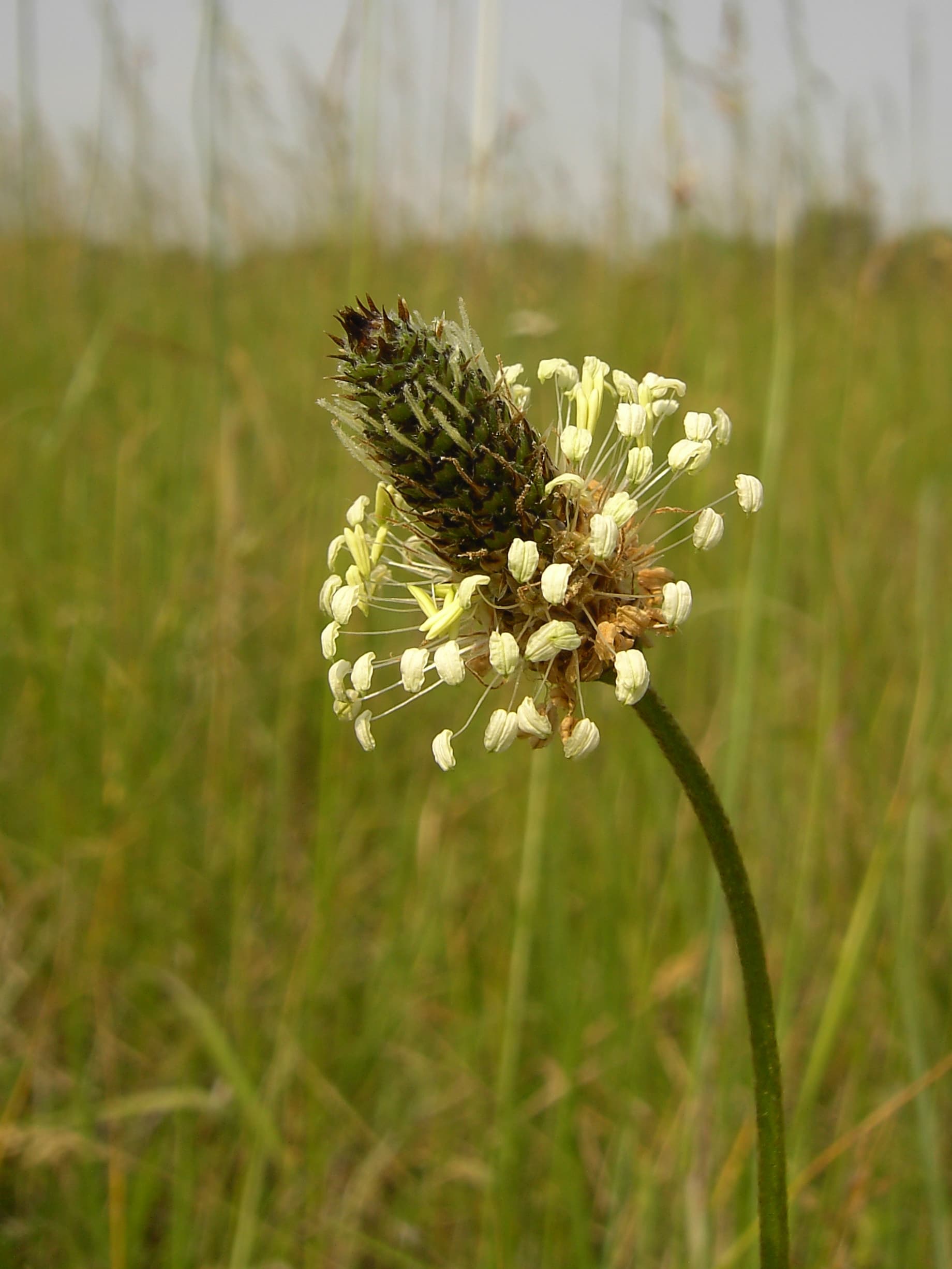
Ribwort plantain
Plantago lanceolata
Dutch: Smalle weegbree
Smalle weegbree (Plantago lanceolata) is a native to the Netherlands, edible perennial from the Plantaginaceae family that grows up to 50cm tall. This plant thrives in full sun to partial shade and requires low maintenance. Blooms in late spring and summer and late summer with green flowers and attracts bees and butterflies and birds.
15–50 cm
15–30 cm
full sun, partial shade
low water needs
sandy soil, loam, chalky soil
low maintenance
late spring, summer, late summer
green
Ecologische waarde
Verzorgingskalender
| Taak | Jan | Feb | Mrt | Apr | Mei | Jun | Jul | Aug | Sep | Okt | Nov | Dec |
|---|---|---|---|---|---|---|---|---|---|---|---|---|
| 🌱Planten | ||||||||||||
| ✂️Snoeien | ||||||||||||
| 🍎Oogsten |
Care tips
Planting
Narrow-leaved plantain (Plantago lanceolata) is a hardy perennial that thrives in full sun or partial shade and tolerates a wide range of soil types, including sandy, loamy, and chalky soils. It prefers well-drained ground and is particularly well suited to poor, dry conditions where many other plants struggle. Plant in March, April, or May for spring establishment, or in September and October for autumn planting when the soil is still warm enough to encourage root development before winter. You can sow seed directly where you want plants to grow, or transplant young plants or divisions. If sowing, scatter seed thinly on prepared soil and rake in lightly—plantain seed needs light to germinate, so don't bury it deeply. Aim for a planting distance of around 25 cm between plants to allow each rosette room to spread. If you're planting plugs or divisions, dig a hole just large enough to accommodate the root ball, firm the plant in gently, and water well to settle the soil around the roots. Soil preparation is minimal: plantain is unfussy and doesn't require rich, fertile ground. In fact, it often performs better in lean soil. Remove any perennial weeds before planting, but there's no need to add compost or manure unless your soil is extremely compacted. After planting, water in well, then leave the plants to establish. A light mulch of grit or gravel around the base can help suppress weeds in the early weeks, but plantain quickly forms a dense rosette that shades out competition on its own.
Pruning
Narrow-leaved plantain doesn't require pruning in the traditional sense, but it does benefit from regular deadheading and tidying to keep it looking presentable and to prevent excessive self-seeding. The main task is to remove spent flower spikes in August and September, once flowering has finished. Plantain produces upright, cylindrical green flower heads on long, ribbed stems throughout late spring, summer, and into late summer. If left in place, these will set copious amounts of seed, and the plant can become invasive in borders and lawns. Use a pair of secateurs or simply pinch off the flower stalks at the base of the rosette as they fade. This not only prevents unwanted seedlings but also encourages the plant to put energy back into the foliage rather than seed production. If you're growing plantain for its edible or medicinal leaves, regular removal of flower stems also prolongs the harvest period, as the leaves remain more tender when the plant isn't flowering. In late autumn or early spring, you can tidy the rosette by removing any dead, damaged, or yellowing outer leaves. Pull these away gently by hand or snip them off at the base. This isn't essential—plantain is a tough, low-maintenance plant—but it improves appearance and reduces the risk of fungal issues in very wet winters. There's no need for hard pruning or cutting back; the evergreen or semi-evergreen rosette should be left largely intact to protect the crown through winter.
Maintenance
Narrow-leaved plantain is exceptionally low-maintenance once established. Its water needs are low, and it tolerates drought well, making it ideal for dry gardens or areas with free-draining soil. In most years, rainfall alone will suffice. Water newly planted specimens during prolonged dry spells in their first season, but after that, irrigation is rarely necessary. In fact, overwatering or planting in heavy, waterlogged soil can lead to root rot. Feeding is not required. Plantain thrives in poor to moderately fertile soil, and adding fertiliser can encourage lush, soft growth that is more prone to disease and less useful if you're harvesting the leaves for herbal use. The plant is fully hardy to zone 3, so overwintering presents no challenges in temperate Europe. The foliage often remains green through mild winters, though it may die back partially in colder spells. No protection is needed. Pests and diseases are uncommon. Plantain is generally trouble-free, though powdery mildew can occasionally appear on the leaves in hot, dry summers with poor air circulation. If this occurs, remove affected leaves and ensure plants aren't overcrowded. Slugs and snails may nibble young leaves in spring but rarely cause serious damage. Mulching is optional. A light gravel mulch can help suppress weeds around young plants, but established plantain rosettes are dense enough to outcompete most weeds on their own. If you're growing plantain in a wilder part of the garden or as part of a meadow planting, no mulch is necessary at all.
More about this plant
Combines well with
Related guides
Ribwort plantain in your garden design?
Make a free garden design with AI advice. Our AI knows Ribwort plantain and 130+ other plants.
Start free design