Rock rose in July: monthly care
Month-by-month care — Helianthemum nummularium
In July your rock rose needs attention: prune and watch the bloom.
- Prune
- Blooms
What to do this July
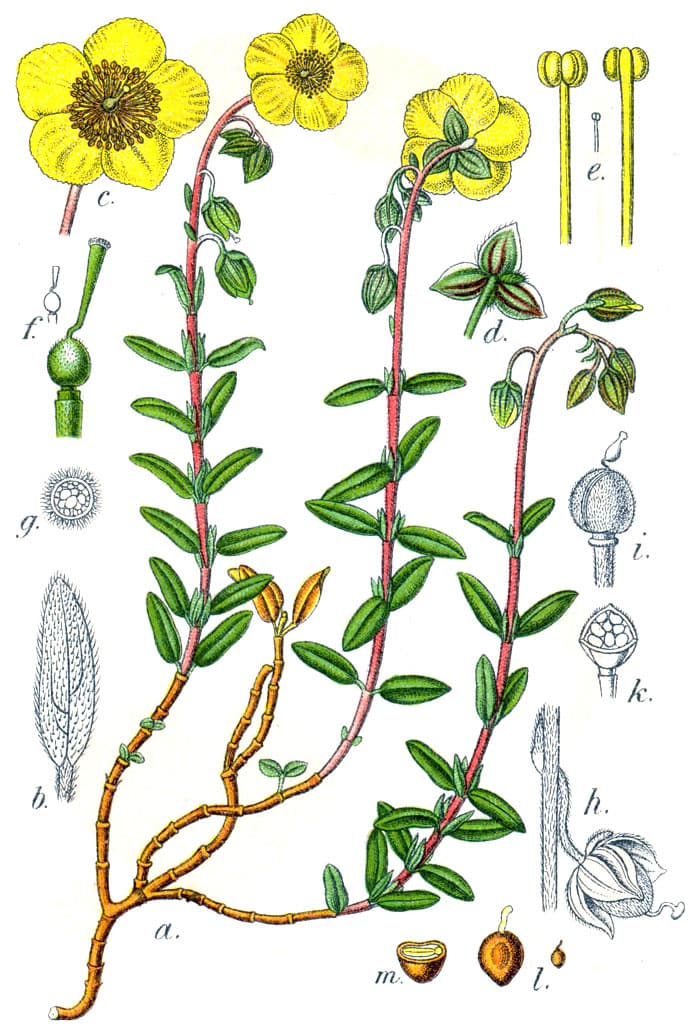
Zonneroosje benefits from a light trim in July or August, immediately after the main flush of flowers has faded. This timing is important: pruning after flowering encourages a second, smaller flush of blooms later in summer or early autumn, keeps the plant compact, and prevents it from becoming leggy and sparse in the centre. Use a pair of sharp hand shears or secateurs. Trim back the flowered shoots by about one-third to one-half, cutting just above a set of leaves. Focus on removing the spent flower stems and any straggly growth, but avoid cutting hard into old, woody stems at the base—zonneroosje does not regenerate well from very old wood. The aim is to maintain a neat, domed shape and encourage fresh, bushy growth. If you miss the July–August window, you can tidy the plant lightly in early spring (March), removing any winter-damaged or dead shoots. However, this won't stimulate a second flowering, so the post-flowering trim is more beneficial. Do not prune in autumn or winter, as this can leave the plant vulnerable to frost damage and rot. Zonneroosje is evergreen, so it retains its small, grey-green leaves year-round. Deadheading individual spent flowers during the flowering season is not necessary—the light shearing in summer deals with all the faded blooms at once. If the plant becomes woody or bare in the centre after several years, it's often easier to replace it with a young plant than to attempt hard renovation pruning, as old specimens rarely respond well.
Once established, zonneroosje requires very little maintenance. It has low water needs and is highly drought-tolerant, so avoid overwatering. In a typical British summer, established plants rarely need watering except during prolonged dry spells. If the soil dries out completely for weeks, water deeply once rather than little and often. In autumn and winter, natural rainfall is more than sufficient—wet winter soil is a greater threat than drought. Feed sparingly in March or April with a light application of general-purpose granular fertiliser or a handful of blood, fish, and bone scattered around the base of the plant. Zonneroosje grows naturally on poor, stony soils and does not need rich feeding. Over-fertilising encourages soft, lush growth that is prone to disease and reduces flowering. On chalky or sandy soils, feeding may not be necessary at all. Zonneroosje is fully hardy in zones 5–9 and needs no winter protection in temperate Europe. Its evergreen foliage provides year-round interest, though leaves may look a little tired by late winter. Remove any damaged or browned foliage in early spring. Pests are rarely a problem. The main threat is root rot caused by poor drainage or excessive winter wet, so ensure the soil remains free-draining. Powdery mildew can occasionally appear in humid conditions or on overcrowded plants; improve air circulation by thinning nearby growth and avoid overhead watering. Refresh the grit mulch every couple of years to keep the crown dry and suppress weeds, which compete for moisture and nutrients in the plant's shallow root zone.