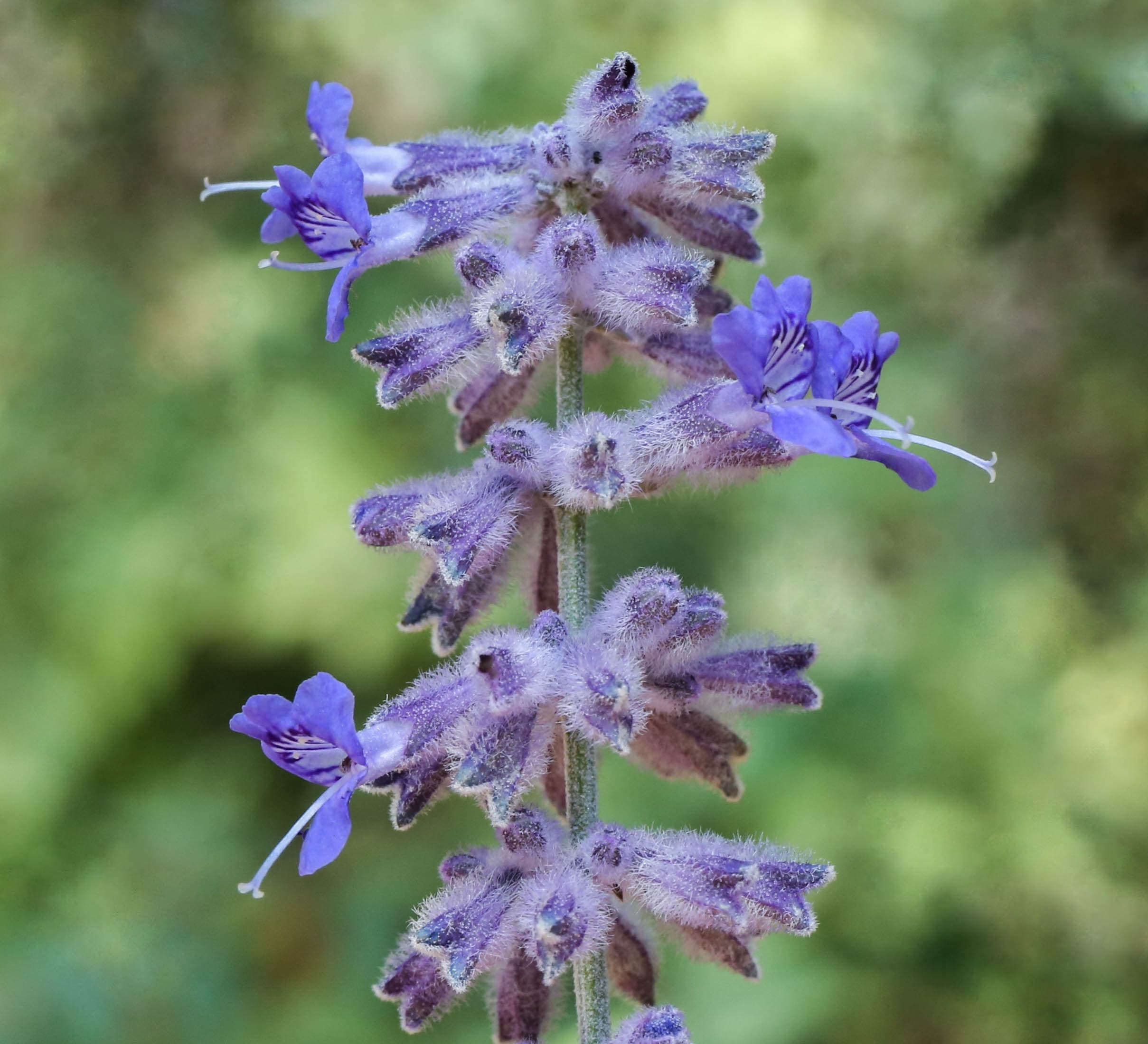
Russian sage 'Blue Spire'
Perovskia atriplicifolia 'Blue Spire'
Dutch: Russische salie 'Blue Spire'
Russische salie 'Blue Spire' (Perovskia atriplicifolia 'Blue Spire') is a perennial from the Lamiaceae family that grows up to 120cm tall. This plant thrives in full sun and requires low maintenance. Blooms in late summer and autumn with blue, purple flowers and attracts bees and butterflies.
90–120 cm
60–90 cm
full sun
low water needs
sandy soil, loam, chalky soil
low maintenance
late summer, autumn
blue, purple
Ecologische waarde
Verzorgingskalender
| Taak | Jan | Feb | Mrt | Apr | Mei | Jun | Jul | Aug | Sep | Okt | Nov | Dec |
|---|---|---|---|---|---|---|---|---|---|---|---|---|
| 🌱Planten | ||||||||||||
| ✂️Snoeien | ||||||||||||
| 💧Bemesten |
Care tips
Planting
Russian sage 'Blue Spire' thrives in full sun and demands excellent drainage, making it ideal for sandy, loamy, or chalky soils. It will not tolerate heavy clay or waterlogged ground, so if your soil is prone to sitting wet, work in plenty of grit or coarse sand before planting. Choose an open, sunny position where the plant will receive at least six hours of direct sunlight daily; shade leads to weak, floppy growth. Plant container-grown specimens in March, April, or May, or wait until September or October if you prefer autumn planting. Dig a hole roughly twice the width of the root ball but no deeper—the top of the root ball should sit level with the surrounding soil surface. Space plants 75 cm apart to allow for their mature spread of 60–90 cm and to ensure good air circulation, which helps prevent mildew. Backfill with the excavated soil without adding compost or manure; Russian sage actively prefers lean, low-nutrient conditions and will grow leggy in rich ground. Firm gently around the roots and water in thoroughly to settle the soil, then leave it. This is a drought-tolerant perennial once established, so resist the temptation to keep watering. A light mulch of gravel or grit around the base is beneficial, especially on heavier soils, as it improves surface drainage and reflects heat. Avoid organic mulches like bark or compost, which retain moisture and can encourage root rot. Staking is not normally required if the plant is grown in full sun and lean soil.
Pruning
Perovskia atriplicifolia 'Blue Spire' flowers on new wood produced in the current season, so it benefits from hard pruning each spring to encourage vigorous growth and a tidy, bushy shape. Prune in March or April, just as the new basal shoots begin to emerge at the base of the plant. If you prune too early, frost may damage the fresh growth; too late, and you delay flowering. Use sharp secateurs or loppers and cut all the previous year's stems back hard to within 10–15 cm of the ground, just above the lowest visible buds or new shoots. Don't be tentative—Russian sage responds well to severe pruning and will quickly produce strong new stems. The old stems are woody and brittle, so they snap off easily; clear away all the pruned material to keep the base tidy and reduce hiding places for pests. If you leave the pruning until late spring or skip it altogether, the plant becomes progressively more sprawling and untidy, with a congested, woody base and fewer flowers. Some gardeners prefer to leave the silvery stems standing over winter for structure and interest, which is fine, but don't delay the spring cut beyond early April. Russian sage does not require deadheading to prolong flowering, and the spent flower spikes retain an attractive, hazy appearance well into autumn. You can remove them if you prefer a neater look, but it makes no difference to the plant's health or performance. Focus your efforts on that single, decisive spring prune.
Maintenance
Russian sage is a low-maintenance perennial once established, but it does have specific needs. Water newly planted specimens regularly through their first summer to help roots settle in, then reduce watering significantly. Established plants have low water requirements and tolerate drought well; in fact, overwatering is one of the few ways to kill them. In a typical British summer, rainfall is usually sufficient. Only water during prolonged dry spells, and even then, sparingly. Feed lightly in April or May with a general-purpose granular fertiliser, but use no more than half the recommended rate. Russian sage evolved in poor, stony soils and too much nitrogen produces soft, floppy growth prone to collapse. A single light spring feed is enough; avoid feeding later in the season, as this encourages late, frost-tender growth. On very poor soils, you can skip feeding altogether without harm. This plant is fully hardy in zones 5–9 and needs no winter protection in temperate Europe. Leave the stems standing until spring; they provide some frost protection for the crown and look attractive when rimmed with frost. Avoid cutting back in autumn, as this can encourage premature sprouting vulnerable to cold damage. Pests are rarely a problem. Russian sage's aromatic foliage deters most insects, and deer and rabbits generally avoid it. Powdery mildew can appear in humid conditions or where air circulation is poor, showing as white patches on leaves. Improve spacing and avoid overhead watering. Root rot is the main risk, caused by poor drainage or overwatering, so ensure the soil stays on the dry side, especially in winter.
More about this plant
Combines well with
Related guides
Russian sage 'Blue Spire' in your garden design?
Make a free garden design with AI advice. Our AI knows Russian sage 'Blue Spire' and 130+ other plants.
Start free design