Siberian bugloss 'Looking Glass' in November: monthly care
Month-by-month care — Brunnera macrophylla 'Looking Glass'
In November your siberian bugloss 'Looking Glass' needs attention: prune.
- Prune
What to do this November
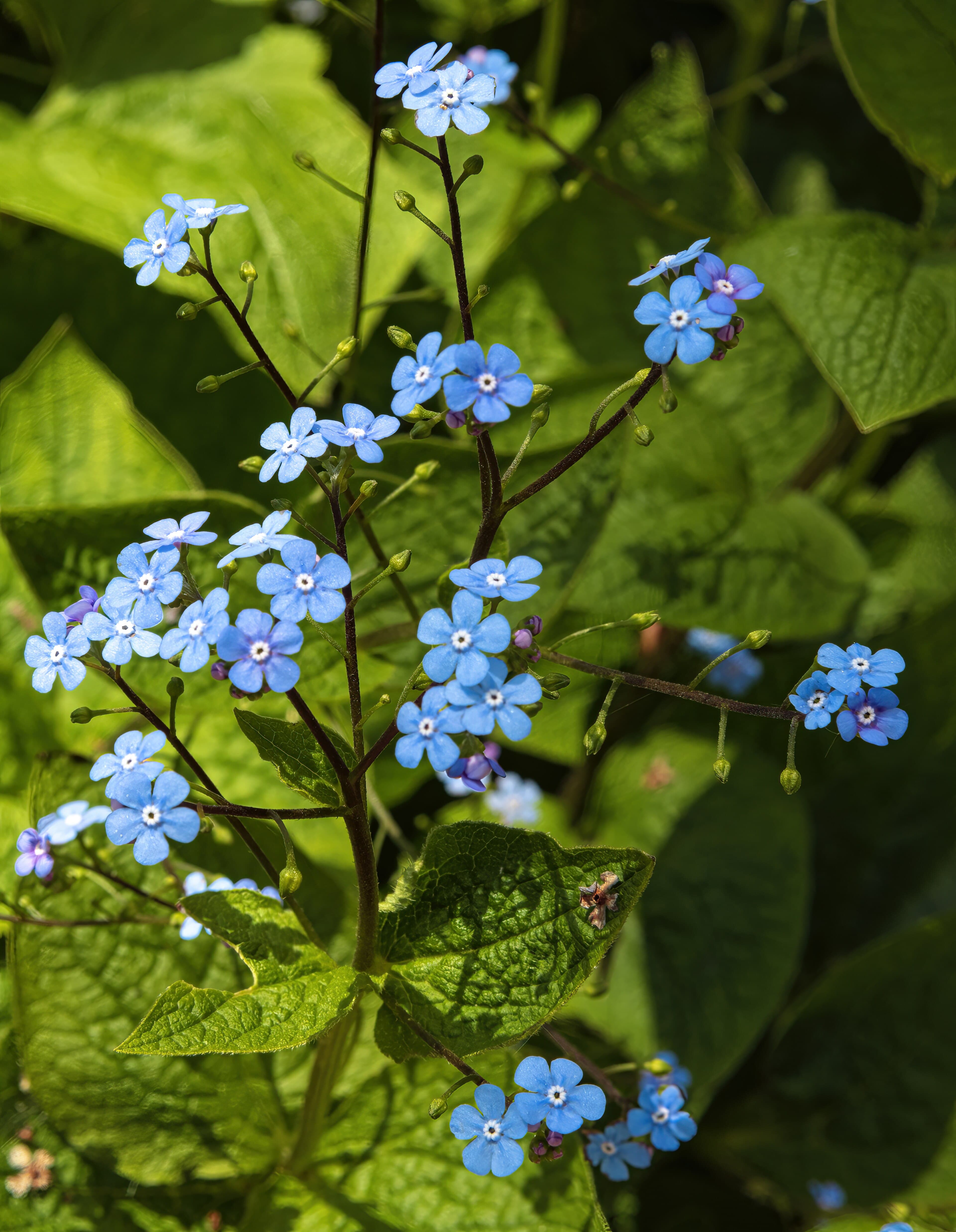
Brunnera macrophylla 'Looking Glass' requires very little pruning, but some tidying keeps it looking its best and prevents self-seeding if that's a concern. The main pruning windows are March and November, though light maintenance can be done throughout the growing season. In late spring and summer, remove any foliage that becomes scorched, tatty, or mildewed—this is most common if the plant is in too much sun or the soil dries out. Simply cut damaged leaves back to the base with clean secateurs or snip them off by hand. This encourages fresh growth and improves air circulation, which helps reduce fungal issues. After flowering finishes in late spring, you can deadhead the spent flower stems if you prefer a tidier appearance or want to prevent self-seeding. Cut the stems back to just above the foliage mound. However, the tiny blue forget-me-not flowers are fairly inconspicuous once faded, so many gardeners leave them. The main pruning session is in November or early March. In autumn, once the foliage has been hit by hard frosts and starts to collapse, cut back all the old leaves to ground level. Alternatively, leave this job until early spring before new growth emerges. Either timing works well; autumn tidying reduces slug hiding places over winter, while spring pruning provides some frost protection for the crown. Use clean, sharp secateurs and remove all the previous season's foliage. Fresh, silvery leaves will emerge in spring. Brunnera doesn't require any shaping or structural pruning—just this annual clear-out.