Siebold's hosta in March: monthly care
Month-by-month care — Hosta sieboldiana
In March your siebold's hosta needs attention: plant / sow and prune.
- Plant / sow
- Prune
What to do this March
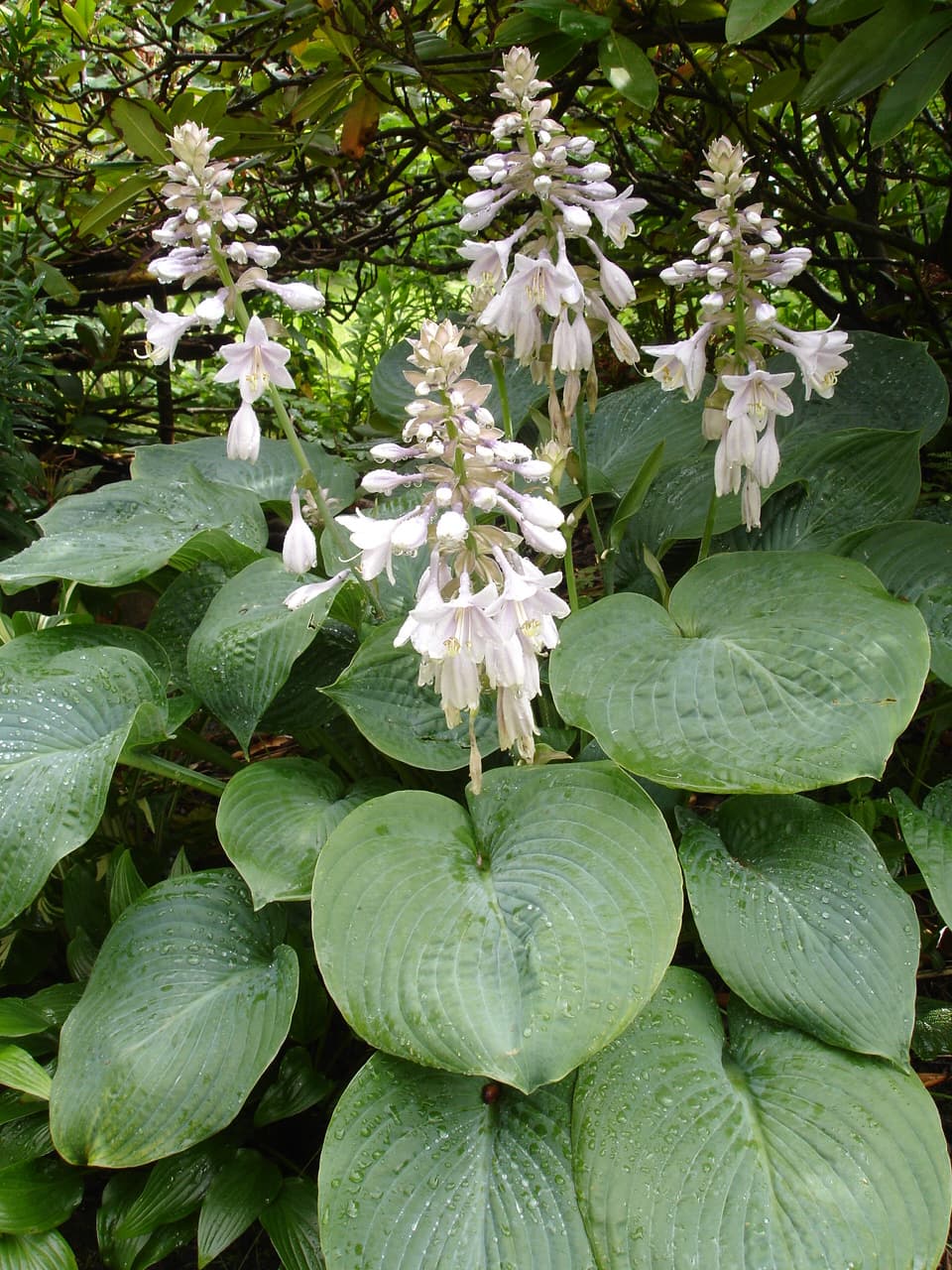
Hosta sieboldiana thrives in partial to full shade, making it ideal for borders under trees, woodland gardens, or any shaded corner where little else will grow. Avoid planting in full sun, which scorches the large, blue-grey leaves and diminishes their colour. This hosta prefers loam or clay soil that retains moisture without becoming waterlogged. Before planting, dig in plenty of organic matter—well-rotted compost or leaf mould—to improve structure and moisture retention, especially if your soil is heavy clay. Plant hostas in March, April, May, September, or October. Spring planting gives the roots a full growing season to establish, while autumn planting works well if the soil is still warm and you can water during dry spells. Dig a hole roughly twice the width of the root ball and deep enough so the crown sits level with the soil surface. Space plants 80 cm apart to allow for their mature spread of up to 120 cm; hostas grow slowly but eventually form substantial clumps. Place the plant in the hole, backfill with the excavated soil mixed with compost, and firm gently to eliminate air pockets. Water thoroughly after planting to settle the roots. Apply a 5 cm layer of mulch—bark chips or leaf mould—around the base, keeping it clear of the crown to prevent rot. Mulch conserves moisture and suppresses weeds, both important for young hostas. If planting in autumn, mulch also insulates roots over winter. Keep the soil consistently moist for the first growing season while the plant establishes.
Hosta sieboldiana requires very little pruning in the traditional sense, but it does benefit from regular tidying to keep it looking its best and to maintain plant health. The main pruning windows are March and November, and the tasks differ slightly between these periods. In November, after the first frosts have blackened the foliage, cut back all the leaves to ground level. Use clean secateurs or garden shears and remove the entire leaf clump, leaving just the crown at soil level. This autumn tidy-up prevents slug eggs and fungal spores from overwintering in the decaying foliage, and it keeps the garden looking neat through winter. If you prefer, you can wait until early March to cut back the old foliage, especially if you garden in a colder area; the dead leaves provide a small amount of insulation for the crown. However, clear away all debris before new shoots emerge in spring, as slugs and snails hide beneath old leaves and will quickly attack fresh growth. Throughout the flowering season in early summer, remove spent flower stems once the white blooms have faded. Cut the entire stem down to the base; this isn't essential for the plant's health but improves appearance and prevents energy being wasted on seed production. If any leaves become damaged, tatty, or diseased during the growing season, snip them off at the base. No other pruning is necessary—hostas naturally form tidy, architectural clumps without any shaping or cutting back during active growth.