Star jasmine in September: monthly care
Month-by-month care — Trachelospermum jasminoides
In September your star jasmine needs attention: plant / sow and prune.
- Plant / sow
- Prune
What to do this September
Star jasmine thrives in full sun or partial shade, though flowering is most prolific in a sunny, sheltered spot. In cooler parts of zones 7 and 8, choose a warm, south- or west-facing wall to protect it from cold winds and frost. The plant prefers loamy soil that is fertile, moisture-retentive but well-drained. Heavy clay should be improved with organic matter and grit; very sandy soils benefit from generous additions of compost to help retain moisture. Plant in April, May, or September when the soil is workable and temperatures are mild. Dig a hole twice the width of the root ball and the same depth, loosening the soil at the bottom to encourage roots to establish. Position the top of the root ball level with the surrounding soil—planting too deep can lead to stem rot. Space plants 100 cm apart if you're planting more than one along a fence or wall. After planting, water thoroughly to settle the soil around the roots. Apply a 5–7 cm layer of well-rotted compost or bark mulch around the base, keeping it a few centimetres clear of the stems to prevent rot. Star jasmine is a twining climber, so provide support immediately: trellis, wires, or a framework of canes. Gently tie in the main stems with soft garden twine to guide the plant in the direction you want. Water regularly during the first growing season to help the root system establish, especially in dry spells. Once settled, star jasmine is reasonably drought-tolerant but performs best with consistent moisture.
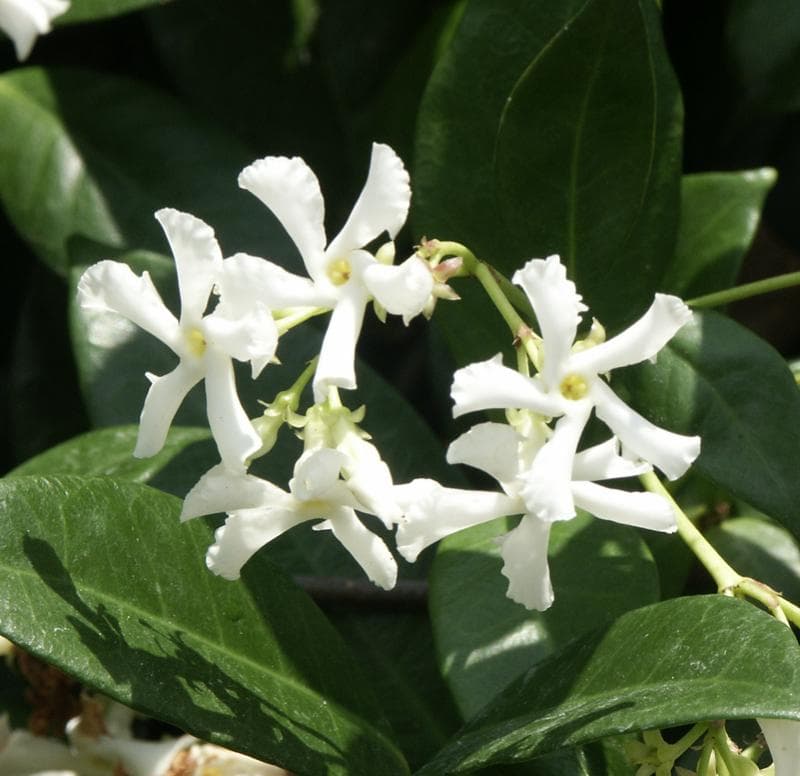
Star jasmine flowers on the previous season's growth, so pruning is best done in August or September, immediately after the main flush of blooms has finished. Pruning at this time allows the plant to produce new shoots that will carry next year's flowers while avoiding any risk of frost damage to fresh growth. This climber doesn't require heavy pruning to stay healthy, but it does benefit from regular tidying to keep it within bounds and encourage dense, bushy growth. Use clean, sharp secateurs or loppers for stems thicker than your thumb. Start by removing any dead, damaged, or diseased stems, cutting back to healthy wood. Then look for wayward shoots that are growing away from the support or into gutters, windows, or neighbouring plants—trim these back to a main stem or suitable side shoot. If your star jasmine has become overgrown or bare at the base, you can renovate it by cutting back harder, removing up to one-third of the oldest stems close to the base. This encourages fresh growth from lower down. Avoid cutting into very old, thick wood all at once; spread major renovation over two or three years to avoid shocking the plant. Throughout the growing season, you can lightly trim or tie in stray shoots to keep the plant tidy, but avoid any significant pruning between October and July, as you'll be removing the stems that carry the fragrant white flowers. If the plant is young and still filling its space, pruning can be minimal—just remove anything dead or damaged and let it grow.