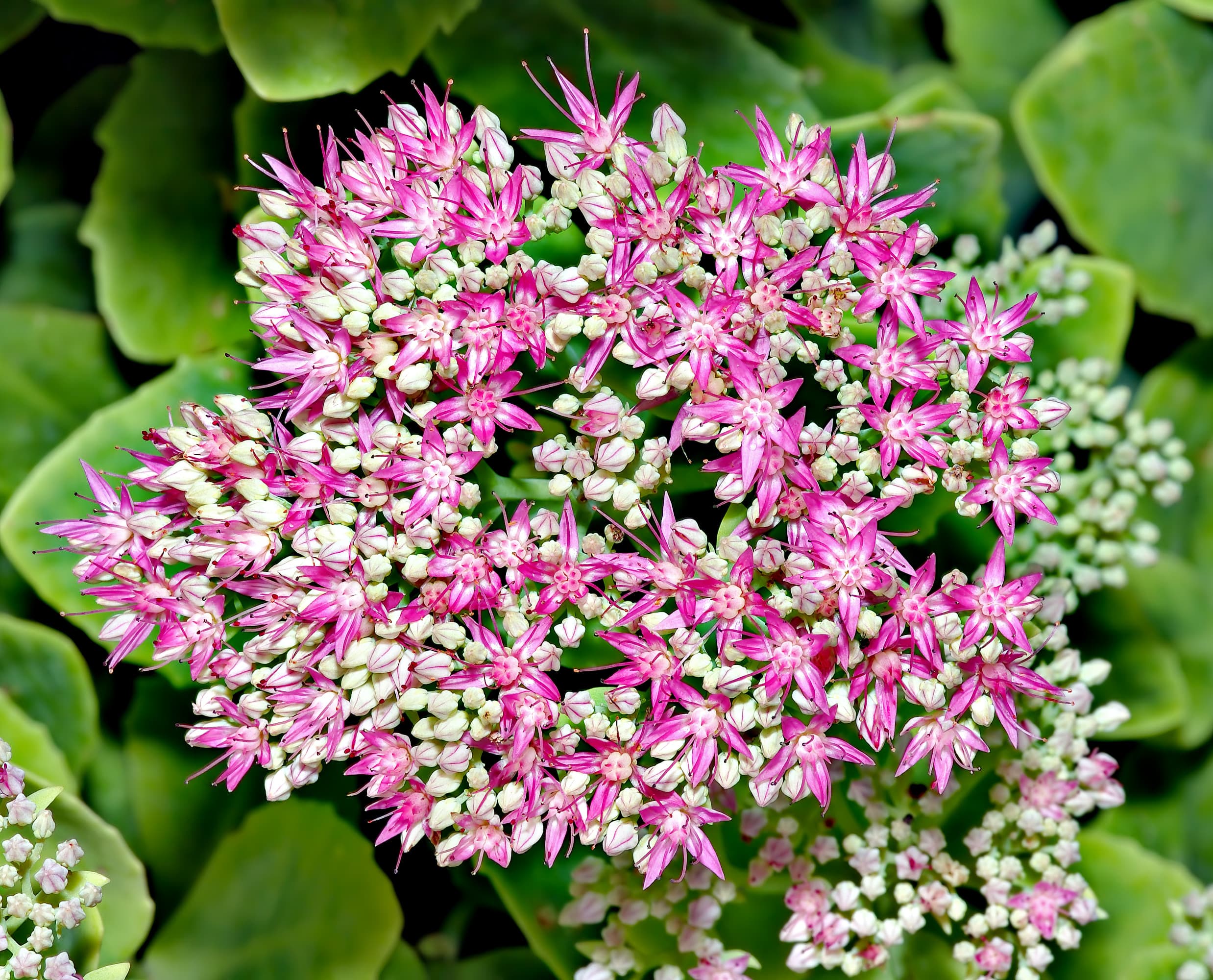
Stonecrop Autumn Joy
Hylotelephium 'Herbstfreude'
Dutch: Sedum 'Herbstfreude'
Sedum 'Herbstfreude' (Hylotelephium 'Herbstfreude') is a perennial from the Crassulaceae family that grows up to 60cm tall. This plant thrives in full sun and requires low maintenance. Blooms in autumn and summer with pink, red flowers and attracts bees and butterflies.
40–60 cm
40–50 cm
full sun
low water needs
sandy soil, loam, chalky soil
low maintenance
autumn, summer
pink, red
Ecologische waarde
Verzorgingskalender
| Taak | Jan | Feb | Mrt | Apr | Mei | Jun | Jul | Aug | Sep | Okt | Nov | Dec |
|---|---|---|---|---|---|---|---|---|---|---|---|---|
| 🌱Planten | ||||||||||||
| ✂️Snoeien |
Care tips
Planting
Hylotelephium 'Herbstfreude' (often still sold as Sedum 'Herbstfreude') thrives in full sun and well-drained soil, making it ideal for sunny borders, gravel gardens, and rockeries. It tolerates sandy, loamy, and chalky soils with ease, but good drainage is essential—waterlogged ground will cause the fleshy roots to rot. Choose a spot that receives at least six hours of direct sunlight daily; plants grown in shade become leggy and flop over. Plant in March, April, September, or October when the soil is workable. Spring planting gives the roots a full growing season to establish, while autumn planting works well if the soil isn't too wet. Dig a hole slightly larger than the root ball and incorporate a handful of grit or sharp sand if your soil is heavy clay. This improves drainage around the roots. Set the plant at the same depth it sat in its pot—burying the crown too deeply invites rot. Space plants 45 cm apart; they will fill out to form neat, rounded clumps 40–50 cm wide. After planting, water in thoroughly to settle the soil around the roots, then leave well alone. Autumn Joy is drought-tolerant once established and resents fussing. A light mulch of gravel or grit around the base helps suppress weeds and keeps the crown dry, but avoid organic mulches like bark or compost, which hold moisture against the stems. No staking is needed if the plant is grown in full sun with good drainage; the sturdy stems support the heavy flower heads naturally. Water only during prolonged dry spells in the first summer while roots establish.
Pruning
Autumn Joy requires very little pruning, and many gardeners leave the spent flower heads standing through winter for structure and interest—the dried, rust-brown heads look striking under frost and provide food for seed-eating birds. If you prefer this approach, simply leave the plant untouched until early spring. Prune in March, just as new growth begins to emerge at the base. Cut back all the old stems to ground level using secateurs or sharp shears. The previous year's growth will be dry and brittle, so it snaps away easily. Remove everything down to about 2–3 cm above soil level, taking care not to damage the fresh shoots pushing through. This annual cut-back keeps the plant tidy and makes room for the new season's foliage. If the clump becomes congested or flowering diminishes after several years, March is also the time to divide it. Lift the entire plant with a fork, then use a sharp spade or knife to split it into sections, each with healthy roots and shoots. Replant the divisions immediately at the same depth and spacing, and discard any woody or exhausted central portions. Some gardeners pinch back the stems by half in late May or early June to create bushier, slightly shorter plants that are less prone to flopping, though this delays flowering by a week or two. Pinch just above a leaf node using your fingers or snips. This technique is optional—plants grown in full sun with lean soil rarely need it. Deadheading is unnecessary; the flowers age gracefully from pink through copper to deep red-brown, and removing them eliminates the plant's autumn and winter appeal.
Maintenance
Autumn Joy is one of the easiest perennials you can grow, demanding almost nothing once established. Water sparingly. The thick, succulent leaves store moisture, so the plant tolerates drought well. In a typical year, rainfall is sufficient. Water only during prolonged dry spells in summer—once every two to three weeks is ample. Overwatering or poorly drained soil causes root rot and encourages floppy growth, so err on the side of neglect. Feeding is not necessary. This stonecrop evolved on poor, rocky ground and actually performs better in lean soil. Rich, fertile conditions produce lush, weak stems that collapse under the weight of the flower heads. If your soil is very poor or sandy, a single light application of general-purpose granular fertiliser in early spring is the absolute maximum; otherwise, leave well alone. Autumn Joy is fully hardy to zone 3a and requires no winter protection in temperate Europe. Leave the old stems and seed heads standing until March—they provide valuable structure in the winter garden and shelter for overwintering insects. The dried flower heads remain attractive through frost and snow. Pests and diseases are rare. Slugs and snails occasionally nibble young shoots in spring, but damage is usually cosmetic. Vine weevil larvae can attack the roots in container-grown plants; check for them if foliage suddenly wilts. Root rot is the main issue, caused by waterlogged soil rather than disease—prevention through good drainage is key. Mulch lightly with gravel or grit to suppress weeds and keep the crown dry. Avoid organic mulches, which retain moisture and can smother the low rosettes of foliage in winter.
More about this plant
Combines well with
Related guides
Stonecrop Autumn Joy in your garden design?
Make a free garden design with AI advice. Our AI knows Stonecrop Autumn Joy and 130+ other plants.
Start free design