Stonecrop Autumn Joy in March: monthly care
Month-by-month care — Hylotelephium 'Herbstfreude'
In March your stonecrop Autumn Joy needs attention: plant / sow and prune.
- Plant / sow
- Prune
What to do this March
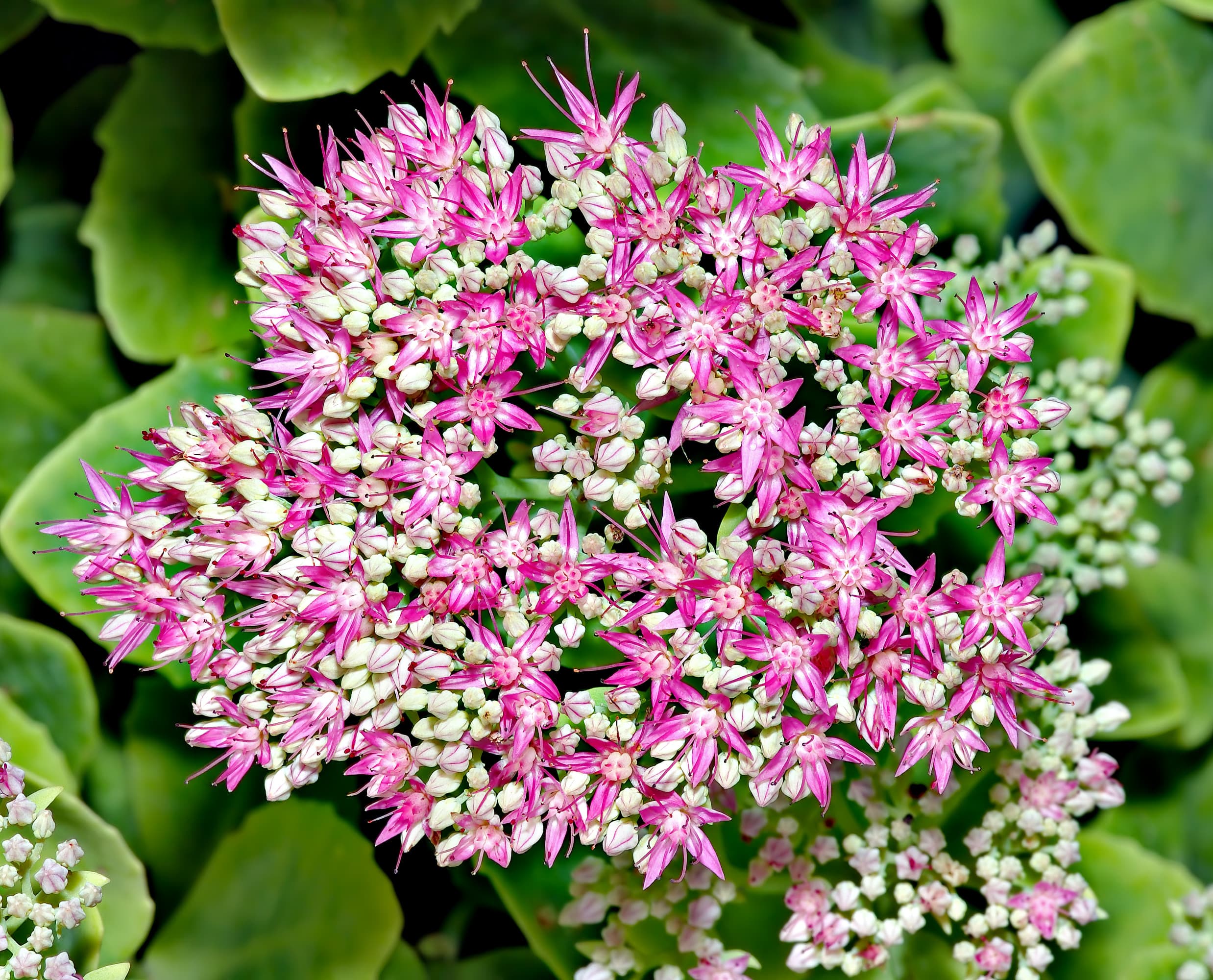
Hylotelephium 'Herbstfreude' (often still sold as Sedum 'Herbstfreude') thrives in full sun and well-drained soil, making it ideal for sunny borders, gravel gardens, and rockeries. It tolerates sandy, loamy, and chalky soils with ease, but good drainage is essential—waterlogged ground will cause the fleshy roots to rot. Choose a spot that receives at least six hours of direct sunlight daily; plants grown in shade become leggy and flop over. Plant in March, April, September, or October when the soil is workable. Spring planting gives the roots a full growing season to establish, while autumn planting works well if the soil isn't too wet. Dig a hole slightly larger than the root ball and incorporate a handful of grit or sharp sand if your soil is heavy clay. This improves drainage around the roots. Set the plant at the same depth it sat in its pot—burying the crown too deeply invites rot. Space plants 45 cm apart; they will fill out to form neat, rounded clumps 40–50 cm wide. After planting, water in thoroughly to settle the soil around the roots, then leave well alone. Autumn Joy is drought-tolerant once established and resents fussing. A light mulch of gravel or grit around the base helps suppress weeds and keeps the crown dry, but avoid organic mulches like bark or compost, which hold moisture against the stems. No staking is needed if the plant is grown in full sun with good drainage; the sturdy stems support the heavy flower heads naturally. Water only during prolonged dry spells in the first summer while roots establish.
Autumn Joy requires very little pruning, and many gardeners leave the spent flower heads standing through winter for structure and interest—the dried, rust-brown heads look striking under frost and provide food for seed-eating birds. If you prefer this approach, simply leave the plant untouched until early spring. Prune in March, just as new growth begins to emerge at the base. Cut back all the old stems to ground level using secateurs or sharp shears. The previous year's growth will be dry and brittle, so it snaps away easily. Remove everything down to about 2–3 cm above soil level, taking care not to damage the fresh shoots pushing through. This annual cut-back keeps the plant tidy and makes room for the new season's foliage. If the clump becomes congested or flowering diminishes after several years, March is also the time to divide it. Lift the entire plant with a fork, then use a sharp spade or knife to split it into sections, each with healthy roots and shoots. Replant the divisions immediately at the same depth and spacing, and discard any woody or exhausted central portions. Some gardeners pinch back the stems by half in late May or early June to create bushier, slightly shorter plants that are less prone to flopping, though this delays flowering by a week or two. Pinch just above a leaf node using your fingers or snips. This technique is optional—plants grown in full sun with lean soil rarely need it. Deadheading is unnecessary; the flowers age gracefully from pink through copper to deep red-brown, and removing them eliminates the plant's autumn and winter appeal.