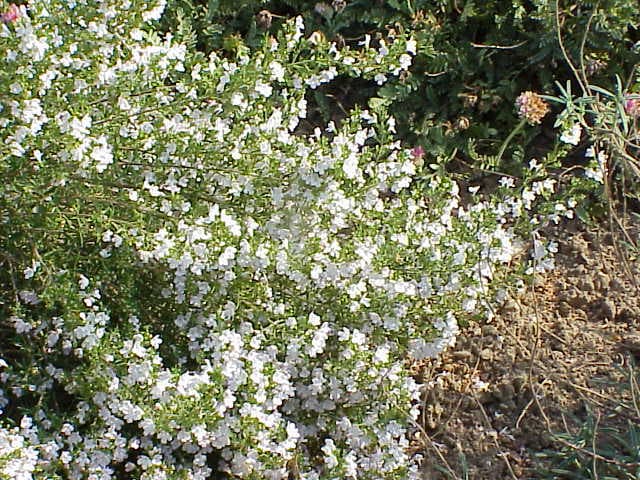
Summer savory
Satureja hortensis
Dutch: Bonenkruid
Bonenkruid (Satureja hortensis) is a edible herb from the Lamiaceae family that grows up to 40cm tall. This plant thrives in full sun and requires low maintenance. Blooms in summer with white, pink flowers and attracts bees.
20–40 cm
20–30 cm
full sun
low water needs
loam, sandy soil, chalky soil
low maintenance
summer
white, pink
Ecologische waarde
Verzorgingskalender
| Taak | Jan | Feb | Mrt | Apr | Mei | Jun | Jul | Aug | Sep | Okt | Nov | Dec |
|---|---|---|---|---|---|---|---|---|---|---|---|---|
| 🌱Planten | ||||||||||||
| 🍎Oogsten |
Care tips
Planting
Summer savory is a tender annual herb that thrives in full sun and well-drained soil. It will not tolerate frost, so sow or plant outdoors only after all risk of frost has passed in May or June. Choose a warm, sunny spot with loam, sandy or chalky soil; it performs particularly well in light, free-draining conditions and dislikes heavy, waterlogged ground. Prepare the soil by removing weeds and working in a little grit or sharp sand if drainage is poor. Summer savory has low nutrient requirements, so there's no need to add compost or manure—overly rich soil can actually reduce the intensity of its flavour. Rake the surface to a fine tilth if sowing seed directly. Sow seeds thinly on the surface or barely cover them with a few millimetres of soil, as they need light to germinate. Space rows about 20 cm apart. Germination usually takes one to two weeks in warm soil. Once seedlings have two or three true leaves, thin them to 20 cm apart to allow good air circulation and prevent mildew. Alternatively, you can start seeds indoors in modules in April and transplant the young plants outside in May once they're hardened off. Plant them at the same spacing—20 cm apart—and at the same depth they were growing in their pots. Water gently after planting or sowing to settle the soil, but avoid saturating it. Summer savory establishes quickly in warm weather and needs little further attention once the roots are down. There's no need for staking or mulching; in fact, a mulch-free surface helps keep the base of the plant dry and discourages rot.
Pruning
Summer savory does not require formal pruning in the way a shrub or perennial does. It's a fast-growing annual that completes its life cycle in a single season, so your focus should be on regular harvesting rather than structural pruning. Begin harvesting leaves and soft stem tips from July onwards, once the plants are around 15 cm tall and growing vigorously. Pinch out the top few centimetres of each stem regularly throughout the summer. This encourages the plant to bush out rather than bolting straight to flower, and it keeps the foliage tender and flavourful. Use sharp scissors or simply pinch with your fingers. The flavour is at its peak just before the flowers open, so if you want to dry a large batch for winter use, cut whole stems back by about half in late July or early August, just as the flower buds begin to form. Hang the stems upside down in a warm, airy place out of direct sun until completely dry, then strip the leaves and store them in an airtight jar. If you're growing summer savory primarily for fresh use, continue light, frequent harvesting right through to September. The plants will flower in summer—producing small white or pale pink blooms—and while the flowers are edible and attractive to bees, allowing too many to develop will reduce leaf production and cause the foliage to become woody and bitter. There are no specific pruning months listed for summer savory because it doesn't need cutting back for health or shape. Simply harvest as you cook, and pull up and compost the whole plant once it's finished flowering or after the first autumn frost.
Maintenance
Summer savory is a low-maintenance herb that asks very little once established. Its native habitat is dry, rocky Mediterranean hillsides, so it has low water and nutrient needs and thrives on neglect rather than cosseting. Water sparingly. After the initial watering at planting time, summer savory rarely needs supplementary irrigation except during prolonged dry spells. Even then, water only when the soil surface is completely dry, and avoid wetting the foliage. Overwatering encourages root rot and dilutes the essential oils that give the herb its peppery flavour. Sandy and chalky soils drain freely and suit it perfectly. Feeding is not necessary. The database specifies no feeding months, and this reflects the plant's preference for lean conditions. Avoid fertilisers entirely—they promote soft, lush growth that lacks flavour and is more prone to aphid attack and fungal disease. Summer savory is not hardy and will not survive winter frosts. It completes its life cycle between late spring and autumn, so there is no overwintering to manage. Simply pull up spent plants in October and add them to the compost heap, then sow fresh seed the following May. Pests and diseases are rarely a problem. Occasionally aphids cluster on the soft growing tips in hot, dry weather; a strong jet of water or a spray of dilute washing-up liquid usually deals with them. Powdery mildew can appear in humid conditions if plants are too close together, so ensure good spacing and air flow. Avoid overhead watering, especially late in the day. Mulching is not recommended. Keep the soil surface clear to promote the dry conditions summer savory prefers and to reduce the risk of stem rot at the base.
More about this plant
Combines well with
Related guides
Summer savory in your garden design?
Make a free garden design with AI advice. Our AI knows Summer savory and 130+ other plants.
Start free design