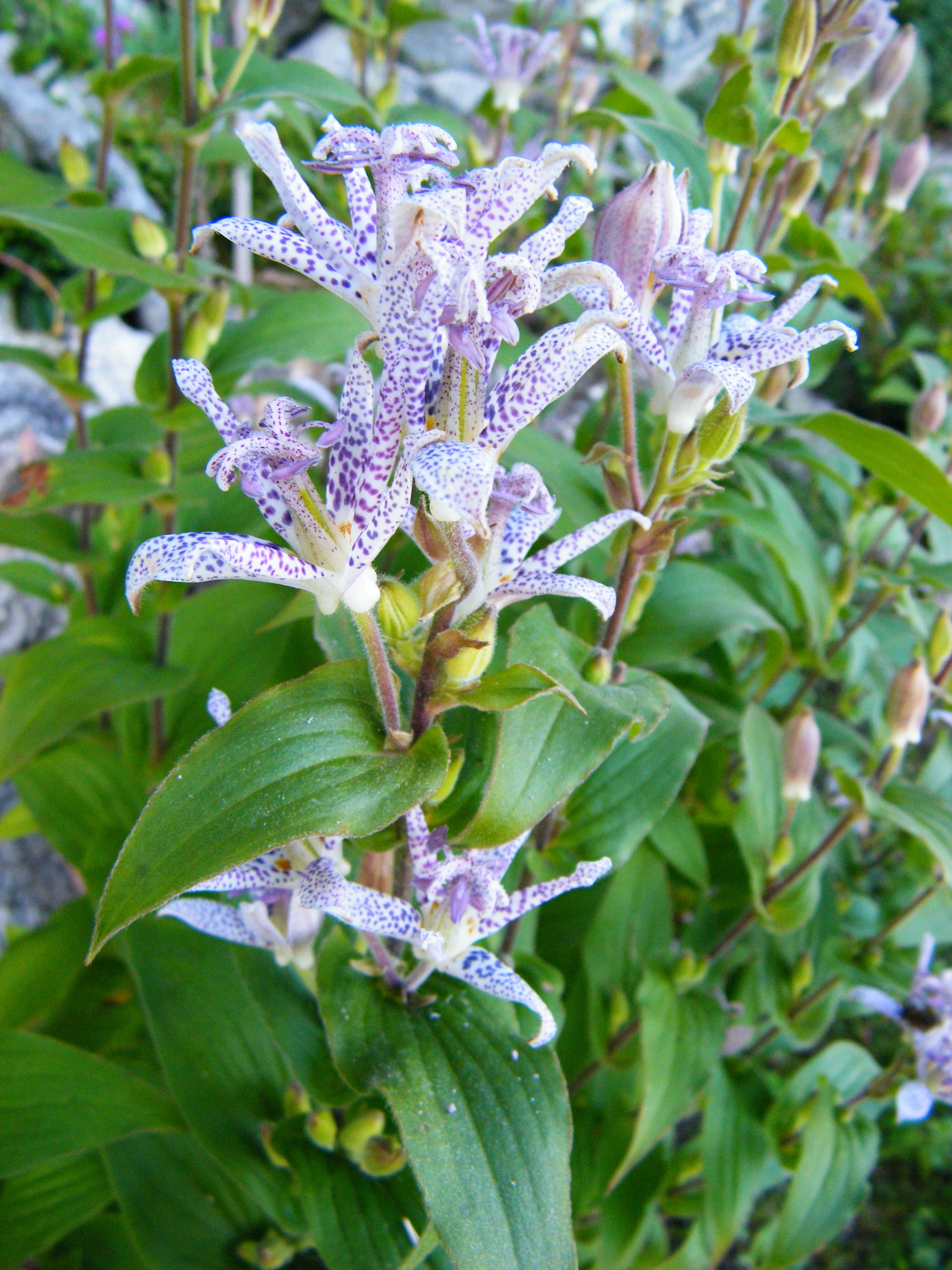
Toad lily
Tricyrtis hirta
Dutch: Paddenlelie
Paddenlelie (Tricyrtis hirta) is a perennial from the Liliaceae family that grows up to 90cm tall. This plant thrives in partial shade to shade and requires moderate maintenance. Blooms in late summer and autumn with white, purple flowers and attracts bees.
60–90 cm
30–45 cm
partial shade, full shade
moderate
loam, clay soil
moderate maintenance
late summer, autumn
white, purple
Ecologische waarde
Verzorgingskalender
| Taak | Jan | Feb | Mrt | Apr | Mei | Jun | Jul | Aug | Sep | Okt | Nov | Dec |
|---|---|---|---|---|---|---|---|---|---|---|---|---|
| 🌱Planten | ||||||||||||
| ✂️Snoeien | ||||||||||||
| 💧Bemesten |
Care tips
Planting
Tricyrtis hirta, commonly known as toad lily, thrives in partial to full shade, making it an excellent choice for woodland gardens or shady borders where many flowering perennials struggle. Choose a sheltered spot away from strong winds, as the slender stems can be damaged by exposure. The plant performs best in moisture-retentive loam or clay soil enriched with organic matter. Prepare the planting area by digging in plenty of well-rotted compost or leaf mould to improve soil structure and water retention. The soil should be fertile and slightly acidic to neutral. Plant between March and May, when the soil has warmed and the risk of hard frost has passed. Dig a hole slightly larger than the root ball and position the rhizome so the crown sits at or just below soil level—planting too deeply can lead to rot. Space plants 40 cm apart to allow for their mature spread of 30–45 cm and to ensure good air circulation. After planting, water thoroughly to settle the soil around the roots and eliminate air pockets. Apply a 5–7 cm layer of organic mulch such as leaf mould, composted bark, or well-rotted manure around the base, keeping it clear of the crown itself. This mulch conserves moisture, suppresses weeds, and mimics the plant's natural woodland habitat. Toad lilies are slow to establish and may take a full season to settle in, so don't be alarmed if growth is modest in the first year. Keep the soil consistently moist during the first growing season to encourage strong root development. Avoid planting in exposed, sunny positions or dry soil, as the foliage will scorch and flowering will be disappointing.
Pruning
Tricyrtis hirta requires minimal pruning, but a tidy-up in early spring helps maintain plant health and appearance. The main pruning window is March to April, just before new growth emerges. In late autumn, after flowering has finished and the first frosts have blackened the foliage, you can either cut back the stems to ground level or leave them standing over winter. Many gardeners prefer to leave the dead stems in place, as they provide some frost protection for the crown and offer winter interest in the border. If you've left the old growth over winter, cut all stems back to within a few centimetres of the ground in March or early April. Use clean, sharp secateurs or garden shears. Remove all dead foliage and stems completely, as decaying material left around the crown can harbour slugs and encourage fungal problems in the damp conditions toad lilies prefer. During the growing season, deadheading is not strictly necessary because the flowers are produced in succession from late summer through autumn, and removing spent blooms won't significantly prolong flowering. However, if you find the faded flowers unsightly, you can snip them off individually. Be careful not to damage emerging buds lower down the stem. Toad lilies don't require formative pruning or thinning. If clumps become congested after several years, you can lift and divide them in early spring rather than pruning. This rejuvenates the plant and provides new stock. Avoid autumn division, as newly separated plants may struggle to establish before winter. Overall, pruning is straightforward: an annual spring cut-back is all that's needed.
Maintenance
Toad lilies need consistent moisture throughout the growing season, particularly from spring through to autumn when they're in active growth and flower. Water regularly during dry spells, aiming to keep the soil evenly moist but not waterlogged. Clay and loam soils help retain moisture, but in prolonged dry periods you may need to water twice weekly. Reduce watering after flowering finishes in late autumn, as the plant enters dormancy. Feed in April, May, and June to support the long growing season and late flowering. Apply a balanced slow-release fertiliser such as blood, fish and bone in early spring, or use a general-purpose granular feed. A second application in late May or early June encourages strong stem growth and abundant flowers. Avoid high-nitrogen feeds, which promote leafy growth at the expense of blooms. A spring top-up of well-rotted compost or leaf mould also provides gentle, sustained nutrition. Refresh the mulch layer each spring to conserve moisture and suppress weeds. Toad lilies are hardy to zone 5, so they tolerate winter cold in temperate Europe without protection. However, a mulch layer over the crown in exposed gardens offers extra insurance against hard frosts. Slugs and snails are the main pests, particularly in spring when new shoots emerge. Check regularly and use organic pellets, beer traps, or hand-picking. The plants are generally disease-free, though prolonged wet conditions can occasionally cause leaf spot or crown rot—good drainage and air circulation help prevent this. Toad lilies are slow-growing and dislike root disturbance, so avoid unnecessary transplanting. Clumps can remain undisturbed for many years, gradually increasing in size and flowering performance.
More about this plant
Combines well with
Related guides
Toad lily in your garden design?
Make a free garden design with AI advice. Our AI knows Toad lily and 130+ other plants.
Start free design