Umbrella plant in April: monthly care
Month-by-month care — Darmera peltata
In April your umbrella plant needs attention: plant / sow, fertilise and watch the bloom.
- Plant / sow
- Fertilise
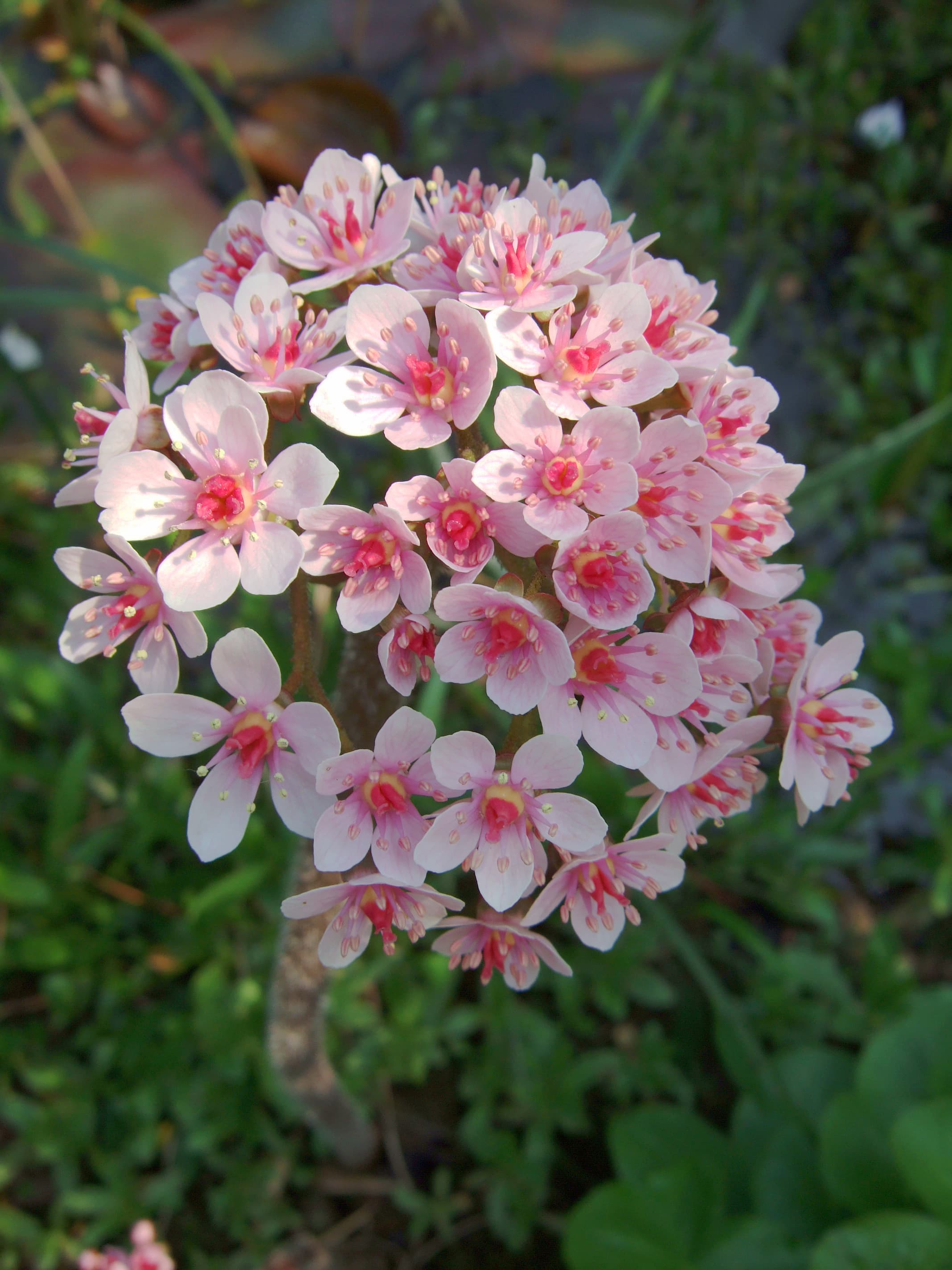
- Blooms
What to do this April
Darmera peltata thrives in damp, shaded spots and is ideal for bog gardens, pond margins, or any area with reliably moist soil. Choose a position in partial or full shade; it tolerates some morning sun but scorches in hot, exposed sites. The soil should be moisture-retentive—loam, clay, or peat-based soils are all suitable—and ideally enriched with organic matter such as well-rotted compost or leaf mould before planting. Plant in March, April, September, or October. Autumn planting allows the rhizomes to establish before winter, while spring planting gives a full growing season ahead. Dig a hole large enough to accommodate the thick, fleshy rhizome comfortably. Position the rhizome horizontally just below the soil surface, around 5–8 cm deep, with any growing points facing upwards. Space plants 100 cm apart; darmera spreads steadily via rhizomes and needs room to develop its impressive foliage clumps. After planting, water thoroughly to settle the soil around the roots and eliminate air pockets. Keep the soil consistently moist, especially during the first growing season. Apply a 5–8 cm layer of organic mulch such as composted bark or leaf mould around the base to conserve moisture and suppress weeds, but keep it clear of the crown to prevent rot. In very dry spells, water generously—darmera will not tolerate drought. If planting near a pond or stream, position it where the roots can access moisture naturally. The plant will reward you with striking umbrella-like leaves up to 60 cm across and clusters of pink flowers in early spring before the foliage fully emerges.
Watering is the single most important task with darmera. This plant has high water needs and must never dry out. In spring and summer, water deeply and regularly, especially during dry spells; the soil should remain consistently moist to the touch. If planted beside a pond or stream, natural moisture will usually suffice, but in borders you may need to water two or three times a week in warm weather. Reduce watering frequency in autumn as growth slows, but don't let the soil become bone-dry even in winter. Feed in April and May to support the lush foliage. Apply a balanced, slow-release granular fertiliser around the base of the plant, or use a general-purpose liquid feed every three to four weeks during the growing season. Avoid high-nitrogen feeds, which promote soft growth at the expense of flowers. A spring mulch of well-rotted compost or manure also provides gentle, sustained nutrition and helps retain soil moisture. Darmera is fully hardy in zones 5–9 and needs no winter protection in temperate Europe. The rhizomes survive freezing temperatures underground, and new growth emerges reliably each spring. Mulch around the crown in late autumn to insulate the soil and suppress weeds. Pests are rarely a problem, but slugs and snails can damage emerging shoots and young leaves in spring. Use organic slug pellets, beer traps, or hand-pick in the evening. Darmera is generally disease-free, though prolonged waterlogging in heavy clay can occasionally cause rhizome rot. Ensure good drainage despite the plant's love of moisture, and clear away dead foliage promptly in autumn to reduce fungal risk.
Watering is the single most important task with darmera. This plant has high water needs and must never dry out. In spring and summer, water deeply and regularly, especially during dry spells; the soil should remain consistently moist to the touch. If planted beside a pond or stream, natural moisture will usually suffice, but in borders you may need to water two or three times a week in warm weather. Reduce watering frequency in autumn as growth slows, but don't let the soil become bone-dry even in winter. Feed in April and May to support the lush foliage. Apply a balanced, slow-release granular fertiliser around the base of the plant, or use a general-purpose liquid feed every three to four weeks during the growing season. Avoid high-nitrogen feeds, which promote soft growth at the expense of flowers. A spring mulch of well-rotted compost or manure also provides gentle, sustained nutrition and helps retain soil moisture. Darmera is fully hardy in zones 5–9 and needs no winter protection in temperate Europe. The rhizomes survive freezing temperatures underground, and new growth emerges reliably each spring. Mulch around the crown in late autumn to insulate the soil and suppress weeds. Pests are rarely a problem, but slugs and snails can damage emerging shoots and young leaves in spring. Use organic slug pellets, beer traps, or hand-pick in the evening. Darmera is generally disease-free, though prolonged waterlogging in heavy clay can occasionally cause rhizome rot. Ensure good drainage despite the plant's love of moisture, and clear away dead foliage promptly in autumn to reduce fungal risk.